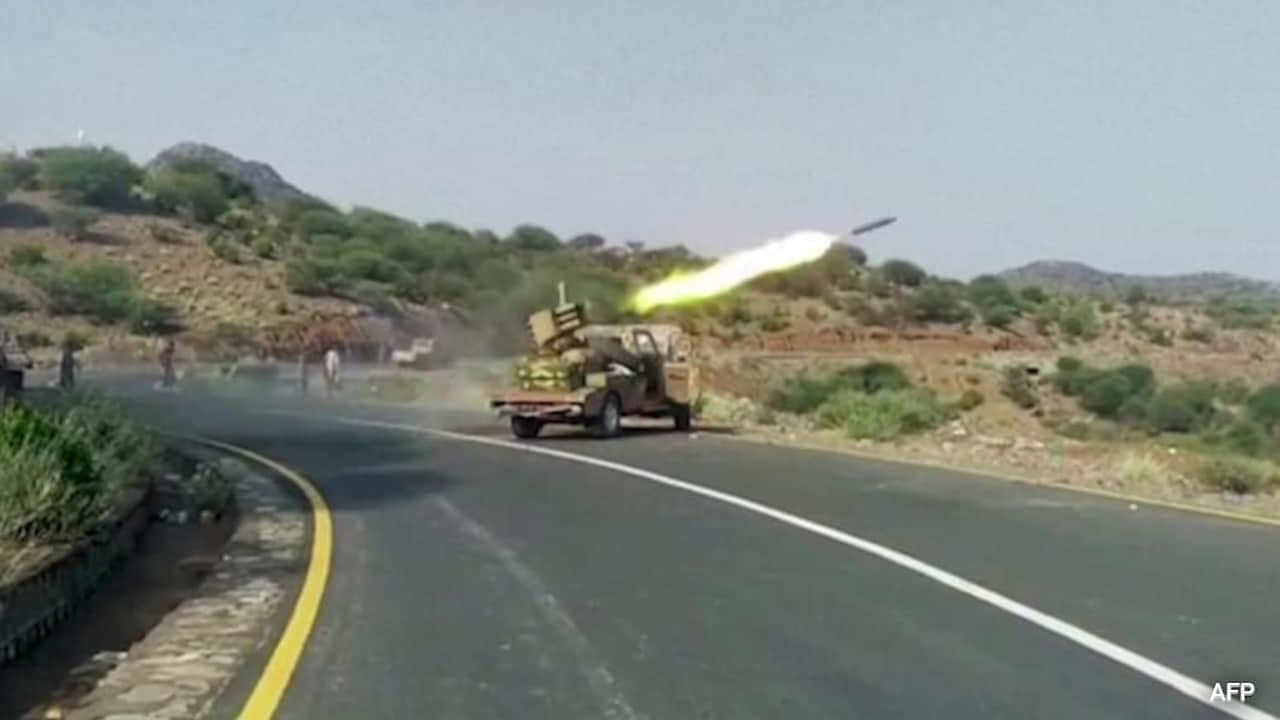
Every time a Patriot battery lights up the night sky over Riyadh or Khamis Mushait to swat down a crude Houthi drone, defense analysts cheer on cable news. The conventional narrative writes itself. Advanced air defense systems protect sovereign skies, high-tech engineering triumphs over asymmetric terror, and deterrence holds the line against regional chaos.
It is a comforting script. It is also an expensive illusion.
I have spent years watching defense budgets bleed out into the sand, and I can tell you that the standard coverage of these missile intercepts misses the entire economic and strategic reality. The lazy consensus assumes that intercepting a drone with a multi-million-dollar interceptor is a defensive victory. It is not. It is an economic attrition trap disguised as military success.
When a sixty-dollar fiberglass hull strapped with a lawnmower engine forces the expenditure of a three-million-dollar interceptor missile, physics is not your primary problem. Math is. The Houthi strategy in Yemen does not rely on air superiority. It relies on balance sheets. By trading pennies for millions, they have weaponized the replacement costs of Western-supplied missile defense architectures. Every successful intercept is a tactical win and a strategic loss.
The Cost Curve Fallacy
Let us define terms clearly. Modern air defense is built on the premise of asymmetric deterrence. Historically, defending an asset cost less than attacking it. Walls were cheaper than siege engines. Armor plate was cheaper than solid shot. Today, the defense-industrial complex has inverted that equation entirely.
When coalition forces intercept incoming projectiles, they are deploying complex guidance systems, rocket motors, and proximity fuses against targets built from commercial off-the-shelf components. You can buy a commercial drone motor on AliExpress for forty dollars. The guidance chip inside a low-end loitering munition costs less than a decent smartphone. Yet the interceptor requires precision engineering, government-certified supply chains, and decades of research and development overhead.
The mainstream press treats each interception as a clean binary: the missile hit or the missile was destroyed. They ignore the burn rate. Defense contractors love this dynamic because replenishment orders are guaranteed by sovereign panic. When inventories drop, procurement officers sign blank checks.
Imagine a scenario where a conflict drags on for a decade under these exact parameters. You do not need a war college degree to calculate the outcome. One side runs out of cash and supply chain components; the other side keeps building cheap flying lawnmowers in a basement.
The Deterrence Myth
We are told that robust missile defense creates deterrence. If you can shoot down everything they throw at you, the adversary eventually gives up. That theory works nicely in a laboratory setting. In actual asymmetric conflicts, it achieves the exact opposite.
Interception creates a protective shield that absorbs the political cost of inaction. When leaders know their missile defense systems will catch ninety-five percent of incoming threats, they have zero incentive to pursue difficult, messy political settlements. The shield becomes a crutch for diplomatic laziness.
Furthermore, the focus on tactical interception distracts from the source of the problem. You cannot shoot your way out of a supply chain insurgency. Houthi drone capabilities have not degraded under years of interceptor fire; they have evolved. They launch in swarms to saturate radar horizons, forcing defenders to waste limited inventory on decoys before the real payload arrives.
I have spoken with defense contractors who privately admit that their best-case scenario is a permanent, low-intensity stalemate. Total victory ends procurement contracts. Total defeat ruins the brand. The sweet spot is a perpetual threat environment where governments feel just vulnerable enough to keep ordering replacements.
The Logistics Nightmare Behind the Radar Screen
To understand why this theater persists, you have to look past the dramatic footage of streaks in the night sky. The logistics tail required to maintain a modern battery is staggering.
You need constant telemetry updates, specialized maintenance crews, secure communications links, and a continuous stream of imported components. When a battery is positioned near an active conflict zone, the wear and tear on seeker heads and launch rails multiplies rapidly. Sand, heat, and high-frequency use degrade sensitive electronics faster than any catalog spec sheet will admit.
The public imagines a sleek, automated fortress operating with minimal human friction. The reality is an army of civilian contractors billing hundreds of dollars an hour just to keep the software patched and the cooling systems functioning in forty-degree heat.
When a missile is launched, it is not just a three-million-dollar piece of hardware leaving the rail. It is the culmination of a fragile global supply chain involving rare earth minerals, specialized microprocessors, and precision machining found in only a handful of factories worldwide.
Dismantling the Playbook
If we are going to talk honestly about regional missile defense, we have to stop measuring success by interception percentages alone. A ninety-nine percent intercept rate means nothing if the remaining one percent hits a critical oil facility while your inventory of interceptors is depleted by half.
The real solution is not building bigger shields. It is shifting the cost equation back to the attacker. That means deploying directed energy weapons, high-powered microwaves, and cheap electronic jamming arrays that neutralize low-end drones for pennies on the dollar. Until defense budgets stop subsidizing expensive interceptor monopolies and start funding cost-effective counter-drone tech, every successful interception is just a very expensive way to lose a war of attrition.
The next time you see footage of a Patriot missile chasing a drone across the horizon, do not look at the fireworks. Look at the invoice.