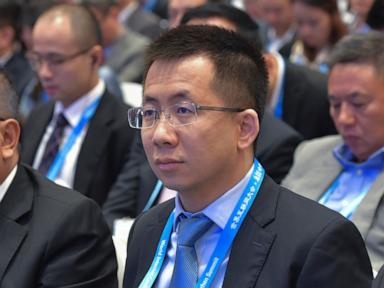
ByteDance founder Zhang Yiming has reclaimed the top spot in China’s rich list in late 2026, climbing back to number one on the Hurun China Rich List with an estimated fortune nearing $100 billion (specifically pegged around $99.7 billion, up 43% year-over-year) and rising to number one on Forbes’ 2026 China ranking at $84 billion. That headline sounds like a neat victory lap for the quiet software engineer who stepped out of ByteDance’s daily chief executive chair years ago. Look closer at the balance sheets and macro numbers, though, and the story stops being a simple tale of one man’s triumph. It becomes a cold autopsy of how China’s economy is reallocating capital, punishing old consumer models, and forcing a tech giant that built its empire on short-video attention to spend tens of billions of dollars on artificial intelligence infrastructure.
For decades, I have watched wealth rankings in Beijing and Shanghai mirror whatever cycle happened to be popular with domestic banks and foreign funds. First came industrial heavyweights and property developers who borrowed against land appreciation. Then came consumer internet darlings and bottled-water tycoons riding rising household consumption. In 2026, that ladder snapped. Hurun’s data shows total dollar billionaires in China climbing by 155 to 1,176, overtaking the United States by 176, yet combined wealth across Forbes’ 2026 China top tier dipped to $1.3 trillion from $1.35 trillion a year earlier. Meanwhile, for the first time in Hurun’s history, not a single mainland property developer remains in the top 100.
Zhang did not reach number one by selling more soda or building apartments in tier-three cities. He did it by owning the most cash-generative private consumer engine in China—Douyin and TikTok—and turning those profits into an aggressive artificial intelligence bet centered on Doubao, China’s most widely used AI assistant, with more than 300 million monthly active users.
Why Consumer Giants Lost Ground While Zhang Surged
Every wealth ranking is a relative contest, and part of Zhang’s climb came from rivals slipping. Nongfu Spring founder Zhong Shanshan, who held the number-one crown in four of the past five years on Hurun’s tally and five years on Forbes’ ranking, saw his fortune fall by roughly 23% to $61.0 billion on Hurun’s list and drop to $60.2 billion on Forbes’ count. His beverage business posted solid profits, yet shares slid amid sluggish consumer sentiment and fierce price competition in bottled water, while his vaccine business Wantai Bio struggled as demand cooled after its earlier surge.
Tencent’s Ma Huateng also felt the gravity of a cautious market, slipping out of Hurun’s top three for the first time since 2022 as his net worth dropped 26% to $51.5 billion. Even when legacy platforms kept core cash flows steady in gaming, payments, or advertising, investors priced them like mature utilities rather than open-ended growth rockets.
When domestic retail demand stalls and real estate deleveraging drags on household confidence, owning a toll road on everyday groceries or office space stops looking like a guaranteed compounder.
Compare that to how ByteDance makes money. Douyin and TikTok extract attention across hundreds of millions of daily sessions, feeding an ad and e-commerce machine that generated roughly $50 billion in profit in 2025. That war chest gives ByteDance something almost no pure-play AI startup has: internal cash flow large enough to self-fund massive capital expenditure without begging public equity markets for mercy every quarter.
The $70 Billion Compute Gamble Behind the Valuation
A billionaire ranking is a paper estimate built on private-market multiples, comparable public peers, and balance-sheet snapshots. To justify an AI-driven re-rating for ByteDance, investors are underwriting a staggering spending commitment. Reports in 2026 indicate ByteDance has weighed up to $70 billion in capital expenditures this year—roughly 400 billion to 500 billion yuan—focused heavily on data centers and AI compute infrastructure, with internal discussions extending toward $100 billion in 2027 if conditions allow.
That is a massive number for any company outside Silicon Valley’s hyperscalers. In nominal dollars, $70 billion still trails the biggest U.S. cloud and platform spenders, yet construction and power costs in parts of China are lower than in Northern Virginia or Oregon, meaning each dollar of civil infrastructure can stretch further. Still, spending at that scale changes the risk profile of the business.
Hardware Bottlenecks and Export Controls
Spending money on data centers is easy on a spreadsheet. Getting top-tier silicon into those racks is the real bottleneck. U.S. export controls continue to restrict access to advanced accelerators from Nvidia, forcing ByteDance to split its bets across domestic Chinese chips, alternative suppliers outside restricted tiers, and software optimization.
Domestic accelerators have improved, and Beijing strongly encourages local procurement to build self-reliance. Yet any mismatch between chip supply, networking gear, and model training schedules can turn a $70 billion capex plan into slower-than-hoped return on invested capital. An analyst or investor who treats a proposed capex budget as guaranteed compute capacity is making a rookie mistake.
Monetizing Doubao Without Breaking User Habits
Doubao’s scale—over 300 million monthly active users—gives ByteDance distribution that rivals cannot buy overnight. Distribution alone does not pay back tens of billions in servers. Chinese internet users have long expected consumer software and search tools to be free, supported by ads or commerce rather than direct subscriptions.
ByteDance has explored paid tiers and enterprise/API monetization alongside consumer features. Even if only a small fraction of Doubao users pay or if AI embeds quietly into Douyin and TikTok ad targeting, commerce recommendations, and video creation tools, the economics have to beat rising depreciation charges. If free AI queries surge faster than monetization per query, margins will feel the squeeze.
| Factor | Upside Driver for ByteDance | Key Risk or Friction Point |
|---|---|---|
| Core Cash Engine | Massive profit pool (~$50B in 2025) from Douyin, TikTok, and commerce | Regulatory scrutiny, ad cyclicality, and global platform headwinds |
| AI Infrastructure | Up to $70B proposed 2026 capex; lower local build costs than U.S. peers | Export controls on leading chips and heavy depreciation drag |
| Consumer Reach | Doubao exceeds 300M monthly users; deep integration across apps | User resistance to subscriptions; high inference cost per prompt |
| Competitive Field | Strong engineering talent and recommendation-engine heritage | Fierce price wars with DeepSeek, Alibaba, Baidu, and Tencent |
What DeepSeek and Hardware Winners Reveal About 2026
Zhang Yiming’s return to number one is not happening in a vacuum. Look down the 2026 rich lists and the same structural shift jumps off the page. Liang Wenfeng, founder of AI heavyweight DeepSeek, vaulted up the rankings after a funding round valuing the private company above $75 billion—a reminder that lean research labs and aggressive model efficiency can mint immense wealth fast.
Elsewhere, wealth jumped in hardware, semiconductors, robotics, and shipbuilding rather than mall retail or residential towers. Memory-chip maker CXMT’s cofounder Zhu Yiming debuted high on Forbes’ ranking following a Shanghai listing and next-generation high-density memory announcements. Humanoid robotics founder Wang Xingxing of Unitree entered as the youngest member on Forbes’ list at age 36. Hengli Group’s Chen Jianhua surged on shipbuilding demand.
To see why capital moved this way, consider a hypothetical example. Suppose two founders each built a profitable Chinese business five years ago: one ran a regional retail chain tied to consumer foot traffic, and the other built a specialized industrial automation or data-infrastructure supplier. When domestic consumption cools and policy pushes hard toward advanced manufacturing and AI compute, the industrial supplier can attract higher valuation multiples even if its current revenue is smaller. That dynamic is playing out across the entire 2026 list.
The Unanswered Questions Around ByteDance’s Valuation
As a veteran observer of tech hype cycles, I view private-company valuations with healthy skepticism. Public stocks reprice every second on transparent filings; private giants like ByteDance trade on secondary transactions, tender offers, and analyst models that vary widely depending on assumptions. When Hurun puts Zhang near $100 billion and Forbes puts him at $84 billion, both numbers reflect real momentum—and both rely on estimates of what ByteDance’s equity is worth on paper rather than cash sitting in Zhang’s personal checking account.
There are also governance and geopolitical realities that never disappear from Zhang’s ledger. Zhang stepped back from running ByteDance day to day, handing operational leadership to cofounder Liang Rubo, yet markets still treat Zhang as the strategic architect behind the firm’s product DNA and capital allocation. Meanwhile, cross-border tensions around TikTok, data governance, and semiconductors keep external risk elevated.
If you are tracking where real power and capital are moving in China’s tech economy, stop counting billionaire rankings as a scoreboard of finished victories and start watching ByteDance’s quarterly compute deployment, Doubao’s unit economics, and whether rivals like DeepSeek force pricing down across the entire AI stack.


