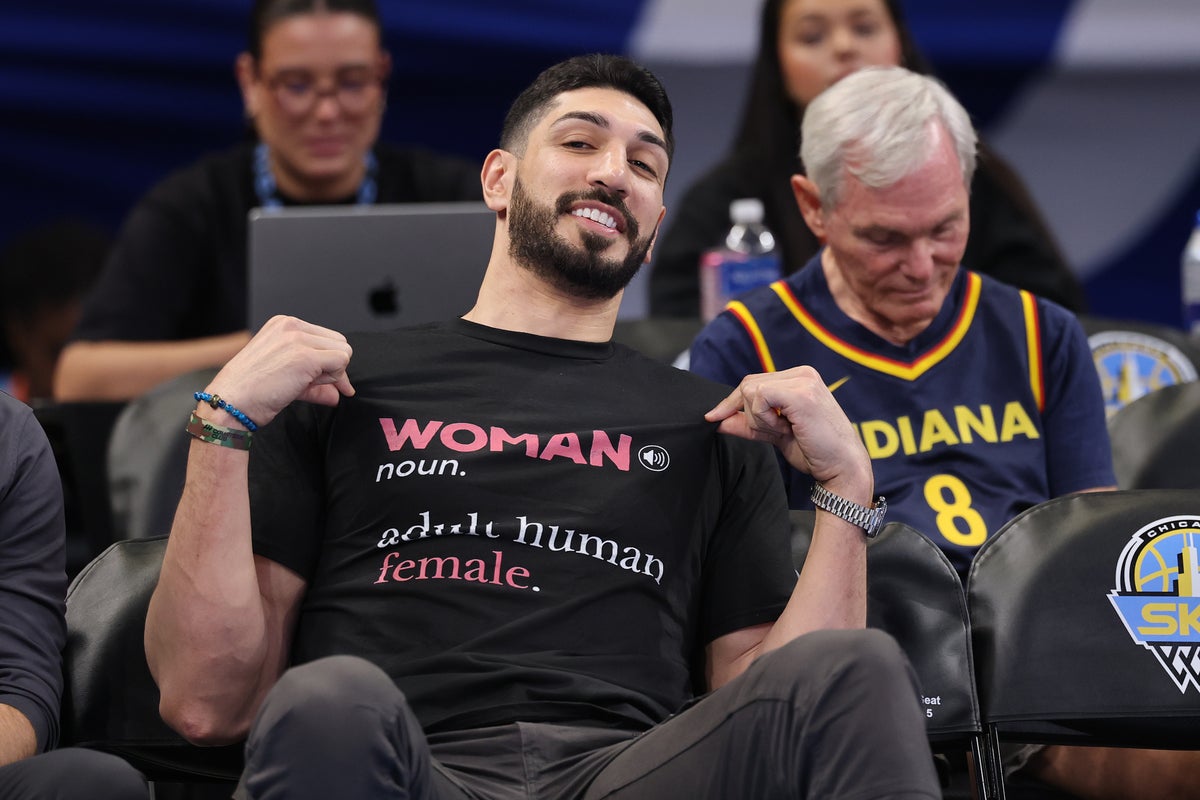
The baseline at Wintrust Arena was supposed to be a place to watch basketball. Instead, it became the epicenter of a deliberate provocation when former NBA center Enes Kanter Freedom was ejected following a heated on-court exchange with Chicago Sky guard Natasha Cloud.
Sport has a long, uncomfortable history of functioning as a billboard for social agitation. This incident was different. It combined athletic theatre, institutional policy gaps, and modern digital stuntwork into a single volatile package.
The Anatomy of a Baseline Standoff
With just over a minute remaining in the third quarter of a matchup between the Indiana Fever and the Chicago Sky, the temperature on the floor boiled over. Cloud converted an interior basket, punctuating the play with a celebratory chest bump before pivoting sharply toward the baseline. Stationed courtside was Freedom, draped in a black t-shirt emblazoned with a dictionary definition: "WOMAN noun. adult human female."
What followed was a swift escalation. Cloud approached Freedom, yelling and pointing aggressively as the arena's ambient noise spiked. Freedom stood, arms outstretched, holding his ground. Security guards and Sky players swarmed the area to intercede, creating a human barrier before the confrontation could physicalize further. Arena officials quickly made the decision to escort Freedom from the building, capping off a stunt engineered from its inception to command headlines.
The Strategy Behind the Stunt
Freedom did not end up courtside by accident. Weeks prior, alongside former NBA player Royce White, he submitted a declaration of eligibility for the WNBA draft under the satirical premise of identifying as a woman. This maneuver was designed to expose perceived vulnerabilities in athletic governance and mock ongoing cultural conversations regarding gender policy in professional sports.
The WNBA finds itself wrestling with a policy vacuum. While collective bargaining documents state the league is restricted to women, explicit language addressing legal sex changes, biological parameters, or gender identity protocols remains threadbare. Capitalizing on this ambiguity, external political actors have turned WNBA arenas into testing grounds. Prior to tip-off, Freedom participated in an exterior rally supporting Indiana Fever guard Sophie Cunningham, who had earlier in the summer drawn intense media attention for criticizing the inclusion of transgender athletes in women's categories.
The Trap Set for the Players
Athletes are perpetual captives of the arenas they labor in. When external agitators purchase courtside seats to wage ideological campaigns, the burden of response falls squarely on the competitors who have paid their dues on the hardwood.
Chicago coach Tyler Marsh defended Cloud's fiery reaction post-game, framing her defense as a protective measure for the locker room.
"Tash is always going to stand on that, and we stand for Tash," Marsh told reporters.
Yet, the league faces a systemic dilemma. If players ignore courtside provocation, the spectacle normalization grows unchecked. If players engage, they risk ejections, fines, and playing directly into the hands of provocateurs who weaponize negative attention for digital elevation. The commercial boom currently propelling women's professional basketball has turned its venues into prime real estate for cultural warfare.
Security protocols across professional sports leagues were originally designed to handle intoxicated fans or overzealous autograph seekers. They were never architected to filter out high-profile media figures executing pre-planned political demonstrations from premier baseline seats. As long as league rulebooks contain structural grey areas and ticket sales remain open to anyone with capital, the hardwood will remain vulnerable to those more interested in burning down the house than playing the game