Low oil prices now top the strategic agenda for Washington as the administration ramps up pressure against Tehran. Vice President JD Vance recently articulated this shift, making it clear that financial strangulation of the Iranian state relies directly on flooding global markets or otherwise depressing crude valuations. When a barrel of oil drops, Tehran loses the hard currency required to fund proxy networks across the Middle East, sustain domestic subsidies, and keep its fractured internal security apparatus funded.
The mechanics of this strategy reveal a calculated bet. Energy markets are notoriously volatile, and shifting the pricing baseline requires more than political rhetoric. It demands a sophisticated synchronization of domestic production, diplomatic leverage with key OPEC members, and aggressive enforcement of existing sanctions.
For decades, Washington treated economic sanctions on Iran as a blunt instrument of prohibition. The playbook involved chasing shadow tankers, freezing sovereign assets, and penalizing third-party buyers in Asia. That approach produced mixed results. Tehran adapted by building a ghost fleet of aging tankers, turning off transponders, and utilizing complex cryptocurrency and barter channels to move petroleum.
The current pivot toward low oil prices changes the battlefield. Instead of merely trying to block every barrel from leaving Iranian ports, the strategy aims to make those barrels worth significantly less on the open market. If global supply expands and prices plummet, the profit margins for illicit Iranian crude shrink to the point of irrelevance.
To understand why this matters, look at the math powering the Iranian fiscal model.
The Fiscal Breakeven Trap
Tehran requires a specific petroleum price point to balance its national budget. Analysts estimate that Iran needs Brent crude to hover well above seventy dollars a barrel just to keep public sector wages paid and prevent severe currency depreciation. When global benchmarks trade below that threshold, the government faces an impossible choice.
It can slash spending on the Islamic Revolutionary Guard Corps and regional militias, risking internal pushback from its most loyal factions. Or it can print money, accelerating hyperinflation that already devastates the working class.
Hyperinflation is not a theoretical risk in Tehran. It is a daily reality that sparks sporadic street protests, forcing the regime to deploy riot police with increasing frequency. By intentionally fostering an environment of low oil prices, Washington aims to exacerbate this internal pressure cooker.
The strategy also exposes deep vulnerabilities within OPEC+. Riyadh and other major producers hold spare capacity that could easily offset any sudden supply shocks. While Saudi Arabia prefers higher prices to fund ambitious domestic diversification projects, the kingdom also shares a deep strategic rivalry with Tehran. Balancing market share preservation with price defense creates a permanent friction point that Washington exploits through backchannel diplomacy.
The Production Paradox at Home
Executing this plan requires robust domestic output. You cannot drive down global prices while domestic production stagnates. American shale operators have consistently surprised economists with their resilience and efficiency gains, pumping near-record volumes despite regulatory headwinds and capital discipline mandates from Wall Street.
This domestic abundance provides the geopolitical leverage necessary to target Iranian revenue streams. When American drillers pump millions of barrels daily, it acts as a structural weight on global pricing.
Critics of this approach point to the environmental contradictions. Pushing for maximum hydrocarbon extraction runs counter to long-term climate commitments. Yet pragmatism routinely overrides climate idealism in high-stakes geopolitics. Energy security and geopolitical containment take precedence when national security advisors look at regional stability maps.
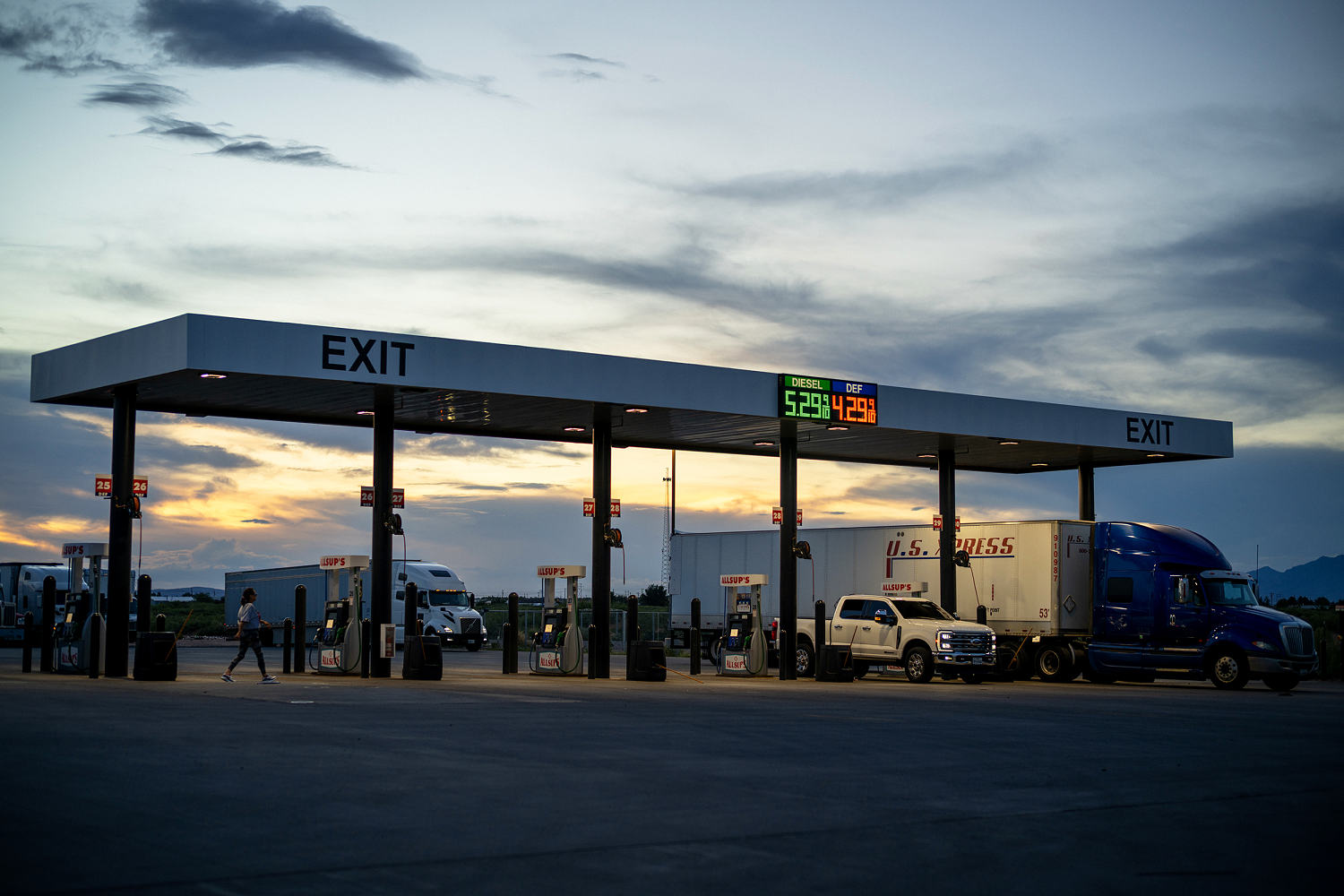
Furthermore, depressing crude valuations carries domestic political risks for any American administration. Cheaper fuel at the pump pleases motorists, but it can severely damage capital investment in domestic energy sectors, leading to layoffs and corporate consolidation in producing states like Texas, Oklahoma, and North Dakota. Navigating this tightrope requires careful calibration to avoid crippling domestic producers while achieving international objectives.
The Shadow Fleet Defense
Tehran is not passive in this fight. Over the past decade, a vast network of maritime evasion tactics has evolved.
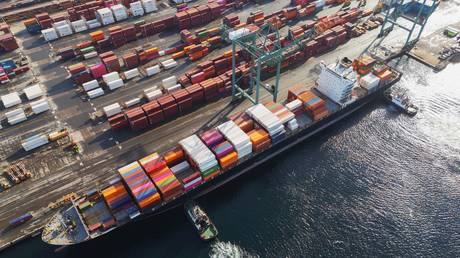
Old very large crude carriers change flags with impunity, transferring cargoes ship-to-ship in international waters near Malaysia and the Persian Gulf. These vessels turn off their automatic identification systems, going dark for days at a time to confuse satellite tracking. Buyers in East Asia, particularly independent refineries operating outside the Western financial system, snap up these discounted cargoes with enthusiasm.
When global crude prices fall, the discount required to move this illicit oil becomes too steep for intermediaries to justify the legal and financial risks. If legitimate Brent trades at sixty dollars, Iranian crude must trade at such a severe discount that the profit margin evaporates after factoring in insurance, bribery, and transport costs through hostile waters.
This is the hidden mechanism behind the administration's new focus. Low oil prices act as an invisible dragnet, catching what traditional naval interdiction misses.
Regional Fallout and Unintended Consequences
Every macroeconomic lever has recoil. Forcing crude valuations downward affects economies far beyond Tehran and Washington.
European allies, still weaning themselves off Russian energy, view volatile commodity markets with apprehension. Emerging market economies that rely on energy imports might find temporary relief, but global investment in alternative energy sources could stall if fossil fuels remain artificially cheap for extended periods.
Moreover, domestic stability in other oil-dependent nations hangs in the balance. States in Latin America and Africa that depend on petroleum exports face severe fiscal contractions when global prices drop, potentially creating new humanitarian crises and governance vacuums that require international intervention.
The administration calculates that these collateral effects are manageable compared to the primary objective of neutralizing a hostile nuclear threshold state. Whether that calculation holds true depends on the durability of global demand, particularly in expanding Asian economies that consume the lion's share of traded petroleum.
The campaign to starve Tehran of revenue through commodity depreciation represents a fundamental evolution in economic warfare. It moves past simple prohibition and targets the structural realities of global supply and demand. As production figures tick upward and diplomatic pressure intensifies behind closed doors, the coming months will test whether market forces can achieve what decades of traditional sanctions could not.
The barrels keep flowing, the tankers slip through the dark waters of the Gulf, and the ledger in Tehran grows redder by the day.