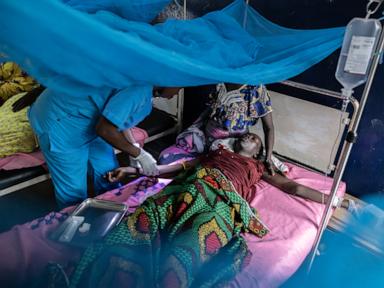
A pregnant woman forced to give birth on a dirt road in a conflict zone is a horrific image, but it is not an isolated tragedy. It is the predictable outcome of a systemic failure. When war tears through a region, the destruction of clinics, the looting of ambulances, and the flight of medical professionals are not just collateral damage. They are structural erasure. For pregnant women in fragile settings across the African continent, from the Central African Republic to the eastern Democratic Republic of the Congo and Sudan, the collapse of healthcare infrastructure transforms childbirth into a life-or-death gamble.
The primary query driving this crisis is simple: Why does conflict make childbirth so uniquely fatal? The answer lies beyond the immediate violence of bullets and bombs. War systematically dismantles the invisible networks of logistics, supply chains, and professional expertise required to keep a mother alive when complications occur. When a health system collapses, a manageable obstetric issue becomes an execution warrant.
The Logistics of Abandonment
International headlines frequently focus on the geopolitical movements of armed factions. What they miss is the tactical collapse of basic utility infrastructure. Consider what happens when an ambulance is looted or a rural road is heavily mined.
In a stable environment, a woman experiencing obstructed labor can be transferred to a regional hospital within the critical golden hour. In a active conflict zone, that transport network ceases to exist. Reports from conflict-addled regions like North Wollo in Ethiopia show that local health departments frequently lose their entire ambulance fleets to looting by armed groups.
Without institutional transport, families are forced to rely on commercial vehicles. In a wartime economy, fuel prices skyrocket, and the cost of hiring a private vehicle can surge by 500 percent overnight. For a displaced family living in a temporary camp, this financial barrier is absolute. They cannot pay. Consequently, the woman stays where she is, or she begins a grueling trek on foot.
The breakdown extends directly inside the remaining clinics. Modern obstetric care relies heavily on a handful of basic resources:
- Constant Electrical Power: Needed for newborn incubators, blood bank refrigeration, and surgical lighting.
- Sterile Surgical Packs: Essential for emergency cesarean sections to prevent lethal postpartum infections.
- Clean Running Water: Crucial for basic sanitation and preventing neonatal sepsis.
When regional power grids are sabotaged, doctors are forced to operate using cell phone flashlights. Laboratory testing stalls because generators cannot be run continuously due to fuel rationing. Clinicians are forced to diagnose severe pre-eclampsia or internal hemorrhaging based purely on visual symptoms, without basic blood panels or urinalysis.
The Human Resource Drain
A hospital building is only as effective as the professionals working inside it. Conflict triggers an immediate, aggressive brain drain of highly skilled medical workers who are forced to flee to safer urban centers or cross international borders as refugees.
The Central African Republic presents a stark manifestation of this math. For a population of roughly six million people, there are often fewer than twenty fully certified obstetrician-gynecologists practicing in the entire country. The vast majority of these specialists are concentrated in the capital city of Bangui. In the remote provincial interior, specialized maternal care is practically non-existent.
The burden of care falls squarely on traditional birth attendants or community volunteers who lack the training, surgical equipment, and pharmaceutical supplies to manage severe complications. A traditional midwife can guide a normal, uncomplicated delivery by instinct and experience. However, she cannot perform a surgical intervention for a ruptured uterus, nor can she administer intravenous magnesium sulfate to halt an eclamptic seizure.
Furthermore, the frontline healthcare workers who choose to stay behind face immense psychological trauma and physical insecurity. Midwives and nurses regularly work thirty-six-hour shifts under the threat of bombardment or armed incursions. Anxiety and chronic stress among healthcare staff reduce the quality of care, while the constant fear of violence prevents pregnant women from seeking prenatal checkups altogether. They stay hidden in the bush or in overcrowded displacement camps until the final, agonizing moments of labor force them into the open.
The Cultural Premium on Home Deliveries
To truly understand why maternal mortality rates remain stubbornly high in conflict zones, one must look at the intersection of structural collapse and deep-seated cultural dynamics. Western humanitarian frameworks often assume that if you build a temporary clinic, women will automatically use it. Reality on the ground is far more complex.
In many traditional communities across sub-Saharan Africa, giving birth at home without medical intervention is viewed as a supreme badge of honor and personal strength. A woman who delivers on her own kitchen floor or in her family compound is celebrated as resilient. Conversely, a woman who seeks emergency care at a formal hospital or a humanitarian field tent can face social stigma, marked by peers as weak or incapable.
[Traditional Home Birth] --------> Viewed as a sign of cultural strength
                                       |
                                       v
[Systemic Complication]  --------> Delayed transfer to clinic due to stigma
                                       |
                                       v
[Catastrophic Outcome]   --------> Fatal hemorrhage or obstructed labor
When conflict forces families into camps for internally displaced persons, these cultural pressures do not evaporate; they intensify. In a chaotic environment where refugees have lost their homes, their livelihoods, and their societal status, clinging to familiar cultural practices becomes a defense mechanism.
Furthermore, many public health facilities in fragile states struggle with documented instances of obstetric violence. Overworked, underpaid, and unsupervised staff in under-resourced clinics have been documented using verbal abuse, mockery, or physical coercion against laboring women. When a vulnerable pregnant woman hears rumors that nurses at the nearest district hospital treat patients with contempt, she will choose the isolation of her tent or a dirt path over the indignity of a clinical ward.
Rethinking the Humanitarian Intervention
The standard international response to a maternal health crisis in a war zone is often predictable: ship in generic reproductive health kits and erect temporary nylon medical tents. This approach treats a systemic structural failure as a temporary logistics bottleneck. It fails because it ignores the reality of long-term state fragility.
To alter the trajectory of maternal mortality in conflict zones, international donors and non-governmental organizations must shift toward localized, adaptive healthcare strategies.
Decentralizing Care Through Mobile Midwifery
Instead of expecting heavily pregnant, malnourished women to navigate active frontlines to reach a centralized hospital, health systems must deploy agile, mobile medical teams. These teams move directly into displacement camps and remote villages, providing prenatal monitoring, treating severe anemia, and identifying high-risk pregnancies before labor begins.
Formal Integration of Traditional Birth Attendants
Rather than trying to eliminate traditional home births through edicts, formal health networks should train traditional midwives as primary triage lookouts. By teaching these trusted community figures how to recognize the early warning signs of postpartum hemorrhage or obstructed labor, they become a vital early-warning network that can initiate emergency evacuations before it is too late.
Establishing Maternity Waiting Homes
For women living in highly insecure sectors, humanitarian organizations can construct low-cost, secure residential structures adjacent to functioning hospitals. High-risk mothers can move into these waiting homes during their final weeks of pregnancy, ensuring that when labor begins, they are already within walking distance of an operating theater, completely bypassing the danger of mined roads and broken transport networks.
The staggering loss of life among pregnant women in conflict zones is not an inevitable byproduct of warfare. It is the direct consequence of allowing the structural foundation of healthcare to be systematically dismantled without a resilient, localized alternative to take its place.