The Silent Epidemic Below the Surface
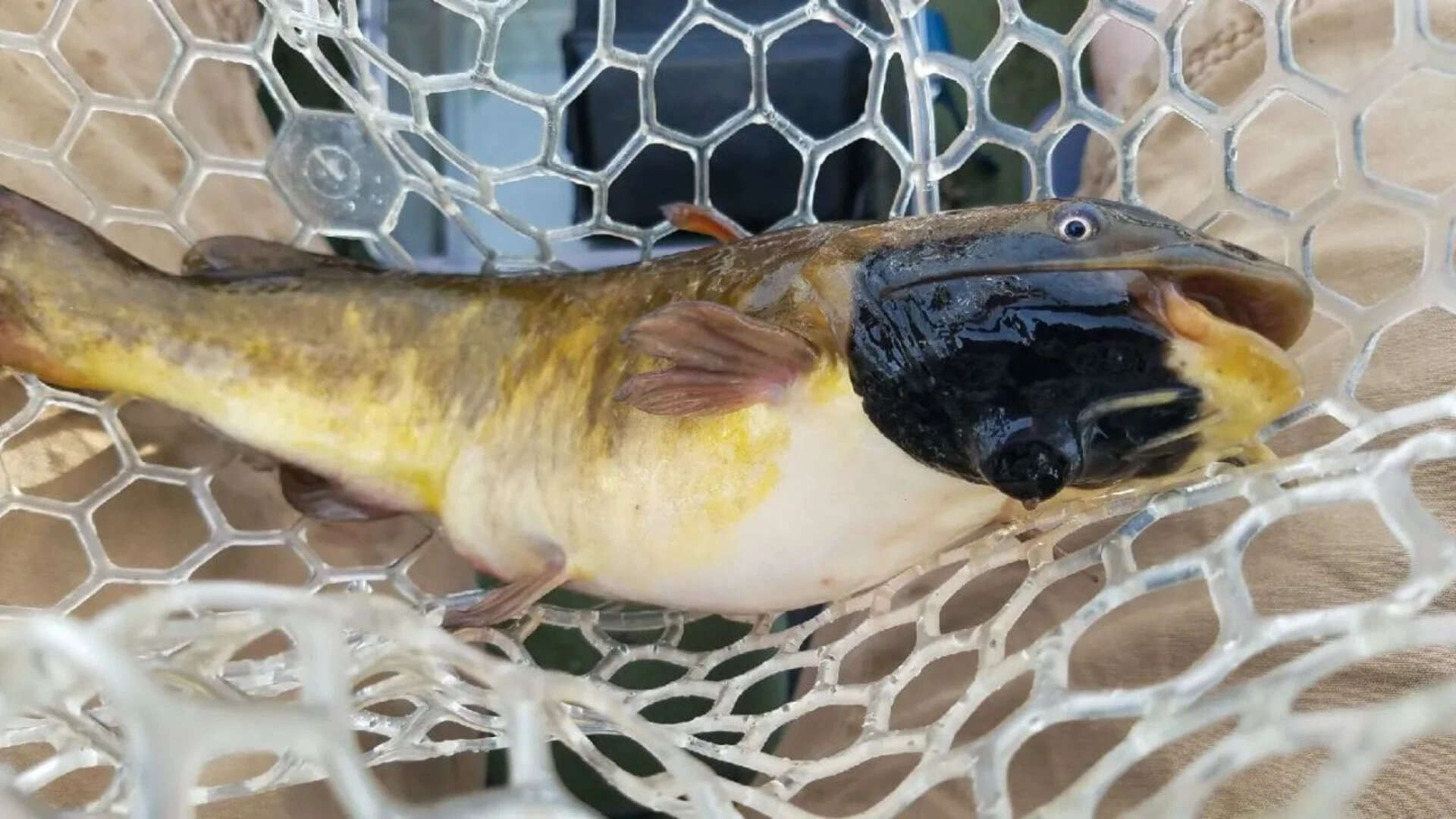
A creeping biological anomaly has taken hold of Vermont’s waters. Scientists have confirmed that roughly thirty percent of the brown bullhead catfish population in a prominent Vermont lake suffers from a transmissible cancer, a rare and alarming phenomenon where living cancer cells pass directly from one animal to another like an infectious contagion. This is not a standard tumor caused by genetic mutation or localized pollution. It is a living, spreading contagion moving through the benthic zone with quiet efficiency.
When marine biologists first flagged abnormal growths on bottom-dwelling fish, the initial working assumption pointed toward standard industrial runoff or localized carcinogens. Standard protocol dictated water sampling, chemical assays, and sediment profiling. Instead, genetic sequencing revealed something far more unsettling. The malignant cells found inside these catfish do not originate from the host's own DNA. They belong to a distinct, transmissible cell line that passes from fish to fish through physical contact, open wounds, or environmental shedding.
For decades, contagious cancers were thought to be evolutionary anomalies restricted to a handful of terrestrial mammals, most notably Tasmanian devils battling facial tumor disease and dogs transmitting canine transmissible venereal tumor. Aquatic transmissible cancers remain an uncharted frontier in veterinary pathology. Finding such a high prevalence in a single freshwater ecosystem forces researchers to rethink how pathogens spread in aquatic environments.
The immediate reality for the lake is stark. Nearly a third of a primary native species carries a malignant, contagious disease. Yet, the broader implications stretch far beyond a single Vermont fishery. If transmissible cancers can establish a foothold in wild freshwater populations at this scale, the scientific community faces a blind spot in how aquatic epidemics are monitored, contained, and understood.
Mechanics of a Contagious Malignancy
Understanding how a cancer behaves like a virus requires throwing out conventional medical intuition. Normally, a tumor forms when an organism's own cells mutate, multiply uncontrollably, and eventually die with the host. A transmissible cancer breaks this terminal rule of biology. These rogue cells function as independent unicellular parasites. They evade the recipient's immune system, establish residency, and grow into lethal tumors without any genetic relation to the host body.
In the case of the Vermont brown bullhead catfish, the bottom-feeding habits of the species create a high-risk vector network. Bullheads spend their lives routing through sediment, stirring up detritus, and interacting in dense aggregations during spawning seasons. Open abrasions are common. As infected fish brush against healthy counterparts, the loose malignant cells find an entry point. Once inside a new host, the alien cells evade immune recognition by downregulating surface proteins that would otherwise trigger a violent rejection response.
Laboratory analysis of these tumors shows a startling degree of genetic stability within the cancer cell line itself. It evolves, but it does so independently of the fish it inhabits. This mirrors the behavior of rogue cell lines observed in marine bivalves, such as the disseminated neoplasia affecting soft-shell clams and mussels along North America's coasts. However, documenting this level of horizontal cancer transmission in a freshwater teleost fish is exceptionally rare.
The pathology moves slowly, which makes tracking it an exercise in frustration. An infected catfish may swim normally for months while the internal burden increases. By the time external lesions become visible, the disease is advanced. This insidious timeline explains why initial field surveys missed the creeping scale of the outbreak. Wildlife officers cannot spot an invisible microbial-like cancer lineage with a casual visual inspection. It requires molecular diagnostics, tissue biopsies, and patient genomic tracking that standard state-level wildlife monitoring budgets rarely accommodate.
Environmental Stressors and the Amplification Loop
Ecosystems do not break down in a vacuum. A pathogen requires the right environmental conditions to achieve high prevalence, and the Vermont lake in question presents a textbook case of compounding ecological stressors. Rising water temperatures, shifting nutrient loads, and historical heavy metal accumulation in the sediment create a pressure cooker for bottom-dwelling species.
Brown bullheads are notoriously resilient fish. They tolerate low oxygen levels and high turbidity better than most game fish, which is precisely why biologists use them as sentinel species. When a sentinel species begins to fail, the entire lake's biosecurity is compromised. Chronic exposure to agricultural runoff and urban drainage weakens the baseline immune competence of the fish population. A suppressed immune system offers zero resistance to invading alien cells.
Furthermore, thermal stress plays a direct role in tumor proliferation. As shallow lake waters warm during prolonged summer months, metabolic rates increase while dissolved oxygen drops. This physiological strain accelerates cellular division rates. For a transmissible cancer cell line, a stressed host is an ideal incubator. The biological friction that would normally suppress abnormal tissue growth simply ceases to function efficiently under thermal duress.
Habitat fragmentation also isolates fish populations, concentrating them into smaller, warmer pockets during low-water periods. High-density crowding acts as an accelerant for any contact-based disease. The combination of chemical burden, thermal fatigue, and spatial compression forms an amplification loop. The cancer is not just surviving; it is exploiting the structural vulnerabilities of a changing environment.
The Broader Threat to Freshwater Biosecurity
State agencies and academic researchers are now racing to determine whether this transmissible cancer is an isolated local mutation or a symptom of a wider regional crisis. If contagious malignancies can jump between fish in one freshwater system, nothing prevents the phenomenon from appearing in neighboring watersheds. The vectors of spread are not limited to natural fish migration. Live-well transport by anglers, avian predators carrying skin fragments, and connected river basins all serve as potential pathways for cross-contamination.
Current regulatory frameworks for fisheries management are entirely unequipped to handle transmissible cancers. State fish and game departments screen for viral hemorrhagic septicemia, whirling disease, and various bacterial pathogens. They test for parasites. They do not screen for malignant cell lines. A batch of apparently healthy catfish transferred from an infected water body to stock a private pond or another public lake could easily introduce the cancer cell line into a pristine ecosystem without tripping a single biosecurity alarm.
The economic and ecological fallout could be severe. While brown bullheads are not typically prized as premier sportfish compared to trout or bass, they occupy a critical ecological niche. As top-tier benthic carnivores and scavengers, they regulate invertebrate populations and cycle nutrients through the benthic-pelagic coupling. A sudden collapse in their numbers alters the trophic balance of the lake, triggering secondary effects on macroinvertebrate populations, water clarity, and predator dynamics.
Researchers examining the tissue samples face a daunting diagnostic landscape. Distinguishing between standard environmental carcinogen-induced tumors and true transmissible cancer requires advanced genomic sequencing that is costly and time-consuming. Funding for wildlife disease surveillance remains chronically under-resourced, forcing academic labs to rely on piecemeal grants while an active marine cancer epidemic unfolds in real time.
The discovery in Vermont forces a reckoning with how we define contagion in the natural world. Pathogens are no longer confined to viruses, bacteria, and fungi. Sometimes, the pathogen is a piece of a living animal, detached and autonomous, hunting for a new home in the dark waters of a stressed lake.