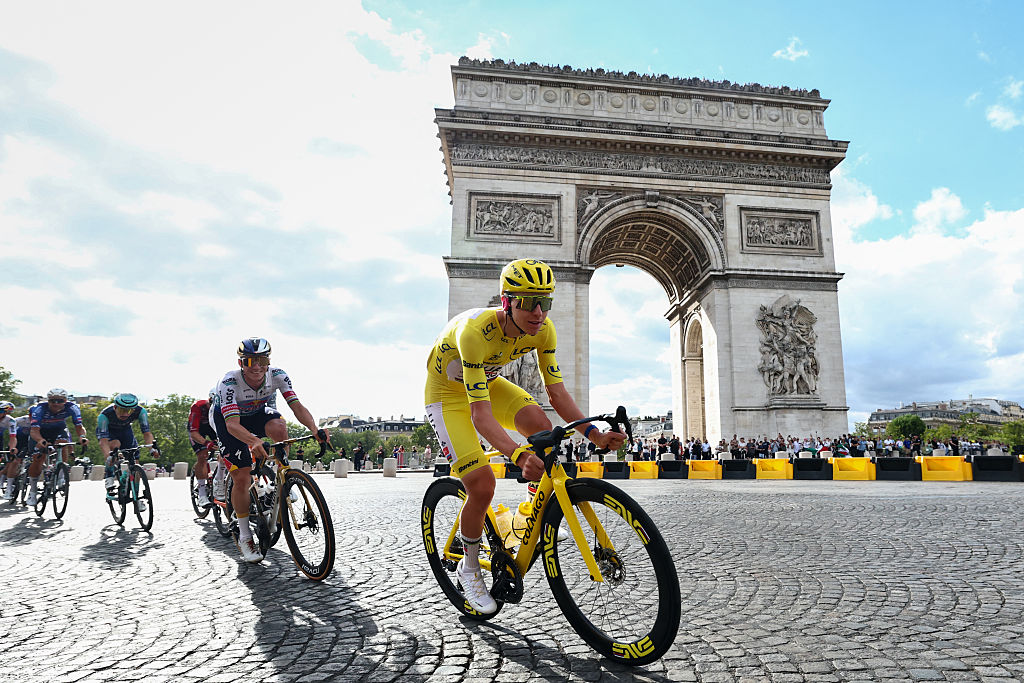
The modern Grand Tour is designed to suffocate anomalies. Every calorie is weighed, every aerodynamic drag coefficient is wind-tunnel tested, and every tactical decision is filtered through the cold mathematics of power meters. Stage 6 of the 2026 Tour de France from Pau to Gavarnie-Gèdre was supposed to be a standard sorting mechanism of the high mountains. Instead, Tadej Pogacar turned a routine Pyrenean test into a demolition derby that vaporized the general classification and redefined what is possible in modern stage racing.
When UAE Team Emirates-XRG orchestrated their long-range assault on the Col du Tourmalet, they did not just attack a bike race. They shattered the psychological baseline of the peloton.
The Anatomy of a Forty-Kilometre Ambush
Most contenders wait for the final three kilometres of a hors catégorie climb to launch their moves. They test the waters, look for weakness, and rely on numbers. Pogacar threw out the rulebook 4.1 kilometres from the summit of the Tourmalet.
The acceleration was violent. Isaac del Toro had already shredded the elite group down to a skeletal remains of GC contenders, burning through teammates until only the heavy hitters survived. When Pogacar stood on the pedals, the acceleration did not look like a threshold effort. It looked like an absolute rejection of the field's authority.
Consider the mechanics of what followed. A forty-kilometre solo flight over the remainder of the Tourmalet, down its treacherous technical descent, and up the concluding slopes to Gavarnie-Gèdre is a tactical absurdity. Wind resistance dictates that solo riders bleed watts at an alarming rate compared to a functional chasing group. Yet Pogacar did not just maintain his advantage. He grew it.
Jonas Vingegaard, a rider engineered precisely for high-altitude attrition, was left stranded. By the time Vingegaard crossed the line at Gavarnie-Gèdre, the deficit had ballooned to two minutes and forty seconds.
Weaponizing the Early Mountain Stage
To understand the true weight of Stage 6, look at the leaderboard context heading into the morning. Overnight leader Torstein Træen sat comfortably atop the general classification, holding a massive cushion of nearly eight minutes after early-race chaos. The narrative in the press room suggested a cautious opening week in the high mountains where the favourites would probe gently and save their bullets for the third week.
Pogacar and his squad smelled blood in the thin Pyrenean air.
By executing a brutal pacing strategy that discarded traditional conservation, UAE Team Emirates-XRG forced an immediate systemic collapse. Træen cracked under the relentless tempo before the summit even arrived, later compounding his misery with a crash on the descent. The seven-minute deficit vanished into the mountain mist. The yellow jersey returned to its most dominant proprietor, but the psychological cost inflicted on the rest of the roster was immeasurable.
When a rider takes over the race lead with three weeks still remaining through a forty-kilometre solo raid, the dynamic shifts from competition to damage control.
The Erosion of the Chase Group
Behind the Slovenian maestro, a secondary race unfolded among the remaining podium aspirants. Remco Evenepoel and other elite climbers tried desperately to establish an organized pursuit, but the chaotic nature of the terrain neutralized cooperative pacing.
Modern team tactics often neutralize long-range attacks through sheer numbers and radio communication. Here, the sheer velocity of the offensive rendered sports directors' ear-piece instructions useless. Riders were reduced to raw physiological limits. If your threshold was 450 watts and Pogacar was operating in an entirely different thermodynamic bracket, mathematics ceased to matter.
This is where Grand Tour racing separates itself from other endurance sports. There are no timeouts. There is no drafting behind a teammate when the road pitches upward at ten percent and the yellow jersey is disappearing up the switchbacks.
The Unforgiving Reality of the Yellow Jersey
Holding the leadership mantle from the first major mountain stage onward changes the burden of control. In previous eras, a team might prefer to let a breakaway soak up energy and wear yellow for a week or two. Pogacar and his management accepted the heavy yoke immediately.
They realized that leaving an unpredictable gap in the high mountains invites danger. By seizing total control on the Tourmalet, they removed ambiguity.
The rest of the race became a grueling exercise in survival. Rivals were forced to rethink every tactical ambition, shifting from offensive strategies to desperate attempts to plug leaks in their respective team structures. Illness and crashes would later test UAE's depth, but the foundational architecture of the race had already been poured in concrete on the slopes of the Pyrenees.
History will record this edition of the Tour through the lens of utter supremacy. Long after the carbon frames are retired and the power files are archived, the memory of that afternoon in July will remain the standard by which all aggressive mountain raids are measured.
The peloton rolled out of Pau looking for a test. They found an executioner.