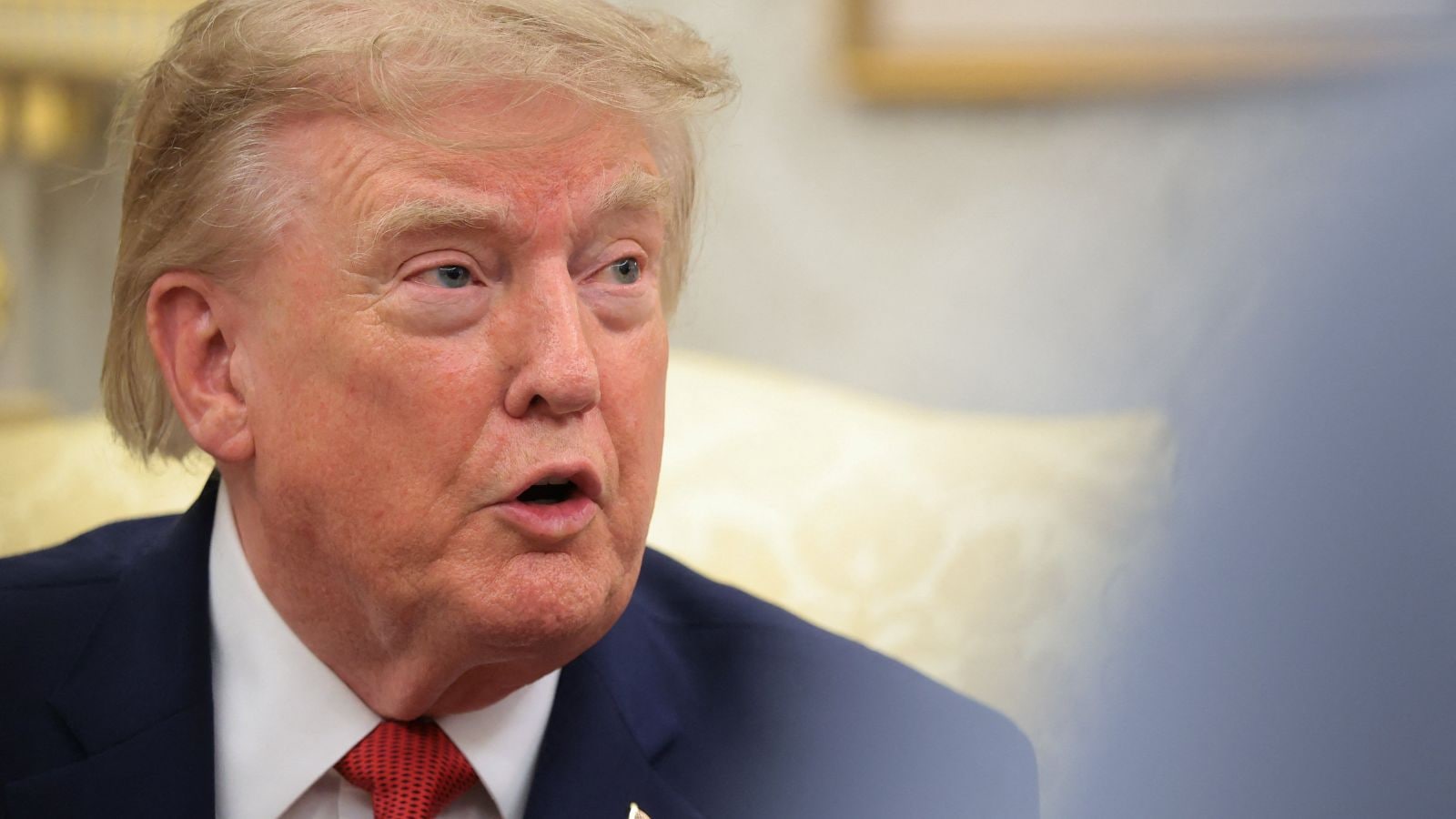
President Donald Trump declared that international waters within the Strait of Hormuz are completely free of naval mines, backing the announcement with a blunt warning that any Iranian vessel attempting to seed the crucial energy corridor anew faces total destruction.
The declaration attempts to project absolute operational control over a narrow maritime chokehold where global commerce hangs by a thread. Yet, declaring a vital waterway clear of explosives is far simpler than keeping it safe. Beneath the surface claims of zero-tolerance policies and orbital surveillance, the underlying vulnerabilities of the global energy supply chain remain completely unaddressed.
The Anatomy of a Maritime Chokehold
The Strait of Hormuz is barely twenty-one miles wide at its narrowest point, with inbound and outbound shipping lanes squeezed into just two-mile-wide channels separated by a buffer zone. This geographic bottleneck handles millions of barrels of oil daily, down heavily from pre-conflict highs, yet still serving as an indispensable artery for international markets.
When state actors or asymmetric forces deploy naval mines into such confined geographies, clearing them requires grueling, high-risk mine countermeasures operations. Even when sweeping assets successfully detonate or retrieve identified ordnance, verifying a hundred percent clearance rate is notoriously difficult.
Ocean currents shift. Silt moves. Remnants of older explosive devices drift into unpredictable configurations.
Declaring the waters demined is a political necessity designed to calm jittery commodity markets and reassure shipping insurers. Maritime intelligence veterans know that absolute clearance is a myth. A single floating contact mine hidden beneath a passing tanker's radar profile can rewrite the risk calculation overnight.
Surveillance Rhetoric Versus Tactical Reality
The White House pointed directly to the United States Space Force as the ultimate guardian of the passage, asserting that overhead assets are watching every square inch of the waterway.
Orbital assets and high-altitude reconnaissance provide extraordinary persistent stare capabilities. They track surface vessels, monitor port departures, and flag unusual loitering behavior.
Satellites cannot look underwater.
Iran does not need massive surface fleets to disrupt traffic in the Gulf. Asymmetric deployment relies on small, low-profile craft, modified dhows, and autonomous underwater vehicles capable of slipping out of obscure coastal inlets under the cover of darkness. By the time orbital tracking registers an unauthorized movement, an explosive package can already rest on the seabed or drift neutrally in the current.
Relying on space-based oversight to deter subsurface mining is a strategic mismatch. Space assets detect macro actions, while naval mining is an inherently micro, clandestine operation.
The Economic Toll of Persistent Anxiety
Commercial shipping operates on margins of predictability. When insurance syndicates label a region a high-risk war zone, premium costs skyrocket, regardless of official declarations from the podium.
Tanker operators do not base their multi-million-dollar cargo movements on optimistic political declarations. They monitor hull insurance rates, crew willingness to enter contested zones, and actual vessel tracking data.
Even with the official announcement that international lanes are cleared, total transit volumes remain a fraction of their historical baseline. Major shipping lines remember previous escalations, recurring tanker seizures, and the persistent threat of asymmetric harassment.
Anxiety persists because the root geopolitical friction between Washington and Tehran remains unresolved. Temporary lulls in direct military exchanges or diplomatic overtures mediated by regional partners do not equate to a durable peace.
The Zero-Tolerance Trap
Enforcing a strict policy of zero tolerance against mine placement creates an escalatory loop. If a warning is absolute, any ambiguous movement by an Iranian Revolutionary Guard Corps boat near the shipping lanes risks an immediate, kinetic response from American forces.
That dynamic converts a routine maritime policing action into a potential trigger for renewed all-out war.
Deterrence only works if the adversary believes the threatened cost outweighs the perceived gain. For Tehran, asymmetric naval disruption remains one of the few asymmetric leverage points left against a crushing Western economic pressure campaign. When conventional military parity is entirely absent, unconventional weaponization of geography becomes the default strategy.
Clearing the physical metal from the water does nothing to alter that strategic calculation.
Maritime security in the Persian Gulf cannot be solved by a presidential decree or an overwatch satellite alone. It requires sustained diplomatic architecture, local buy-in from multiple littoral states, and a recognition that the physical removal of explosives is merely the first, easiest step in a long, precarious process of reopening the world's most sensitive energy corridor.
The mines may be gone from the shipping lanes today, but the incentive structure that put them there is fully intact.