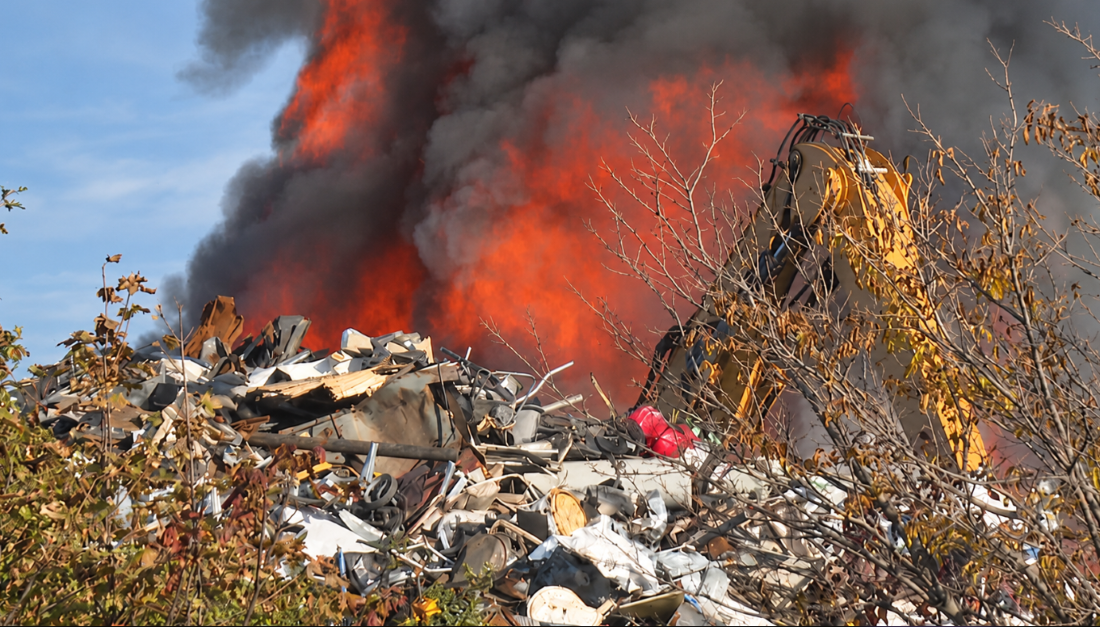
A massive blaze at a scrap metal yard in Kingston does more than send dark plumes over industrial blocks; it exposes a systemic blind spot in how modern recycling facilities operate and why local fire crews face extreme hazards when metal piles ignite. Most coverage stops at sirens, smoke plumes, and traffic delays. Look closer at the material chemistry, site geometry, and regulatory gaps behind a scrap metal yard fire, and you see an industrial model running hotter and riskier than its perimeter fences suggest.
On paper, scrap metal sounds non-combustible. Steel beams, copper wire, aluminum siding, and brass fittings do not burn like timber or stacked pallets. Out on the yard floor, reality looks very different. Modern scrap piles are dense, uneven mixtures of metal and flammable residue: oil-soaked turnings, grease-coated machinery parts, polyurethane foam from stripped appliances, plastic wire insulation, and occasional misidentified lithium-ion batteries or pressurized containers tucked deep inside incoming loads. Once heat builds inside a mound forty feet high, metal acts less like a firebreak and more like a heat trap.
I have covered industrial incidents, municipal budgets, and heavy manufacturing beats long enough to recognize the pattern before the smoke clears. Standard breaking news treats a scrap metal yard fire as a freak accident or an isolated flare-up. In practice, these fires follow predictable mechanics rooted in volume growth, supply chain shortcuts, and strained municipal oversight.
Why Metal Piles Burn Like Tinders
People picture a scrap yard as cold iron and quiet cranes. Walk past the weighbridge on a warm afternoon and you hear a very different story: shear blades clipping through car frames, loaders pushing loose shavings into towering windrows, and fluid dripping from discarded transmissions.
Heat enters a metal pile from several directions at once. Mechanical friction during shearing, shredding, or torch cutting generates localized sparks and hot fragments that fall unseen into crevices. Spontaneous heating occurs when fine metal turnings or chips coated in cutting oils and moisture oxidize slowly inside an unventilated stack. Even radiant solar heat on dark, oil-sheened debris can raise surface temperatures enough to trigger smoldering in dry insulation or foam.
Consider a hypothetical example to see how a small ignition turns into an all-hands alarm. Suppose a truck arrives with mixed industrial scrap containing oily steel shavings and a discarded power-tool pack buried near the center of a load. A loader dumps the material onto an existing pile. Hours later, thermal stress or a short circuit starts a slow, oxygen-starved smolder ten feet below the surface. By the time gray smoke curls out of the top ridge, a deep heat pocket is already established.
Water thrown onto the outside of that pile often hits a wall of hot metal and turns to steam before reaching the seat of the fire. Worse, high-pressure streams can wash oily residue and contaminated runoff straight toward storm drains or nearby waterways. Fire commanders know that attacking a deep-seated scrap fire requires patience, heavy machinery to pull piles apart, and steady water supply—often under conditions where collapsed stacks can shift without warning.
The Hidden Hazards Inside Every Load
Scrap processing has changed dramatically over the past twenty years. Consumer electronics, electric power tools, mobility scooters, and industrial equipment pack energy-dense batteries and complex polymers into everyday goods. Yet intake inspections at busy yards remain fast and visual.
A buyer at a scale house has seconds to judge a load's value and spot obvious contraband. Hidden items slip through every day. Lithium-ion batteries are chief among them. When crushed by a grapple or heated by an adjacent smolder, damaged cells can enter thermal runaway, venting flammable gases and reigniting long after crews believe a section is blacked out.
Pressurized cylinders—propane tanks, refrigerant bottles, or aerosol cans—pose another threat. If one ruptures inside a burning stack, it can launch shrapnel or feed a sudden jet of flame right toward an apparatus parked too close to the perimeter.
Runaway Smoke and Toxic Plumes
When a scrap metal yard fire sends a heavy column of smoke into the sky, the visual drama often overshadows what is suspended in the plume. Burning plastics, rubber coatings, coatings on galvanized or painted metals, and residual lubricants produce complex mixtures of particulate matter, carbon monoxide, and irritant gases.
Neighborhoods downwind feel the consequences immediately. Residents close windows, schools or businesses adjust operations, and municipal officials face urgent questions about air quality that rarely have instant, simple answers. Smoke behavior shifts with wind speed, inversion layers, and how aggressively crews break apart the fuel bed. Pulling a pile apart with an excavator exposes glowing material to fresh air, which can spike flame height and smoke output for a short stretch before cooling and suppression take hold.
Water Supply and Site Layout Realities
Many scrap yards sit in older industrial zones built decades before current pile-height expectations or modern fire-flow demands existed. Narrow access lanes, tight turning radii for ladder trucks, and stacked inventory right up to property lines complicate apparatus placement.
Fire crews frequently rely on high-volume water relay operations, pulling from municipal hydrants or drafting from nearby water sources when on-site storage is limited or nonexistent. If hydrants sit on older distribution mains, heavy drafting can drop line pressure across adjacent blocks. Every minute spent establishing water supply or waiting for heavy equipment to clear a path gives deep-seated heat more time to spread laterally through the pile.
Where Regulation and Reality Collide
Few industries sit at such an awkward intersection of commerce, environmental protection, and municipal safety. Scrap metal yards are essential economic infrastructure: they keep usable metals circulating, feed steel mills and foundries, and give residents and contractors a place to clear out bulky equipment.
At the same time, thin profit margins and volatile scrap prices squeeze operators. Moving more tonnage per shift keeps the lights on. Stacking material higher saves scarce yard acreage. Neither pressure naturally favors wider fire lanes, smaller piles, or slower intake screening.
| Operational Factor | Everyday Yard Practice | Fireground Consequence |
|---|---|---|
| Pile Height and Density | High, tightly packed mounds maximize storage on limited land | Deep-seated heat stays insulated; exterior water struggles to penetrate |
| Incoming Load Screening | Rapid visual checks at scale or drop-off points | Hidden batteries, oils, and cylinders enter active processing zones |
| Equipment and Hot Work | Cutting torches, shears, and loaders run continuously near debris | Sparks and friction ignite trapped combustibles out of sight |
| Site Access and Spacing | Inventory stored close to fences, drives, and structures | Tight maneuvering room for fire apparatus; higher exposure risk |
Oversight is rarely simple either. Depending on jurisdiction, authority over a scrap facility may be split across municipal fire prevention bureaus, zoning offices, environmental agencies, and local police licensing units. A site can pass one narrow inspection while carrying serious fire-load risks that no single agency tracks end-to-end.
The Counter-Argument Nobody Likes to Hear
Cracking down hard on scrap yards sounds straightforward until you trace the ripple effects. Aggressive rules that force smaller piles, strict sorting mandates, or costly suppression infrastructure can push marginal operators out of business.
When legitimate yards close or restrict intake, scrap does not simply vanish. Some of it ends up in illegal dumping, backyard burning, or informal roadside collection where safety controls are zero. Even well-run facilities face genuine trade-offs: sprinkler systems designed for clean warehouses do not work the same way on shifting outdoor piles of jagged metal and debris, and constant excavator work carries its own operator hazards.
Honest risk management does not pretend there is a painless silver bullet. It recognizes that fire prevention in heavy recycling depends on practical day-to-day discipline—separating high-risk materials before they hit the main piles, keeping fire lanes clear even when inventory surges, and maintaining realistic pre-incident plans between operators and local fire departments.
What Fire Crews and Communities Watch Next
Once active flames are knocked down at a scrap metal yard fire, the hardest work often stretches into overhaul and investigation. Hot spots can lurk beneath twisted metal for hours or days. Investigators examine security footage, work logs, weather conditions, and pile layout to determine how ignition started and how fast fire moved through the yard.
For residents living near industrial corridors, the practical questions are grounded and immediate. How old is the facility's site plan? Are piles kept at manageable heights and distances from property lines? Does the local fire department have current pre-plan access and clear water-supply routes before an emergency starts?
Every major yard fire is a warning shot for every other metal recycler operating with similar habits and similar blind spots. Until pile geometry, battery screening, and site access get the same daily attention as commodity prices, another column of black smoke is never more than one spark away.