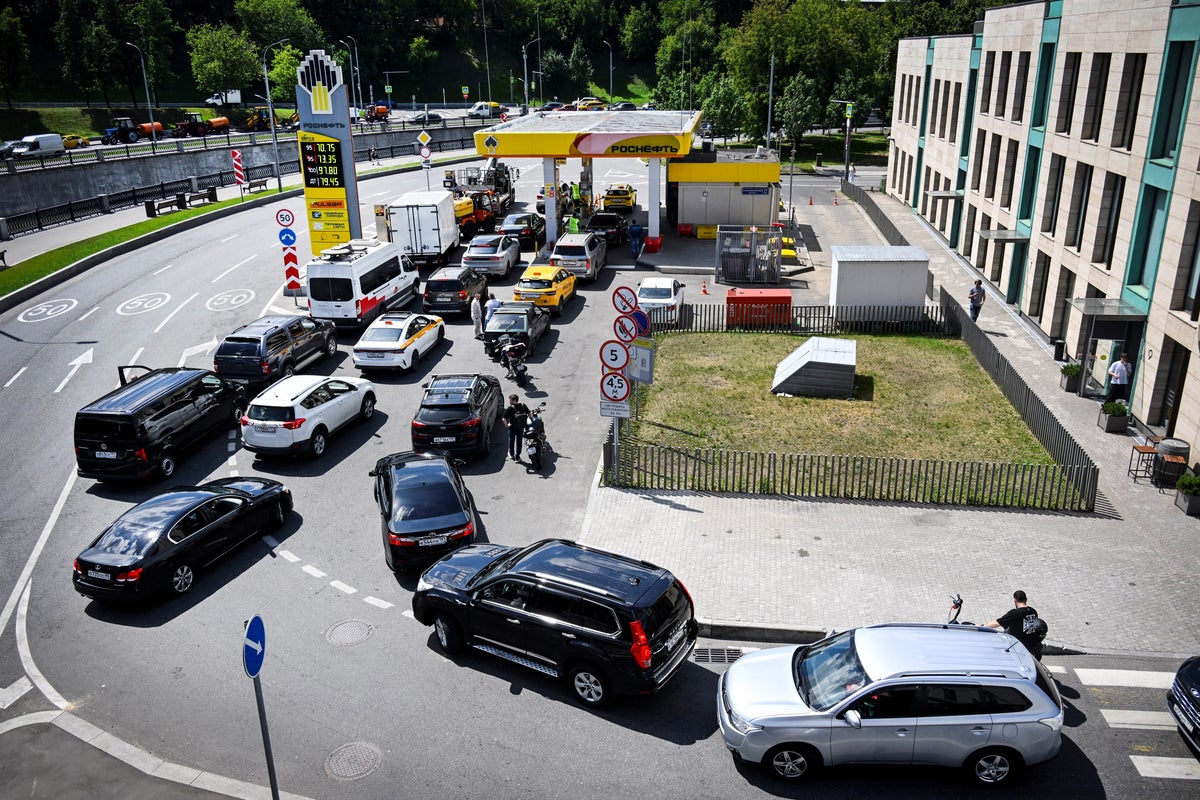
Domestic fuel shortages are forcing Russian drivers into desperate measures as gasoline and diesel supplies dry up across key agricultural and southern regions. This isn't a temporary logistical hiccup. It is the direct consequence of systemic economic cannibalism, where state-mandated price caps, lucrative export incentives, and a wave of Ukrainian drone strikes on refining infrastructure have combined to choke the internal market. The Kremlin is running out of tools to keep the pumps flowing while simultaneously funding its war machinery.
For months, regional hubs from Rostov to Volgograd have reported empty stations, rationing, and skyrocketing wholesale prices. The crisis strikes at the heart of Russia’s social contract. The government implicitly promises cheap energy in exchange for political compliance. That contract is fracturing.
The Perfect Storm Behind the Pumps
To understand why a global energy superpower cannot supply its own gas stations, one must look at the mathematical trap the Kremlin built for itself.
Russia operates on a "damping mechanism." This is a complex regulatory system where the government subsidizes domestic oil refiners when global crude prices are high, making it profitable for them to sell fuel at home below market value. When global prices fall, refiners pay the state back.
It worked, until the finance ministry cut those payouts in half to save cash for the military budget.
Refiners faced an overnight collapse in profitability. Selling a ton of gasoline inside Russia suddenly became dramatically less profitable than smuggling it across the border or selling it to international buyers via shadow fleets. The math changed. Profit margins evaporated. Consequently, oil companies prioritized international buyers, leaving independent domestic fuel stations with empty tanks or extortionate wholesale bills.
Drones, Outages, and the Logistics Chokepoint
Economic policy is only half the disaster. The physical infrastructure is failing.
Ukrainian long-range drone strikes have systematically targeted the vulnerabilities of Russian oil processing. Refineries are not easily repaired under a regime of strict Western technology sanctions.
- Fractionation Towers: These massive, specialized columns separate crude oil into different fuel components. They require advanced Western-made software and metallurgy to replace. When a drone hits one, the refinery's capacity drops by half for months.
- The Turnaround Crisis: Regular spring and autumn maintenance cycles are taking twice as long because engineers must source counterfeit or third-party spare parts through circuitous supply chains in East Asia.
This has created a geographic mismatch. Most of Russia’s functional refining capacity sits deep in the interior or the north. The deficit is most acute in the south, the nation's breadbasket.
The Railway Traffic Jam
Fuel cannot get to where it is needed. The state-owned railway network, RZD, is completely overwhelmed. Military transport moving troops, ammunition, and heavy armor toward the Ukrainian front lines holds absolute priority on the tracks.
Tanker cars filled with civilian gasoline sit in railyards for weeks, waiting for a clearance slot that never comes. By the time the fuel arrives at a regional depot, local stations have already been dry for days. Farmers during harvest season are left stranded, watching their crops rot because they cannot secure the diesel required to run combine harvesters.
The Illusion of the Export Ban
In an act of political panic, Moscow implemented temporary bans on gasoline exports to stabilize the home market. It was a blunt instrument that failed to solve the underlying disease.
Banning exports forces a temporary glut into the domestic market, driving wholesale prices down for a brief window. But it does nothing to fix the broken damping mechanism or the damaged refineries. Instead, it chokes off the hard foreign currency inflows that the state desperately needs to sustain its currency and fund imports.
When the government lifts the ban out of economic necessity, the bleeding resumes immediately.
Independent gas station owners are the first to die out. Unlike state-backed giants like Rosneft or Lukoil, independent operators do not own their own refineries. They buy at high wholesale prices and are legally barred from raising retail prices past a certain threshold set by local authorities terrified of public anger. They are caught in a vice. Hundreds of stations have shut down entirely, reducing the fueling network outside of major metropolitan areas to a skeletal state.
The Black Market Emerges
When legal systems fail, gray markets fill the void.
A thriving underground economy has taken root across the southern federal districts. Wholesale fuel destined for industrial agricultural enterprises is routinely siphoned off and sold on the roadside from the backs of unmarked trucks. Drivers use encrypted messaging channels to track which stations have received deliveries, creating flash-mobs at the pumps that drain a station’s entire weekly supply in a matter of hours.
This panic buying exacerbates the shortage. It turns a structural deficit into a psychological stampede.
Moscow's options are narrowing. They can fully restore the multi-billion-dollar subsidies to refiners, which would blow a massive hole in an already strained federal budget. They can allow retail prices to skyrocket, which risks genuine civil unrest in regions already bearing the brunt of military mobilization. Or they can continue with stop-gap export bans that slowly starve the state of hard currency. There is no clean exit ramp. Every choice carries a prohibitive political or economic price tag.