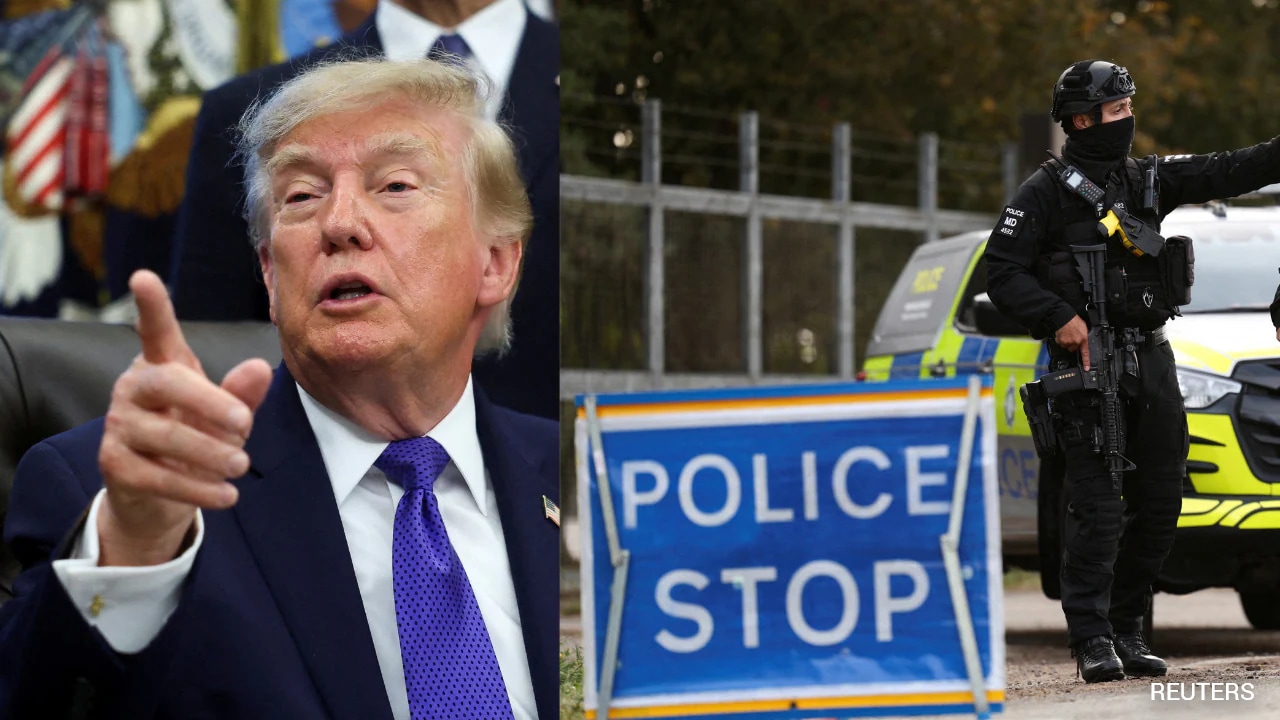
The friction between Washington and London over counterterrorism standards burst into public view following the arrest and subsequent bail release of suspects tied to an alleged terror plot against RAF Fairford. When British authorities chose to release the detained individuals on bail rather than holding them indefinitely under maximum-security detention, the reaction from American leadership was immediate and pointed. Donald Trump publicly criticized the decision, stating plainly that he would not have released them, highlighting a philosophical chasm in how sovereign intelligence networks assess threat levels, evidentiary thresholds, and pre-trial detention.
At the center of this diplomatic strain is a high-stakes security breach involving an essential military installation. RAF Fairford, situated in Gloucestershire, England, has long served as a vital strategic outpost for United States Air Force bomber operations in Europe and the Middle East. When counterterrorism police detained multiple men following suspicious activity near the base perimeter, it triggered an emergency response. The subsequent decision by UK law enforcement to grant bail to the suspects, pending further investigation, revealed fundamental differences in judicial frameworks across the Atlantic. Building on this topic, you can find more in: Why Washington Is Terrified Of A Britain That Stopped Asking For Permission.
The Evidentiary Divide Across the Atlantic
Understanding why these suspects walked out of police custody on bail requires examining the strict evidentiary requirements of the British legal system. In the United Kingdom, police powers to detain terrorism suspects without charge are tightly capped by statutory time limits. Unless detectives can lay formal charges or secure authorized extensions from a court based on a rapidly maturing evidentiary file, suspects must be released—frequently on conditional bail—while forensic analysis continues.
In contrast, American national security architecture often relies on preventative detention paradigms, federal material witness laws, or sweeping indictments that can be unsealed preemptively. U.S. federal prosecutors later unveiled detailed indictments connecting elements of the plot to broader Iranian-backed proxy networks, including figures linked to Kata'ib Hizballah. These court filings alleged sophisticated coordination, including messages passed from correctional facilities using coded language. Yet, British investigators must operate within the strict boundaries admissible in a UK criminal court, where initial intelligence must be converted into ironclad physical or digital evidence before prolonged incarceration becomes legally defensible. Analysts at Al Jazeera have also weighed in on this trend.
This structural reality explains why British counterterrorism officials often prioritize keeping suspects under electronic surveillance and tight monitoring on bail over premature charging that could collapse under judicial scrutiny. However, from the perspective of American commanders and political figures accustomed to an aggressive preventative posture against foreign state-sponsored threats, releasing anyone suspected of probing a joint U.S.-UK military facility feels like an unacceptable gamble.
Geopolitical Pressures and State-Sponsored Proxies
The incident at Fairford did not happen in a vacuum. It unfolded against a volatile backdrop of escalating shadow warfare involving Iran, regional proxies, and Western military assets. U.S. intelligence and Department of Justice officials have repeatedly emphasized that threats from groups backed by Tehran's Islamic Revolutionary Guard Corps (IRGC) extend well beyond conventional battlefields, encompassing plots directed at Western military infrastructure and Jewish communities across Europe.
When foreign intelligence operations penetrate domestic soil to conduct reconnaissance or plan kinetic attacks on allied bases, local security services face a double-edged sword. They must dismantle the cell before operational execution while preserving the integrity of intelligence sources that may be classified or too sensitive to reveal in an open courtroom. This tension often forces a reliance on alternative legal mechanisms, such as the UK National Security Act, leading to secondary arrests and shifting charges as the investigation evolves.
The practical fallout from the Fairford breach was swift. The United States Department of Defense adjusted its force posture, temporarily withdrawing strategic bombers stationed at the Gloucestershire base. This relocation served as a blunt operational acknowledgment that the perceived vulnerability of European host-nation facilities required a recalibration of risk management.
The Cost of Alliance Divergence
Public disputes between allied leaders over judicial procedures risk creating friction where operational unity is most required. Intelligence sharing relies on mutual trust. When American leaders publicly second-guess British bail decisions, it exposes a divergence in risk tolerance. Washington views the situation through the lens of immediate force protection against state-directed terrorism, where the margin for error is zero. London must balance immediate security demands with long-term adherence to statutory civil liberties and criminal procedure rules that govern every suspect on British soil.
As the legal proceedings grind forward and federal prosecutors in New York pursue international co-conspirators, the Fairford incident serves as a stress test for modern counterterrorism cooperation. The core challenge remains reconciling two distinct legal cultures operating under the same persistent threat landscape.
The case moves through the courts, but the fundamental question of how allies handle pre-trial risk remains unresolved.
Five suspects bailed as UK terror probe near US airbase continues
This video provides additional context regarding the immediate aftermath of the arrests and the investigative procedures utilized by British authorities near RAF Fairford.


