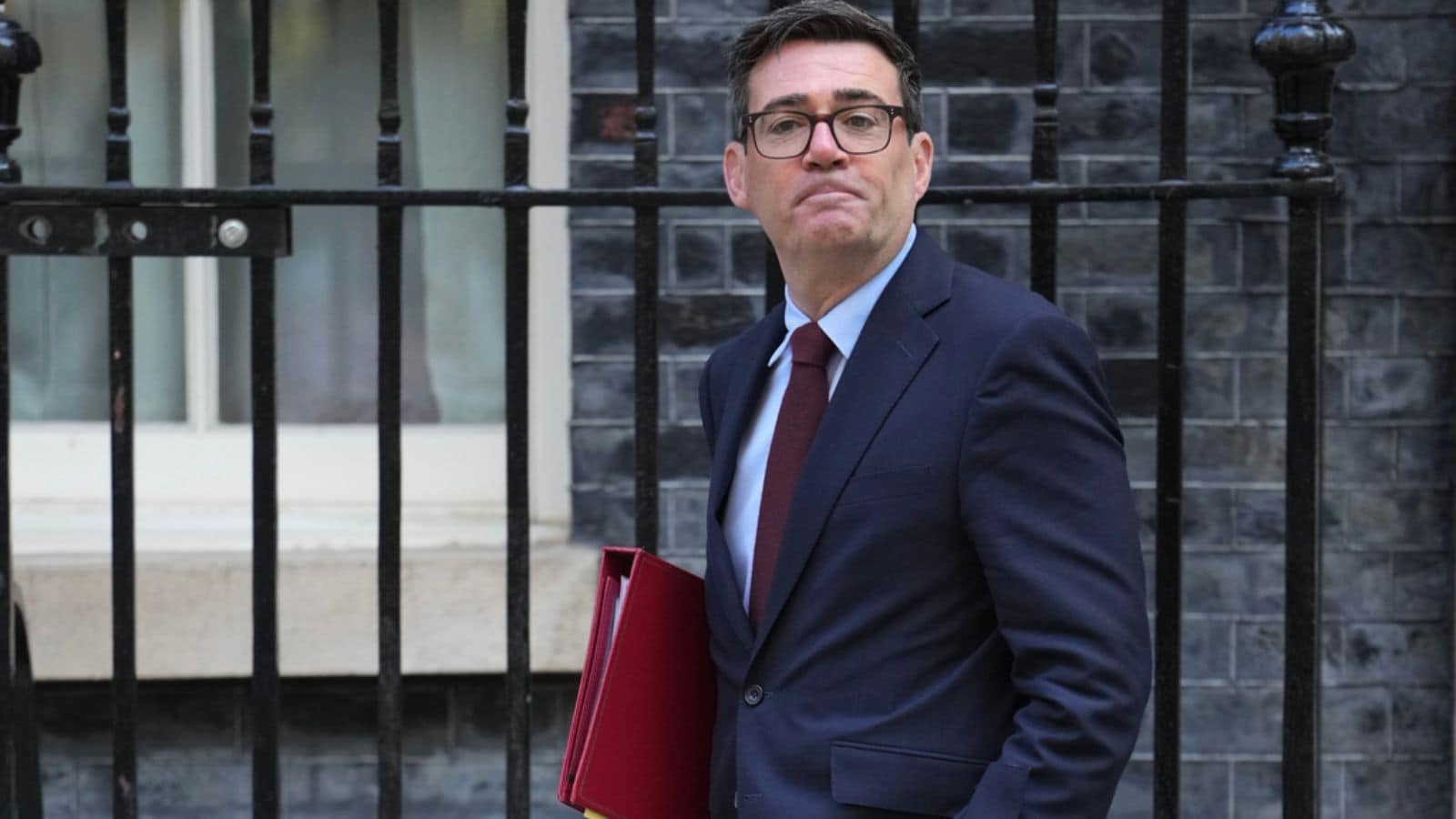
Britain and the European Union are staging a carefully choreographed diplomatic reset, driven by economic necessity and backed by regional heavyweights like Greater Manchester Mayor Andy Burnham who want to repair post-Brexit trade friction without reopening the political civil war of 2016.
The optics of a rare UK-EU summit tell one story. Behind closed doors, the real story is far less romantic and infinitely more pragmatic. Both London and Brussels are confronting hard numbers that no longer allow for ideological posturing. Trade volumes have stagnated, supply chains remain tangled in customs paperwork, and security threats on the European continent demand operational coordination that current treaties simply do not provide. If you enjoyed this post, you might want to look at: this related article.
Yet the political trap remains firmly set. Downing Street cannot afford to look like it is surrendering sovereignty or reversing the referendum result. Brussels, exhausted by years of acrimonious negotiations, has zero appetite for cherry-picking or bespoke arrangements that undermine the integrity of the Single Market. Enter figures like Burnham, whose regional economic mandate gives him the freedom to say out loud what national politicians only whisper in private briefings.
The Structural Reality Behind the Diplomatic Reset
The headline summit is not a sudden change of heart. It is the inevitable collision between political red lines and economic gravity. For another look on this development, check out the recent update from USA Today.
Since the Trade and Cooperation Agreement (TCA) took effect, the friction built into the deal has acted as a slow-acting brake on growth. Small and medium-sized British exporters have quietly abandoned European customers because the cost of veterinary certificates, rules-of-origin documentation, and customs declarations wipes out their profit margins. On the European side, companies have re-routed supply chains around the United Kingdom, treating Britain as an external third country rather than a natural hub.
When UK and EU leaders sit across the table for a formal summit, the agenda is dictated by these structural bottlenecks. Neither side is discussing a return to the Single Market or the Customs Union. Those doors are bolted shut by Westminster's own manifesto commitments and Brussels' strict legal architecture. Instead, the summit focuses on targeted, technical fixes designed to reduce friction where it hurts most.
Sanitary and Phytosanitary Rules
Food and agricultural trade has suffered disproportionately under the TCA. Every shipment of meat, dairy, or plants crossing the English Channel requires physical checks and expensive paperwork. A veterinary agreement—similar to the arrangement the EU maintains with Switzerland—would eliminate the vast majority of these border checks. The catch is simple. Britain would have to accept dynamic alignment with EU food safety standards, meaning Westminster becomes a rule-taker in exchange for smoother trade.
Mutual Recognition of Professional Qualifications
Service industries make up roughly eighty percent of the British economy, yet the TCA barely touched them. Architects, engineers, lawyers, and financial consultants face a patchwork of national regulations across twenty-seven member states. Establishing mutual recognition frameworks allows British firms to bid for European contracts without setting up costly local subsidiaries.
Security and Defense Cooperation
Geopolitics has accelerated what trade policy alone could not. With active war on Europe's eastern flank and shifting priorities in Washington, Britain's military intelligence, nuclear deterrent, and defense manufacturing are assets Brussels desperately wants integrated into European security architecture. A formal UK-EU security pact gives London diplomatic credit and industrial access in exchange for strategic capability.
Why Andy Burnham Is Saying What Westminster Won't
National politicians speak in code. Regional mayors speak in balance sheets.
Andy Burnham’s vocal push to mend Brexit damage is not an act of rogue rebellion against his own party leadership. It is a calculated intervention rooted in the daily realities of running a major post-industrial city-region. Greater Manchester relies heavily on advanced manufacturing, life sciences, digital tech, and international investment—all sectors directly exposed to European market friction.
When Burnham travels to Brussels or meets with European diplomats, he bypasses the Westminster media bubble entirely. His argument is straightforward. Brexit was sold as a way to level up neglected regions outside London, yet the resulting trade barriers have hit northern manufacturing hubs harder than the capital's financial sector.
By framing closer EU ties as a practical necessity for regional growth rather than a constitutional debate, Burnham creates political cover for the national government. He tests the waters. If his proposals—such as youth mobility schemes, streamlined visa rules for touring artists and technical specialists, or closer regulatory alignment for green tech—gain traction with business leaders and voters without triggering a populist backlash, national ministers can quietly adopt them later.
The Brussels Calculus and the Risk of Overpromising
Brussels has a long memory. European negotiators still carry the scars of the Article 50 process, where British domestic politics repeatedly derailed carefully constructed compromises.
For the European Commission, any reset with the United Kingdom must pass a strict test. Does it protect the Single Market, and does it deliver clear value to the twenty-seven member states? European leaders welcome a warmer tone from London, and they genuinely value British security cooperation. However, goodwill does not translate into free concessions.
Consider the issue of youth mobility. Brussels has repeatedly floated a reciprocal scheme allowing young people aged eighteen to thirty to live, work, and study across the Channel for up to three years. For European capitals, this is a priority demand—a tangible way to rebuild cultural and economic bridges damaged by the end of free movement. For Downing Street, any scheme that looks like free movement by the back door threatens overall net migration figures, a toxic domestic issue.
This mismatch in priorities exposes the core vulnerability of the current reset. London wants targeted regulatory relief for goods and services alongside a defense pact. Brussels wants youth mobility, fishing rights stability, and strict enforcement of existing citizens' rights agreements before granting new market access.
The Hidden Mechanics of Quiet Alignment
While politicians debate red lines in public, regulatory alignment happens silently through market pressure.
Manufacturers in the Midlands and the North of England do not build two separate production lines—one for the domestic British market and another for export to Germany or France. They build to the stricter standard, which is almost always the European Union's regulatory framework. When Brussels updates chemical safety rules under REACH or introduces new carbon border taxes through the Carbon Border Adjustment Mechanism (CBAM), British companies comply automatically just to stay in business.
This phenomenon, often called the Brussels Effect, means the United Kingdom is already shadow-aligning with EU rules without getting any say in how those rules are written.
The Carbon Border Problem
The EU's Carbon Border Adjustment Mechanism penalizes imports from countries without equivalent carbon pricing. If the UK and EU emissions trading schemes remain separate, British steel, cement, and electricity exporters face bureaucratic reporting burdens and potential tariffs. Linking the two carbon markets solves the problem overnight, yet it requires Britain to accept European oversight on environmental pricing.
Regulatory Divergence Costs
Every time Britain chooses to diverge from an EU standard for the sake of demonstrating independence, it creates a new compliance cost for domestic businesses. Regulatory bodies in London lack the massive staffing and budget of their Brussels counterparts, often resulting in delayed approvals for new medicines, chemicals, and industrial products. Quietly shadowing EU approvals saves taxpayer money and keeps supply chains moving.
What Actually Changes for Businesses and Travelers
Strip away the diplomatic choreography, and the practical impact of this UK-EU reset comes down to incremental, unglamorous improvements rather than sweeping transformations.
For a hypothetical British logistics firm moving chilled food from Kent to Rotterdam, a successful veterinary agreement means fewer trucks stuck in holding bays at Dover, lower customs brokerage fees, and reduced spoilage rates. It does not mean returning to the frictionless border of 2015, because customs declarations for non-agricultural goods and rules-of-origin checks will still apply unless Britain rejoins the Customs Union.
For travelers, the introduction of the EU's delayed Entry/Exit System (EES) and European Travel Information and Authorisation System (ETIAS) will still mean biometric fingerprint scans and pre-travel authorization forms. Bilateral negotiations may eventually secure access to automated e-gates for British passport holders at major European airports, shaving thirty minutes off arrival queues, though even that requires individual agreements with member states like Spain, France, and Portugal.
For musicians, engineers, and consultants, improved visa waivers and touring exemptions could eliminate the absurd cost of carnets—the customs passports required for moving professional equipment across borders. Again, these are targeted fixes designed to stop the bleeding, not a surgical reversal of Brexit itself.
The Political Tightrope Ahead
The scheduled review of the Trade and Cooperation Agreement acts as a natural focal point for these negotiations, yet expecting a grand bargain misunderstands the nature of both British politics and European bureaucracy.
The TCA review was originally designed as a technical check-up, not a treaty renegotiation. Brussels has been explicit that it will not rewrite the foundational text of the agreement. Any meaningful progress must happen through supplementary agreements—bolt-on deals covering defense, energy grid integration, sanitary standards, and youth exchange.
This incremental approach carries its own danger. Progress is slow, technical, and invisible to the average voter. Meanwhile, opponents of closer EU ties will frame every concession on regulatory alignment as a betrayal of democracy, while pro-European voices like Burnham will continue pushing for bolder economic integration to jumpstart stagnant regional growth.
The British government is attempting to walk a razor-thin line—reaping the economic benefits of European proximity while maintaining the political fiction of complete regulatory independence. Every technical agreement signed at these summits brings Britain closer into Brussels' orbit, one quiet regulation at a time, proving that geography and trade gravity always outlast political slogans.



