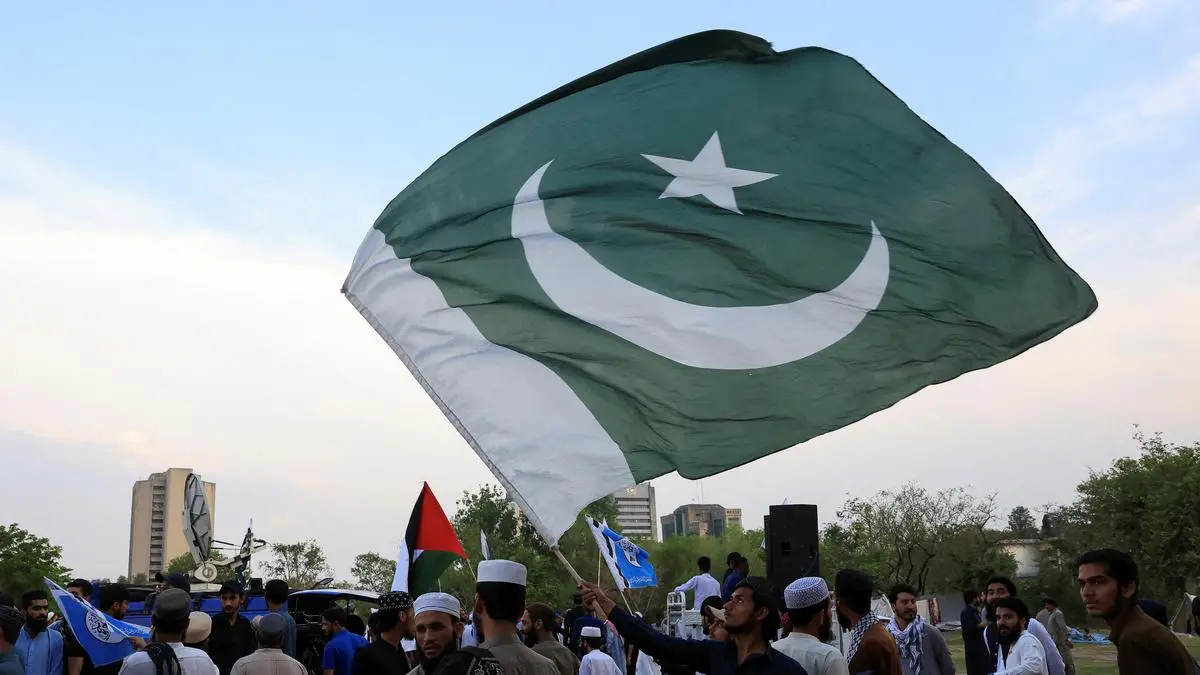
A fierce political rift erupted in Washington after top lawmakers sharply criticized Islamabad's compliance in regional counterterrorism efforts, exposing a deep fault line within American foreign policy. US Senators Rick Scott and Tim Sheehy issued public statements pointing directly to Pakistan's long history of sheltering armed militant factions and hiding Osama bin Laden for nearly a decade. Their objections were triggered by diplomatic talks in Switzerland regarding Iran, where Vice President JD Vance expressed warm praise for Pakistani Army Chief Asim Munir. This rapid escalation reveals a painful truth. Washington remains trapped in a dangerous cycle of transactional dependence with an intelligence apparatus that has repeatedly undermined American security.
The dispute highlights a fundamental contradiction in how the United States manages its unstable alliance with Islamabad. While the executive branch often prioritizes short-term diplomatic deals and logistics, lawmakers on Capitol Hill refuse to forget a generational pattern of double-dealing.
The Swiss Friction and the Double Game
The immediate catalyst for this latest diplomatic breakdown was a series of closed-door discussions held in Switzerland. Vice President Vance sought to secure technical cooperation on regional stability frameworks involving Iran, utilizing Pakistani officials as intermediaries. During these sessions, Vance publicly noted that General Munir was among his favorite international figures, a comment intended to smooth over decades of friction.
Capitol Hill reacted with immediate skepticism. Senator Rick Scott went public to insist that Pakistan cannot be treated as an objective middleman. He emphasized that the state remains deeply invested in regional networks that run counter to American interests. Senator Tim Sheehy was even more direct during a television appearance, reminding voters that the Pakistani military establishment actively hid the world's most wanted terrorist next to their premier military academy in Abbottabad.
This clash is not merely a disagreement over diplomatic style. It represents a systemic failure to reconcile the realities of how Pakistan’s military intelligence operates. For decades, the Directorate for Inter-Services Intelligence, commonly known as the ISI, has pursued a strategy of strategic depth. This doctrine dictates that Pakistan must maintain influence over neighboring states through proxy forces to counter what it perceives as an existential threat from India.
Millions in Aid and Mortars in the Field
The financial relationship between Washington and Islamabad tells a story of extreme contradictions. Between 2002 and 2018, the United States provided more than thirty-one billion dollars in direct aid and military reimbursements to Pakistan. Much of this cash flowed through Coalition Support Funds, which were intended to subsidize Pakistani military operations along the lawless Afghan border.
American investigators later discovered that these funds were frequently diverted. While Pakistani units did launch occasional offensives against domestic militant groups that threatened Islamabad directly, they left regional networks untouched. Factions like the Haqqani Network and the Afghan Taliban operated with near-total immunity just miles from major Pakistani military bases.
A former intelligence officer who spent a decade tracking weapons systems in Quetta described the dynamic during a private interview.
"We would watch convoy vehicles funded by American taxpayers move supplies to the border region. Within forty-eight hours, those same supply lines would branch off into safe houses run by the very insurgents attacking our soldiers in Kandahar. It was an open secret that everyone chose to ignore because we needed their geography."
This geographic dependence is the leverage that Islamabad uses with great success. Pakistan controls the primary ground lines of communication that connect deep-sea ports in Karachi to landlocked regions across South Asia. Whenever Washington pushed too hard on terrorism safe havens, Islamabad would simply close the border crossings, leaving American logistics stranded.
The Ghost of Abbottabad
No event broke the trust between the two capitals completely like the May 2011 raid that killed Osama bin Laden. The al-Qaeda leader was not hiding in a remote mountain cave along the rugged border. He was living in a custom-built, high-security compound in Abbottabad, a quiet garrison town populated by retired military officers.
The compound stood less than a mile from the Pakistan Military Academy. The architectural layout of the house featured twelve-foot-high concrete walls topped with barbed wire, absolute operational security, and zero internet or phone connections. To suggest that local intelligence officers missed a massive, custom-built fortress in a secure military town strains all logic.
The United States chose to launch the Navy SEAL raid without notifying Pakistani leadership in advance. This decision proved that Washington viewed its ally as an active security risk. In the aftermath of the operation, Pakistani officials expressed outrage over the violation of their national sovereignty rather than offering an explanation for how the world's most prominent fugitive lived undisturbed in their backyard.
The Failure of Transactional Diplomacy
The fundamental error in American policy has been the belief that civilian governance can alter Pakistan's strategic calculations. The United States has repeatedly attempted to strengthen civilian prime ministers through targeted economic aid packages. These efforts miss the reality of where true power resides in Pakistan.
The civilian government in Islamabad operates at the pleasure of the military high command based in Rawalpindi. Whenever a civilian leader attempts to normalize relations with neighbors or crack down on state-sanctioned militant groups, the military establishment reasserts control. This can happen through judicial maneuvers, orchestrated public protests, or direct interventions.
The military command views militant proxies not as a threat to be eradicated, but as low-cost national security assets. This structural reality makes long-term agreements impossible. The relationship remains strictly transactional, characterized by brief periods of forced cooperation followed by inevitable betrayal.
| Fiscal Multiyear Period | US Aid Disbursed | Primary Security Focus | Documented Policy Failure |
|---|---|---|---|
| 2001 to 2006 | $10.5 Billion | Al-Qaeda Border Interdiction | Taliban leadership rebuilds sanctuary in Balochistan |
| 2007 to 2012 | $12.8 Billion | Counterinsurgency Subsidies | Osama bin Laden discovered inside Abbottabad garrison |
| 2013 to 2018 | $8.1 Billion | Border Infrastructure Support | Haqqani Network executes major attacks inside Kabul |
A Fractured Alliance with No Exit
The latest statements from the Senate floor demonstrate that patience has evaporated entirely among lawmakers who control the federal budget. The United States can no longer afford to accept pleasant diplomatic rhetoric in place of verifiable structural reform. The current strategy of pretending that Pakistan is an objective partner in regional peace talks ignores thirty years of intelligence data.
The executive branch continues to protect the relationship because they fear the alternative. Pakistan possesses a rapidly expanding nuclear arsenal, a fragile economy, and a massive population vulnerable to radical ideologies. Policymakers worry that pushing the military state too hard could trigger a collapse, creating a far more dangerous crisis than the current state of managed duplicity.
This fear has created an environment of permanent blackmail. Washington continues to offer diplomatic concessions and vague praise to avoid a worst-case scenario, while Islamabad continues to utilize its proxy forces to maintain regional leverage. True stability will remain out of reach until American leadership accepts that some alliances are fundamentally broken and no amount of financial aid can buy loyalty from an institution built on double-dealing.

/https://tf-cmsv2-smithsonianmag-media.s3.amazonaws.com/filer/c6/97/c697b065-e0bd-4970-81ea-819779296b91/u765404inp.jpg)
