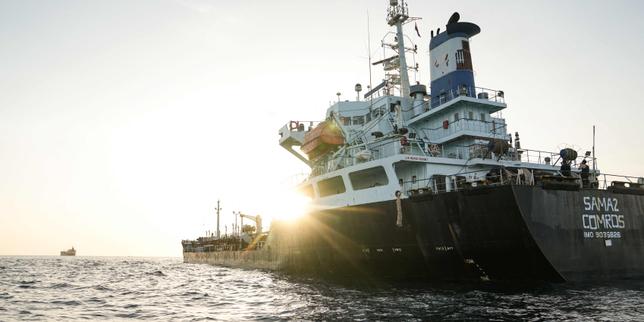
New Delhi imports roughly thirty percent of its crude oil and ninety percent of its liquefied petroleum gas through the hyper-volatile Strait of Hormuz. When regional hostilities between Iran and Western powers tighten around that narrow maritime throat, the Indian economy holds its breath. The cost of energy spikes instantly, freight insurance rates multiply overnight, and cargo vessels sit idle in open water, waiting for diplomatic breakthroughs that rarely materialize on schedule.
Enter Oman. Omani trade representatives pitched Sohar Port to Indian manufacturers and energy conglomerates as a concrete alternative logistics corridor designed to bypass the Hormuz bottleneck entirely. Backed by over thirty billion dollars in cumulative capital investments and boasting a cargo handling capacity of seventy-two million tonnes annually, Sohar sits safely outside the Persian Gulf on the open coast of the Gulf of Oman.
This pitch is not merely an exercise in diplomatic salesmanship. It represents a calculated scramble by Middle Eastern exporters and South Asian buyers to redesign global supply chains before the next geopolitical shock freezes maritime trade lanes. Yet behind the optimistic press releases delivered in New Delhi, the operational reality of redirecting national energy flows demands a much closer look at maritime bottlenecks, pipeline geography, and the brutal economics of redundancy.
The Anatomy of a Chokepoint
Geographical vulnerability defines India's energy calculus. For decades, the quickest path for crude extracted from major Persian Gulf fields has run straight through the twenty-one-mile-wide Strait of Hormuz. Tankers loaded at terminals in Saudi Arabia, Kuwait, and Iraq must squeeze through this narrow marine corridor flanked by Iran on the north and Oman's Musandam exclave on the south.
When military tensions flare, this geography turns into a chokehold. Recent escalations exposed the fragility of relying on a single marine transit route. Drone attacks, naval confrontations, and threats of total closure sent shockwaves through international markets, driving Brent crude prices past critical thresholds and inflating India's current account deficit.
Strategic resilience requires physical alternatives, not just diplomatic assurances. Insurance underwriters react to Middle Eastern flare-ups long before actual blockades occur, pricing small ship operators out of the market and forcing a total recalculation of risk. A port located outside the combat zone stops being an alternative luxury and transforms into an absolute operational necessity.
Beyond the Strait Concrete Economics of Sohar
Sohar Port occupies a prime strategic position on the northern coast of Oman. Because it faces the open waters of the Gulf of Oman, ships docking at its deep-water berths avoid entering the Persian Gulf altogether. This geographic distinction forms the foundation of Muscat's pitch to Indian industrial leaders.
The infrastructure behind the pitch carries serious weight. The port operates alongside a massive free zone that has attracted more than thirty billion dollars in foreign and domestic capital. Petrochemicals, heavy metals, and logistics yards fill the industrial sectors, creating a fully integrated manufacturing and trans-shipment hub.
The annual capacity of seventy-two million tonnes gives the facility the scale required to absorb heavy industrial cargo traffic. Furthermore, the impending completion of the Oman-UAE rail link will connect Sohar directly to the broader rail networks of the United Arab Emirates and eastern Saudi Arabia. Freight can move from regional energy installations across land corridors directly to Omani export terminals, avoiding maritime transit through contested waters.
The Geopolitical Tightrope
Muscat has long maintained a reputation for diplomatic neutrality in a region riven by sectarian and geopolitical rivalries. This non-aligned stance has enabled Oman to act as a trusted mediator between Washington and Tehran. Yet that same neutrality must now accommodate heavy commercial bets on Indian manufacturing and energy security.
India views its partnership with Oman through the lens of long-term maritime security in the western Indian Ocean. The two nations share deep historical ties that stretch across millennia of maritime trade. By anchoring economic cooperation with port investments, New Delhi aims to secure physical access points that remain insulated from northern Gulf conflicts.
At the same time, this alignment avoids direct confrontation with regional rivals. Oman is not asking India to pick a side in the Persian Gulf cold war. Instead, Muscat offers a commercial valve. If Hormuz closes, trade routes do not have to die. They can be redirected southward through Omani territory, preserving commercial continuity for both nations.
Logistics Realities Behind the Pitch
Moving billions of dollars worth of crude oil and industrial goods across international borders involves immense mechanical friction. Port capacity is only one variable in a massive supply chain equation. Tankers loading at Persian Gulf terminals like Ras Tanura still face the initial hurdle of navigating local waters, meaning that oil originating deep inside the Persian Gulf must still find a way out unless overland pipelines carry it across the Arabian Peninsula.
Pipeline infrastructure becomes the critical variable. Existing pipelines running from eastern Saudi fields and the United Arab Emirates toward the coast offer a partial solution. Crude pumped across the Arabian Peninsula can reach terminals facing the open ocean or connect with regional rail and road corridors leading down to Oman's coast. Yet expanding pipeline throughput requires massive capital expenditure and long construction timelines.
Insurance costs present another hurdle. Even when physical shipping routes bypass zones of active military conflict, regional risk multipliers affect maritime insurance premiums across the entire western Indian Ocean. Subduing these financial penalties requires state-backed guarantees, bilateral agreements, and long-term supply contracts that insulate commercial operators from sudden spikes in operational overhead.
What the Bilateral Trade Pact Changes
Commercial architecture received a major boost when the India-Oman Comprehensive Economic Partnership Agreement entered into force. Bilateral trade pacts of this magnitude dismantle customs barriers, streamline regulatory hurdles, and create favorable tax environments for foreign investors operating inside designated free zones.
For Indian manufacturers looking for a dependable manufacturing and logistics base in the Middle East, Sohar provides an attractive destination. Exporters can bring raw materials in, process them within the free zone, and ship finished industrial goods to global markets without facing punitive tariff walls.
Energy security intersects directly with these industrial trade provisions. When a nation builds deep commercial integration with a port authority, energy supplies tend to follow established trade routes. By tying economic interests closer together through mutual investments, both capitals create shared incentives to protect the maritime supply lines connecting them.
The True Cost of Strategic Redundancy
Building a diversified energy network carries a heavy financial price tag. Redundancy is expensive. Maintaining idle storage facilities, alternative port terminals, and backup shipping channels requires continuous capital allocation that does not immediately show a return on commercial investment.
Critics often argue that spending capital on alternative foreign ports distracts from domestic infrastructure development or strategic petroleum reserve expansion inside India. Yet that argument ignores the staggering cost of a total supply chain freeze. When a single geopolitical flashpoint can shave percentage points off national gross domestic product, the cost of redundancy looks remarkably cheap.
Oman's pitch arrives at a moment of profound transformation. The old assumption that the Strait of Hormuz would remain permanently open under international naval protection has shattered. Energy importers are forced to reckon with a fractured maritime order where security is no longer guaranteed by distant superpowers.
India's response to Muscat's proposal will test whether New Delhi can move fast enough to re-engineer its import architecture. The ships will keep moving, but the paths they take are changing forever.