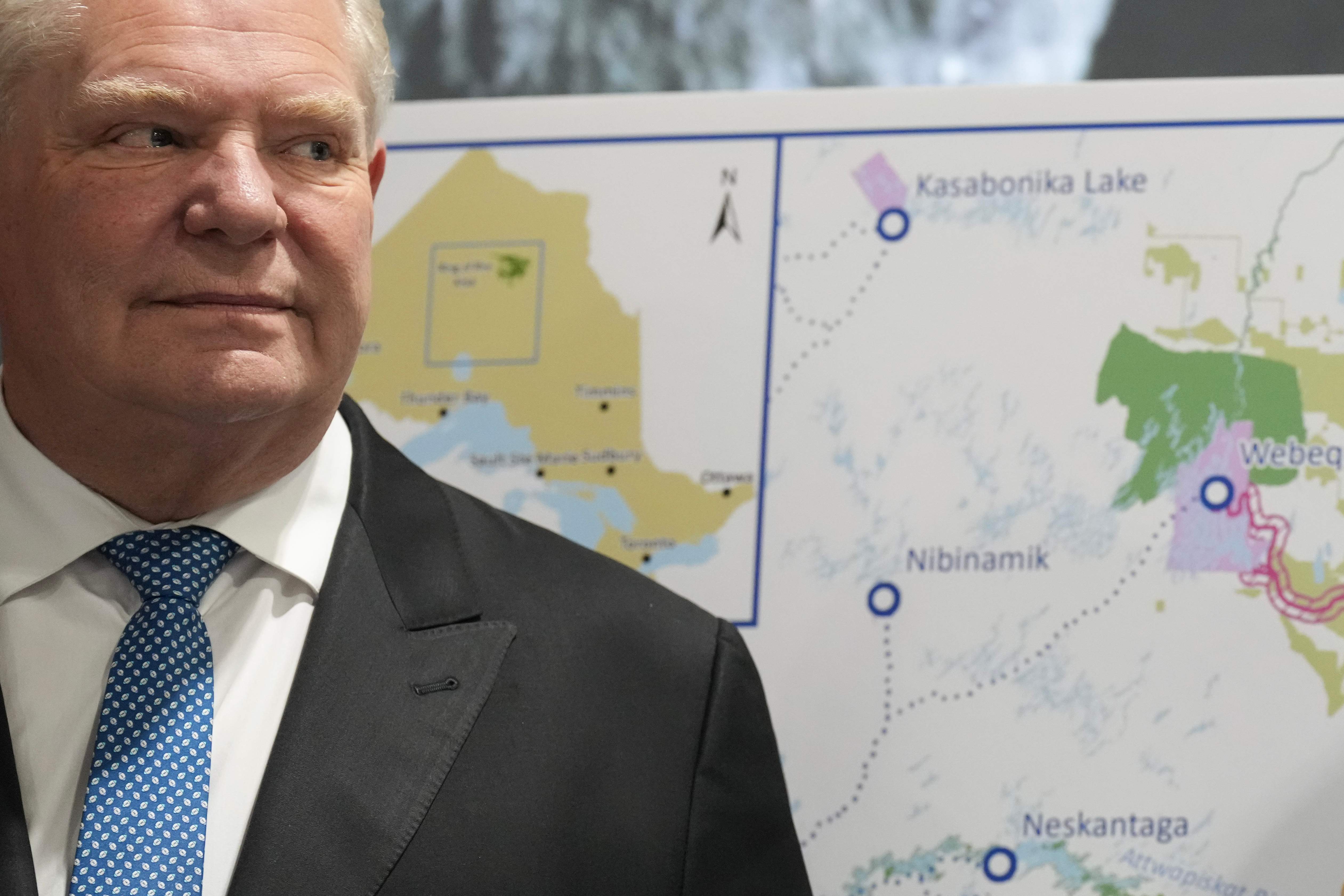
The Ford government has officially broken ground on the access corridors designed to unlock northern Ontario's mineral-rich James Bay lowlands, promising to slash years off the original timeline for the Ring of Fire development. For years, the region existed mostly as a political talking point, a distant treasure chest of chromium, nickel, and critical minerals trapped behind endless muskeg and bureaucratic red tape. Now, bulldozers are moving on the Anaconda and Painter Lake roads in partnership with the Aroland First Nation, marking a sharp pivot from stagnation to aggressive execution.
Premier Doug Ford frames this acceleration as an urgent economic countermeasure. Geopolitical pressures and looming trade tensions have turned mineral self-sufficiency from a distant policy goal into an immediate industrial imperative. Meanwhile, you can read similar developments here: Stop Calling Tragic Accidents Freaks of Nature.
Yet beneath the celebratory ribbon-cuttings and optimistic timelines sits a complex web of logistical hurdles, localized friction, and unaddressed environmental questions that press releases rarely capture. Building permanent infrastructure across hundreds of kilometers of sub-arctic peatlands is an engineering trial unlike any other in modern Canadian history.
The Real Cost of Speed
Accelerating large infrastructure projects by half a decade sounds efficient on paper. In the physical reality of northern muskeg, moving faster changes the risk profile entirely. To understand the bigger picture, check out the recent article by Reuters.
Engineers face a terrain that defies standard road-building techniques. During winter, frozen ground permits heavy machinery to roll freely, but warming seasonal shifts turn the lowlands into an impassable sponge. Designing all-season corridors that can support multi-tonne mining haul trucks without sinking into the bog requires radical stabilization methods.
Consider a hypothetical scenario where a construction consortium rushes earthworks through a premature spring thaw to meet a government-mandated deadline. The resulting sub-base shifting can cause structural failures that demand millions in unexpected remediation before a single ounce of commercial ore ever reaches a smelter.
The province is leaning heavily on localized partnerships to bypass traditional federal bottlenecks, working directly with proponents like Webequie and Marten Falls First Nations. These alliances represent a fundamental shift in how northern projects proceed, moving control closer to the communities whose ancestral territories host the resources.
The Divided North
Unity in resource development is rare, and the Ring of Fire is no exception. While participating communities anticipate life-changing economic inclusion and improved access to basic services, a coalition of other regional First Nations remains deeply opposed.
Communities such as Neskantaga have repeatedly warned that piecemeal environmental assessments fail to account for cumulative watershed damage. Water systems across the James Bay basin are fragile, interconnected, and vital to traditional subsistence lifestyles.
When infrastructure approval processes are compressed to satisfy political electoral horizons, trust often becomes the primary casualty. Critics argue that streamlining regulations to achieve faster groundbreakings risks bypassing crucial ecological baseline studies. If a major contaminant breach occurs in the peatlands during early development, the legal and social fallout will halt operations far longer than any regulatory review ever could.
The Geopolitical Engine
External market forces are driving Queen's Park to move at this breakneck pace. Global demand for electric vehicle battery components and aerospace-grade metals has transformed northern geology into a pawn on the international chessboard.
The United States wants secure, domestic-adjacent supply chains that bypass geopolitical rivals. Ontario holds the geological goods, but without a physical road network, those resources remain entirely theoretical. The province's push is designed to prove to international investors that Ontario is open for business and capable of delivering hard assets on a predictable schedule.
The machinery is moving now, the dates are locked on the calendar for routes to open by the early 2030s, and the political capital of the provincial government is staked entirely on the outcome. Whether this high-speed gamble transforms Canada into a critical minerals superpower or exposes the limits of forced industrial acceleration remains to be written in the mud of the north.
Building the Ring of Fire road network
This video provides an official visual overview of the accelerated road network plan and the specific timelines announced for the northern infrastructure corridors.
http://googleusercontent.com/youtube_content/1