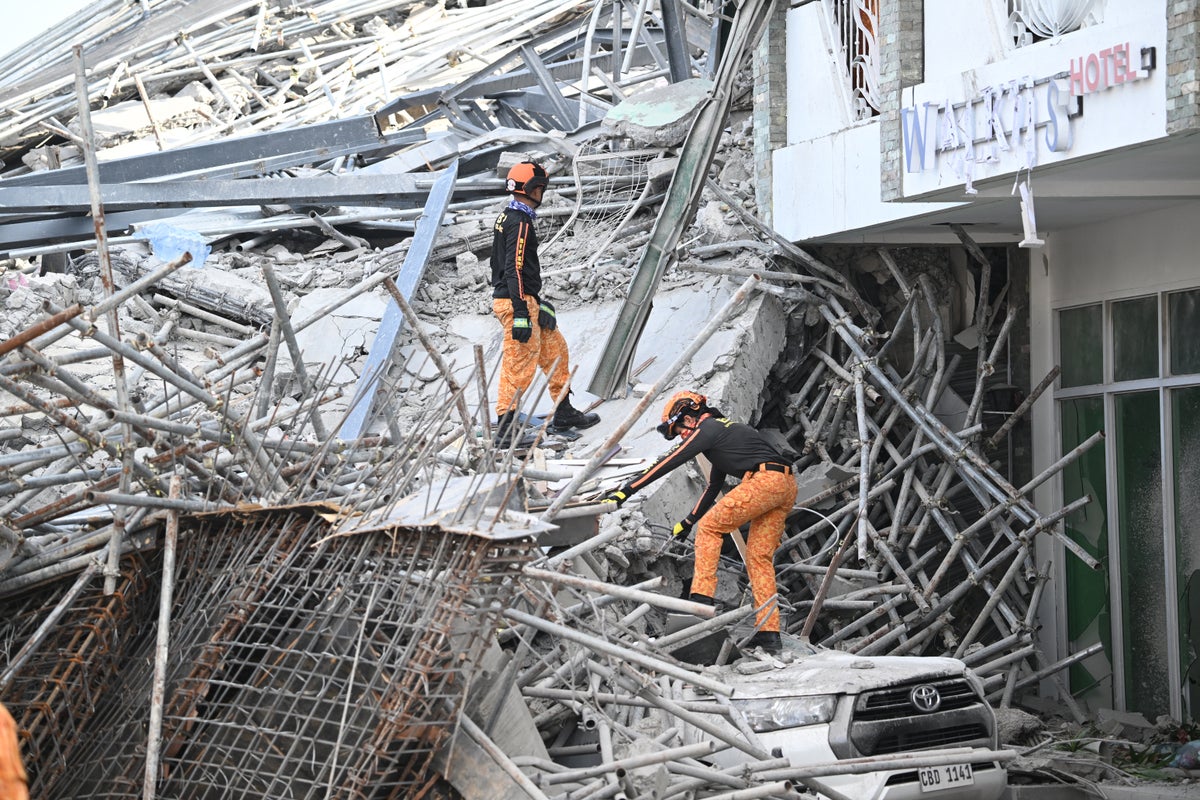
The faint, rhythmic tapping from beneath the shattered concrete plates of a collapsed commercial complex outside Manila is not just a plea for survival. It is an indictment. As search teams scramble through the dust to locate the 21 people trapped in the wreckage, the immediate focus is understandably on the clock. Minutes dictate mortality. But for those who have watched the rapid, unregulated urbanization of the Philippines over the last two decades, this disaster is entirely predictable. It is the logical consequence of a broken enforcement mechanism that treats building codes as optional suggestions rather than life-saving laws.
Rescuers working the site report hearing muffled voices and frantic knocking from what used to be the building's basement parking level. They are fighting against time, shifting debris by hand because bringing in heavy excavators risks triggering a secondary collapse.
Yet, the true catastrophe started years before the first pillar cracked. The tragedy unfolding right now is the direct result of systemic corruption, inadequate materials, and an oversight system that allows developers to police themselves.
The Illusion of the Safe Blueprint
Every disaster follows a script written in an office long ago. On paper, the Philippines possesses a stringent regulatory framework. The National Building Code of the Philippines is designed to withstand the archipelago's brutal mix of frequent earthquakes and devastating typhoons. It mandates specific concrete mixtures, steel tensile strengths, and soil testing protocols.
The gap between law and reality is wide. In practice, the process of securing a building permit is often less about engineering compliance and more about navigating bureaucratic grease. Local government units, tasked with inspecting construction sites, are chronically understaffed. A single inspector might be responsible for hundreds of active projects, leading to a system where signatures are bought, and physical inspections rarely happen.
When a building fails catastrophically without an earthquake or an extraordinary weather event, the cause is almost always structural theft. This occurs when a developer cuts corners to pad profit margins. They substitute high-grade ribbed steel rebar with cheaper, brittle alternatives. They water down the concrete mix, compromising its load-bearing capacity.
To understand how a column fails, consider the relationship between concrete and steel. Concrete provides compressive strength, resisting the downward pull of gravity. Steel provides tensile strength, allowing the structure to flex under pressure. When the ratio is skewed to save money, the building becomes a ticking time bomb. The weight of the upper floors slowly grinds down on weak foundations until a single shear point gives way, causing a progressive collapse.
The Subcontracting Shell Game
Investigating these failures always leads to a labyrinth of corporate entities designed to shield the real perpetrators from liability. A major developer secures the land and markets a glittering vision of modern commerce. They then outsource the actual construction to a general contractor. That contractor, looking to squeeze its own profit margin, hires a tier of subcontractors.
By the time laborers are pouring concrete on the third floor, the workers are often untrained day laborers managed by a third-tier firm with zero engineering expertise. The quality control chain is completely severed.
If a building collapses, the finger-pointing begins instantly. The developer blames the general contractor, the contractor points to the subcontractor, and the subcontractor declares bankruptcy and vanishes. The victims and their families are left chasing ghosts in civil courts for decades, while the individuals who authorized the compromised designs simply establish new corporate names and bid on the next project.
This shell game is enabled by a lack of criminal accountability. In many jurisdictions, structural failure is treated as a regulatory infraction or a civil matter unless massive loss of life forces the hand of public prosecutors. Even then, the legal fallout rarely reaches the executive suites where the financial decisions to skimp on safety were made.
Why the Current Rescue Model is Failing
The immediate response to these crises exposes another harsh truth. The Philippines lacks the specialized, heavy-duty urban search and rescue infrastructure required to handle multiple large-scale structural failures simultaneously.
Local fire departments and volunteer brigades show immense bravery, but bravery cannot cut through four feet of reinforced industrial concrete. Specialized equipment like acoustic listening devices, thermal imaging cameras, and hydraulic cutters are expensive and heavily concentrated in the capital region. When a collapse occurs in the provinces or on the periphery of metro areas, critical hours are lost just transporting the gear through gridlocked traffic.
Furthermore, the country’s emergency services are geared primarily toward flood response and typhoon recovery. Shifting mud and rising water require different tactics than navigating a unstable mound of pulverized masonry.
An urban search and rescue operation is an intricate engineering challenge in its own right. Rescuers must construct elaborate wooden and steel shoring systems to stabilize the remaining structure as they tunnel inward. Without this, the vibration from a single jackhammer can cause the entire pile to settle, crushing both the survivors and the people trying to save them.
The Cost of Cheap Cement
The economic factors driving this vulnerability are deeply rooted in the local supply chain. The cost of building materials has skyrocketed over the past several years, driven by global inflation and supply disruptions. For smaller developers operating on razor-thin margins, the temptation to use uncertified, substandard imported steel or low-grade aggregate is immense.
There is an illegal market for recycled rebar, often salvaged from demolished older buildings, re-rolled, and sold without any quality testing. This metal looks identical to certified steel to the untrained eye, but its internal structure is fatigued and prone to snapping under sudden loads.
Compounding this is the issue of soil mechanics. Much of the rapid expansion in Philippine urban centers is happening on reclaimed land, former agricultural paddies, or unstable hillsides. These terrains require deep, expensive piling works to anchor a building to bedrock. Skipping this step means the building rests on a shifting foundation. Over time, uneven settling creates immense stress on the upper beams, setting the stage for a sudden, catastrophic failure even on a clear, windless day.
Breaking the Cycle of Ruin
Stopping the next collapse requires shifting the focus from disaster response to aggressive, preemptive enforcement. The current system relies on self-policing, which has proven fatal.
- Mandatory Third-Party Audits: Local government units must hand over structural inspection duties to independent, certified engineering firms. These auditors should be legally liable for the accuracy of their reports, removing the conflict of interest inherent in the current political appointment system.
- Digital Material Tracking: Implementing blockchain or secure digital logging for construction materials would allow regulators to trace every batch of concrete and every ton of steel back to its manufacturer and testing facility.
- Criminalizing Code Violations: Slicing safety margins for financial gain must be treated as a violent crime, not a administrative oversight. If an executive faces jail time for authorizing substandard materials, the financial incentive to cut corners evaporates.
The voices currently fading beneath the rubble are a reminder that structural integrity is a human rights issue. Every permit signed without an inspection, every bag of cement skimped to save a peso, and every look the other way by a corrupt official is an act of violence against the people who will eventually inhabit the building. The rescue teams will eventually pack up their gear, the news cameras will move on to the next crisis, and the site will be cleared. Unless the underlying rot in the regulatory system is cut out, the blueprints for the next disaster are already being approved.