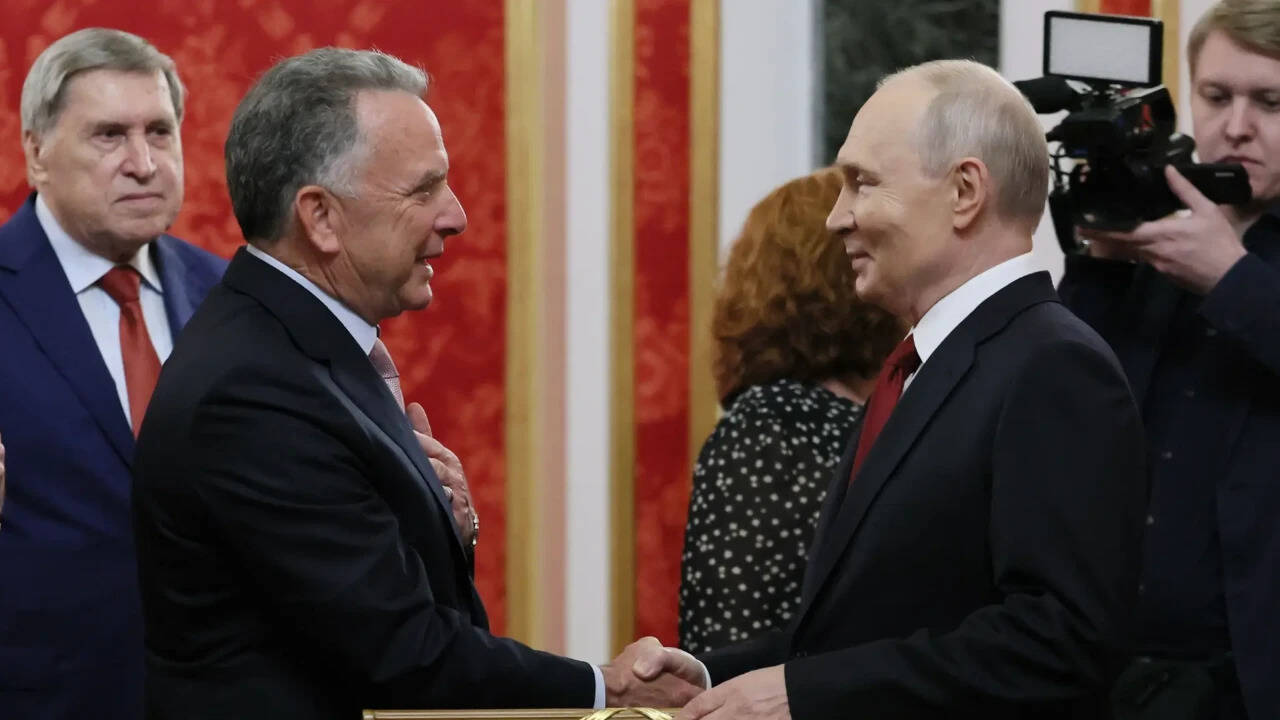
Washington is running a parallel diplomatic track on Ukraine while the front lines keep bleeding. When U.S. special envoy Steve Witkoff sits down with Russian President Vladimir Putin, the public gets sanitized talking points about peace frameworks, prisoner releases, and potential summits with President Donald Trump. Behind closed doors, however, the real leverage is transactional, messy, and far removed from classic Cold War statecraft.
Having covered Moscow and Washington for decades, I have watched plenty of envoys walk into the Kremlin convinced that personal rapport or a clever commercial pitch can bend Russian strategic calculus. It almost never works like that. Putin treats diplomacy as a continuation of pressure by other means, and his meetings with Witkoff—alongside fellow envoy Jared Kushner—illustrate how Washington is trying to test whether commercial incentives, humanitarian optics, and high-level summits can pry open a stalemate that artillery has failed to break.
What Actually Happens in These Kremlin Sessions
Public summaries make these encounters sound neat. A peace track here, a prisoner file there, a nod toward a summit with Trump and China’s Xi Jinping. In reality, Witkoff’s meetings with Putin operate like a multi-threaded deal room where nothing is settled until everything is connected—and even then, Moscow reserves the right to walk back whatever suits its narrative at home.
Consider the sequence of diplomacy over recent weeks. Trilateral discussions involving Ukraine, the United States, and Russia in Abu Dhabi have run alongside direct Kremlin sit-downs between Putin and Trump’s envoys, followed by rapid outreach to Ukrainian President Volodymyr Zelenskyy. That shuttle rhythm tells you something critical about how this White House works. Instead of relying solely on traditional State Department channels, Trump has leaned on dealmakers with real estate and business instincts who speak the language of negotiation, risk, and quid pro quo.
Yet dealmaking instincts hit a wall when they meet ideological and territorial rigidity. Reports around the November talks show Washington pressing Moscow with a blunt message that better deal terms may not last forever, while simultaneously exploring whether broader arrangements—such as a new European security architecture or economic openings—might give Putin something he can sell domestically as a victory. Meanwhile, the Kremlin’s public posture has stayed stubbornly hardline, insisting on territorial demands in Ukraine’s Donbas and refusing to treat ceasefires as anything more than tactical traps.
The Prisoner Card and Humanitarian Theater
Prisoner releases are the easiest win to put on camera. They are also the most easily misread.
In October, when Putin ordered the release of detained American Stephen Hubbard during Witkoff’s visit, the optics were immediate and emotionally charged. For Hubbard’s family, getting an American out of Russian custody was everything. For Washington, Trump framed the release as a personal triumph achieved without giving up a swap. Weeks later, momentum shifted toward a much larger exchange of prisoners of war between Ukraine and Russia following the Abu Dhabi talks and Kremlin meetings, with Kyiv welcoming the prospect of bringing large numbers of soldiers home.
Here is the veteran’s warning on prisoner diplomacy. Moscow holds detainees like chips in a casino. It can loosen its grip on one American or agree to a large POW exchange to project reasonableness, signal openness to Trump, or buy breathing room in talks—all while continuing missile strikes and refusing core peace terms. Humanitarian relief is real for the people walking free. Strategic concession it is not.
A prisoner release proves Russia can say yes when it wants to. It does not prove Russia is ready to end the war on terms Ukraine or Europe can live with.
Why a Trump Meeting Looms Over Every Line of Talk
Nothing in the Putin-Witkoff channel exists in a vacuum. Every line of conversation is shadowed by the prospect of direct leader-to-leader engagement involving Trump, Putin, and potentially Xi.
For Putin, an envoy meeting is a rehearsal and a filter. He uses it to gauge what Trump actually cares about most right now, where U.S. patience is thinning, and how far Washington might go to lock in a headline-grabbing diplomatic moment. For Trump’s team, these sessions serve as reconnaissance ahead of high-stakes summits and ongoing talks with Kyiv and European capitals.
To see how incentives get tangled in this kind of diplomacy, consider a hypothetical example. Suppose U.S. negotiators float lifting certain export frictions on Russian commodities or sketching out post-war economic reconstruction in exchange for a limited truce. On paper, commercial upside looks like leverage. In practice, if Moscow views sanctions relief or diplomatic normalization as proof that endurance pays off, the incentive flips—rewarding aggression rather than ending it.
| Diplomatic Lever | What Washington Hopes It Buys | What Moscow Actually Gets | Key Risk for Kyiv and Allies |
|---|---|---|---|
| Prisoner Releases | Goodwill, family reunions, and momentum for broader talks | Soft-power optics and proof it controls the pace of relief | Mistaking tactical gestures for strategic compromise |
| Economic and Trade Talk | Pragmatic off-ramps and commercial leverage | Relief from isolation and legitimacy for state firms | Weakening pressure tools before a durable settlement exists |
| Summit Prospects | Direct leverage at the highest level | Global parity and room to sideline tougher demands | Side-dealing over Ukraine’s sovereignty or European security |
The Overlooked Fault Lines Nobody Wants to Admit
Most coverage treats peace talks as a straight line between two poles—either a deal happens or it doesn't. That misses three friction points shaping every conversation between Witkoff, Putin, Kyiv, and Europe.
Territory Versus Security Guarantees
Moscow’s territorial demands remain the sharpest knife in the room. Insisting that Ukraine surrender ground Russian forces have not even conquered is a non-starter for Kyiv. At the same time, discussions around long-term security guarantees for Ukraine and a broader European security order collide directly with Putin’s effort to dictate neighboring countries' alignments. You cannot build lasting stability on a map redrawn by force while leaving Ukraine exposed to the next round of coercion.
Europe’s Seat at the Table
European leaders are not bystanders watching from the bleachers; they live with the consequences of whatever security arrangement emerges. Yet friction over Europe’s role—whether European officials are locked into the next round of talks or contested by Moscow—exposes a chronic transatlantic split. If Washington negotiates the broad contours of European security without firm alignment from Kyiv and European capitals, any resulting agreement will fracture the moment implementation begins.
Domestic Clocks in Washington and Moscow
Diplomacy runs on political calendars. Shifts in the U.S. congressional balance and legislative battles over Ukraine aid create real uncertainty about what Washington can promise and sustain over time. Putin knows how to read political clocks better than almost any leader alive; he stretches timelines when he thinks time favors attrition, and moves fast only when he sees a concrete opening.
What to Watch Next
Ignore the grand adjectives coming out of any diplomatic room and watch three concrete markers instead. First, see whether large-scale prisoner exchanges actually move from announcement to implementation on the ground. Second, watch whether Russia budges even an inch on core territorial or ceasefire demands during trilateral sessions. Third, track whether Ukraine and European partners are treated as co-authors of any security framework or handed a fait accompli after the fact.
In Moscow, polite words and staged gestures cost nothing until ink meets verifiable facts on the ground.