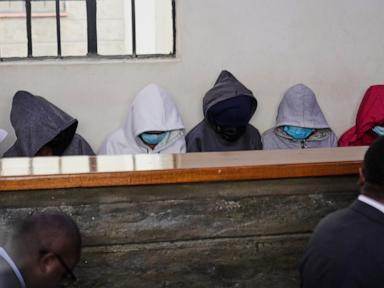
A Kenyan court recently ordered nine students to be remanded for 21 days following a school dormitory fire that claimed the lives of 16 children. The tragedy, which occurred at Hillside Endarasha Academy in Nyeri County, follows a grimly predictable pattern in the country's education sector. While public fury focuses on the immediate culprits holding the matchsticks, the true failure lies deeper. The systemic neglect of basic safety infrastructure and the commercialization of secondary education have turned Kenyan boarding schools into tinderboxes.
This latest disaster is not an isolated incident of juvenile delinquency. It is the symptom of an institutional rot that prioritizes enrollment numbers and profit margins over the lives of young citizens.
The Illusion of School Safety and the 21 Day Remand
The decision to detain nine minors for three weeks highlights the state's scramble to show accountability. Prosecutors argue they need the time to conduct forensic investigations, perform DNA identification on the badly burned victims, and determine the exact charges, which could include arson and murder.
But locking up teenagers will not fix the structural vulnerabilities that made the Hillside Endarasha fire so lethal.
Historical data shows that arson in Kenyan schools is a recurring crisis. Over the past three decades, hundreds of students have died in similar infernos. The most infamous cases include the 1998 Bombolulu Girls fire which killed 26 students, the 2001 Kyanguli Secondary School tragedy that claimed 67 lives, and the 2017 Moi Girls School fire in Nairobi where 10 students perished.
Each time an incident occurs, the government sets up a task force. Investigations are launched. Promises are made. Yet, the findings are routinely shelved, and the underlying conditions never change.
Why Kenyan Dormitories Keep Burning
To understand why these tragedies repeat, one must look at the physical and regulatory environment of these institutions. The ministry of education has clear safety guidelines on paper, but enforcement is virtually non-existent.
The Grille Window Trap
Walk into almost any Kenyan boarding school dormitory, and you will find steel grilles welded tightly over the windows. Ostensibly, these bars are installed to keep burglars out and to prevent students from sneaking out at night. In reality, they turn dormitories into inescapable cages during an emergency. When smoke fills a room and the main exit is blocked, these reinforced windows ensure that escape is impossible.
Extreme Overcrowding
The introduction of the government's 100 percent transition policy, which mandates that every child finishing primary school must enter secondary school, strained an already fragile infrastructure. Schools took in double or triple their intended capacity without building new facilities. Dormitories designed for 50 students now routinely house 150, with triple-decker bunk beds packed tightly together. This level of congestion leaves no room for orderly evacuation.
Locked Doors from the Outside
In many boarding institutions, school administrators or prefects lock the dormitory doors from the outside at night to maintain discipline. When a fire breaks out, valuable minutes are lost searching for the individual holding the keys. By the time the doors are breached, asphyxiation from toxic smoke has already done its deadly work.
The Toxic Culture of Academic Pressure and Sabotage
The motivation behind student arson in Kenya is a dark mix of institutional stress and a lack of grievance channels. The education system relies heavily on high-stakes national examinations. A student's entire future depends on a single set of tests at the end of four years.
This creates an environment of intense pressure. When students feel overwhelmed, hopeless, or unheard by authoritarian school administrations, arson becomes a perverted tool of protest.
[Systemic Pressure] ➔ [Lack of Grievance Channels] ➔ [Arson as Radical Protest]
Students rarely burn down classrooms; they target dormitories and administration blocks. They target the spaces that represent control and confinement. Until schools adopt modern guidance, counseling, and democratic student representation, structural frustration will continue to express itself through violence.
The Commercial Greed Behind Private Boarding Institutions
The proliferation of private academies across Kenya has complicated the safety matrix. Education has become a highly lucrative business. To maximize profit, some private proprietors cut corners on construction, materials, and staffing.
| Safety Standard | Prescribed Regulation | Common Reality in Schools |
|---|---|---|
| Dormitory Spacing | 1.2 meters between beds | Beds bolted together, triple bunks |
| Fire Extinguishers | Serviced units every 10 meters | Expired, empty, or completely absent |
| Emergency Exits | Two wide doors opening outwards | One narrow door locked from outside |
| Alarms | Functional smoke detectors | Non-existent |
A standard wooden roof truss treated with cheap, flammable varnish can accelerate a fire across an entire building layout in less than three minutes. Many schools lack basic smoke detectors or functional fire extinguishers. Even when extinguishers are present on the walls, staff and students are rarely trained on how to use them.
The Failure of State Oversight
The Ministry of Education employs quality assurance officers whose sole job is to inspect schools and ensure compliance with safety standards. Their failure to shut down non-compliant institutions points to a deeper issue of corruption and bureaucratic laziness.
Inspection reports are frequently bypassed through bribery or political influence. A school owner with the right connections can easily ignore safety directives, knowing that inspectors will look the other way. This regulatory collapse means that parents pay high fees to send their children to places that are structurally unsafe.
The state cannot continue to treat school fires as unexpected natural disasters or isolated criminal acts by rogue children. The culpability extends from the student who strikes the match, to the principal who locked the doors, to the inspector who signed off on an overcrowded, unventilated hall.
Holding nine students in a remand home for 21 days satisfies the public desire for immediate retribution. It creates a convenient narrative that the problem is simply a few bad apples. But true accountability requires prosecuting the school owners who neglected fire codes and the government officials who failed to enforce the law.
True reform means tearing down the window grilles, unlocking the doors, and reducing the overcrowding that turns Kenyan schools into death traps. Until the ministry enforces its own safety manuals with the same vigor it uses to police national exams, more dormitories will burn. No amount of police investigation can alter that reality.