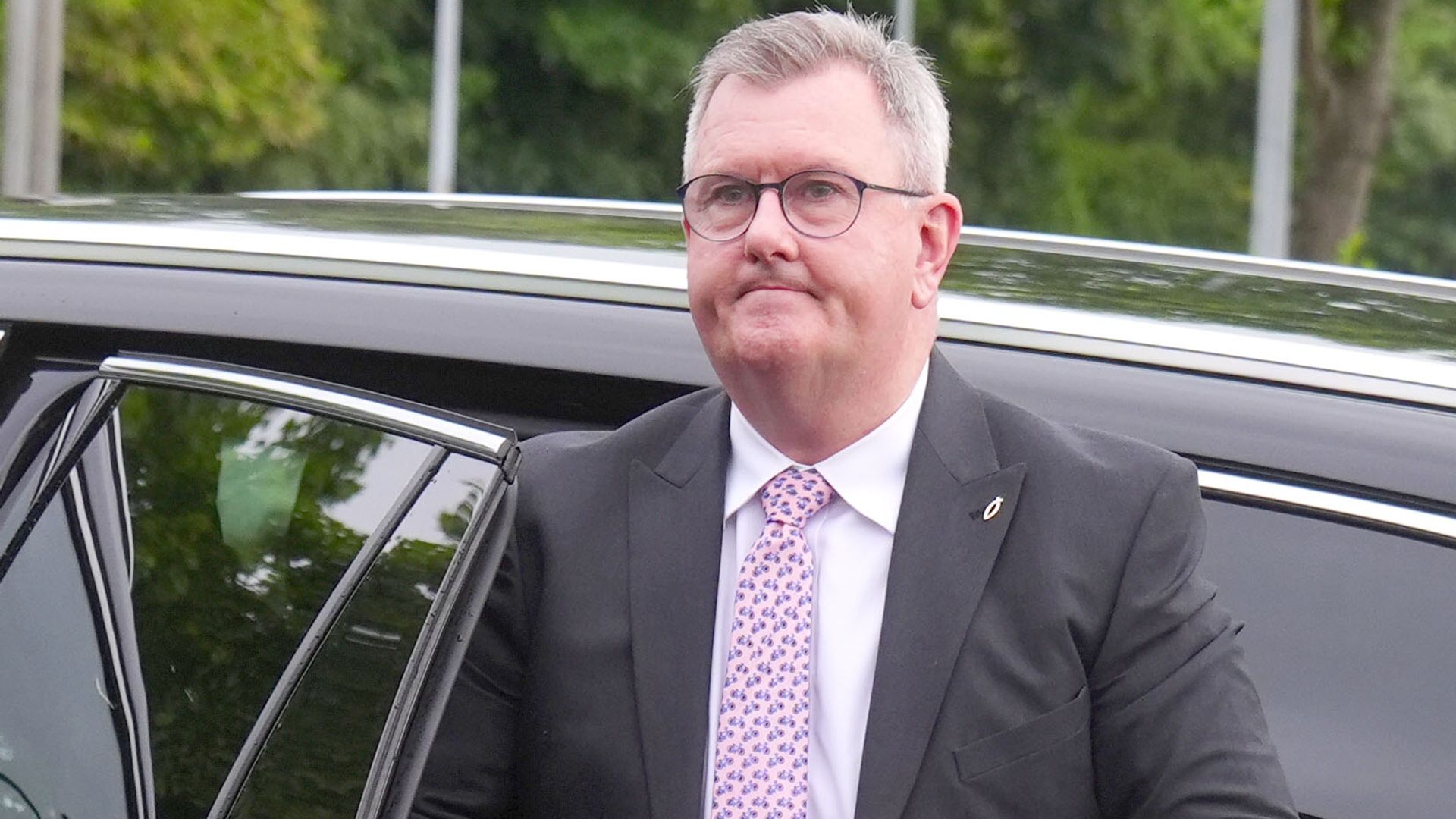
Former Democratic Unionist Party leader Jeffrey Donaldson was sentenced to 15 years in prison at Newry Crown Court in October 2026 after a jury convicted him of 18 child sex offences, including rape, indecent assault, and gross indecency committed against two complainants between 1985 and 2008. Judge Paul Ramsey imposed consecutive terms of 11 years and four years, meaning the 63-year-old former politician faces roughly half of that sentence behind bars before supervised release on licence, subject to ongoing appeal proceedings.
A verdict rarely ends a story in Northern Irish politics. It usually exposes the load-bearing walls that were cracked long before the gavel fell.
For decades, Jeffrey Donaldson operated near the center of unionist power. He was an MP at Westminster, a prominent figure in negotiations over devolution, a knight of the realm following the 2016 Birthday Honours, and from 2021 until his arrest in March 2024, leader of the DUP. That longevity created a specific kind of institutional insulation. When a figure becomes synonymous with party discipline and constitutional strategy, colleagues often treat his public posture as proof of character.
How Decades of Respectability Shielded Offending
Public life rewards certainty, polish, and a steady voice on television. In politics, those traits are routinely mistaken for moral probity.
Prosecutors and police officials stressed after the convictions that serious abuse can sit behind a facade of public respectability for years. The timeline of the offences—stretching from 1985 to 2008—spans the Troubles, the Good Friday Agreement era, and the shifting alignments of unionism. Throughout those years, Donaldson climbed the ranks while the two complainants carried the long-term fallout privately.
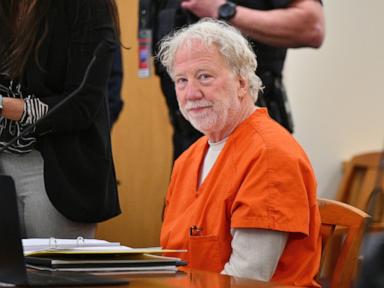
In court, Judge Ramsey noted that Donaldson had shown no regret, apology, or shame, stating that the convictions obliterated his prior public achievements. That remark cuts to a hard truth about high-profile prosecutions. Decades of speeches, committee seats, and party loyalty do not offset crimes against children, yet they do complicate how institutions process shock when the mask drops.
Following the June 2026 guilty verdicts, DUP insiders told reporters that Donaldson rarely spoke about his home life and that many colleagues felt blindsided. Shock is genuine when people only see the public performance. Still, shock is also a convenient shield if a party stops asking how warning signs, whispers, or boundary issues are handled behind closed doors.
The Co-Defendant Trial and Legal Fault Lines
This case was never solely about one man in the dock. Eleanor Donaldson, his wife, faced a trial of the facts after being found unfit to stand a conventional trial on mental health grounds, with a jury finding she had aided and abetted offences committed against the complainants.
In November 2026, Judge Ramsey placed her on a three-year supervised treatment order involving mental health and social work oversight, alongside a five-year notification requirement on the sex offenders register, while noting that both Donaldsons had lodged appeals.
- Unfitness to plead changes accountability: Because she could not be convicted or imprisoned in the same way as a conventional defendant, the court relied on a trial of the facts and a therapeutic disposal tailored to medical evidence.
- A review is already underway: Senior judge Sir John Gillen was tasked with reviewing Northern Ireland's laws and procedures around unfitness to plead and trials of the facts following the case.
- Victims remain central to the aftermath: Both complainants attended hearings and had impact statements read out, underscoring how long justice takes when offences are prosecuted decades later.
Legal mechanisms built to protect fair process in cases of severe mental ill-health can look opaque or unsatisfying to the public when grave harm is established. That tension is real. A system must respect medical evidence without turning procedural safeguards into a perception of impunity.
Political Fallout and Conspiracy Claims
Political shockwaves hit Stormont and Westminster almost immediately after the arrest and verdict. Gavin Robinson, who stepped in as DUP leader, spoke of betrayed trust and insisted the law must take its course. Other parties across the spectrum echoed the point that no office or status places anyone above the law.
Donaldson's knighthood, annulled in July 2026 after calls from rivals and a request submitted through his solicitor, became a symbolic casualty of the collapse. Honours are meant to mark public service; stripping them after a conviction for child sex offences is the bare minimum required to preserve basic credibility.
Where investigative reporting has to separate fact from speculation is around political leverage. Rival unionist figure Jim Allister suggested in parliament that UK authorities might have used knowledge of Donaldson's private life as leverage during negotiations over post-Brexit trade arrangements. No public evidence presented at trial substantiated that claim.
Rumors of blackmail and secret dossiers thrive in Northern Ireland whenever a senior politician falls suddenly during sensitive talks. Treating unverified political speculation as established fact weakens serious accountability. Focus on what courts proved, what parties admit they knew or missed, and how safeguarding rules actually work inside political organizations.
What Institutions Must Change Next
Parties are not police forces, and political aides are not detectives. Pretending otherwise leads to sloppy internal "investigations" that protect reputations rather than people.
What political parties and public institutions can realistically do is narrower and more practical. Enforce strict safeguarding policies for staff, interns, youth wings, and constituency offices; keep clear reporting channels outside party hierarchy; and resist the habit of treating senior figures as untouchable because they hold key votes or negotiating briefs.
If a party only examines its culture when a leader goes to prison, it has waited twenty years too late.
Jeffrey Donaldson jailed for 15 years for child sex abuse crimes offers a concise broadcast overview of the sentencing and the reaction surrounding the case.