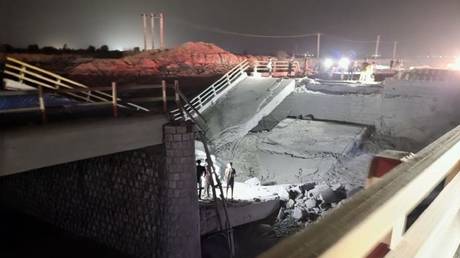
Italian courts delivered a crushing verdict against top corporate executives responsible for maintaining the nation’s highway network, following the 2018 collapse of Genoa’s Morandi Bridge that killed 43 people. Former Autostrade per l’Italia chief executive Giovanni Castellucci and senior engineering figures received prison sentences after prosecutors proved that years of deliberate neglect and suppressed technical warnings led directly to the catastrophic structural failure. The historic trial exposed a systemic rot where corporate profit structures actively disincentivized crucial safety repairs on critical public assets.
The collapse of the Morandi Bridge was not a natural disaster. It was a failure of corporate governance and regulatory oversight. On August 14, 2018, during a torrential downpour, a 200-meter section of the 51-year-old concrete stay bridge snapped, sending dozens of vehicles plunging 45 meters into the Polcevera River valley below. Beyond the immediate loss of life, the disaster severed a vital arterial link connecting northern Italy to southern France, paralyzing the industrial heartland of Liguria.
How Deferred Maintenance Created a Fatal Trap
The mechanics of the disaster were rooted in a design vulnerability known for decades. Designed by renowned engineer Riccardo Morandi and completed in 1967, the bridge relied on a unique system of pre-stressed concrete stays. Unlike modern cable-stayed bridges where individual steel tendons can be inspected and replaced individually, Morandi encased steel cables inside concrete sheaths, pouring grout around them to prevent corrosion.
Concrete degrades. Rainwater, salty coastal air, and heavy truck exhaust penetrated the outer concrete casing over five decades. Moisture settled inside the sheaths, slowly eating away at the internal load-bearing steel wires. Because the stay cables were sealed inside concrete, verifying their physical condition required specialized non-destructive testing or physical excavation.
Investigations revealed that executive managers knew the internal stays were deteriorating long before the collapse. Internal documents seized by Italian financial police demonstrated that internal engineering reports had flagged severe corrosion on Stay 9, the exact element that failed, as early as the 1990s and again in 2014. Despite these repeated technical red flags, full structural retrofitting was repeatedly delayed to preserve cash flow.
The Financial Mechanics of Private Infrastructure Profit
To understand why repairs were deferred, one must look at the privatization deal that handed control of Italy’s toll roads to Autostrade per l’Italia, then controlled by the Benetton family’s holding company.
Under the concession agreement, Autostrade operated thousands of kilometers of Italian motorways, collecting billions in toll revenues each year. The financial incentives were badly misaligned. Every euro spent on structural maintenance directly reduced net operating margins and slashed dividends distributed to private shareholders.
Inspection Companies Owned by the Inspector
The structural flaw in governance was even more brazen. Safety inspections were outsourced to a sister company, Spea Engineering, which shared the same corporate parent as Autostrade.
This created a severe conflict of interest. Spea engineers who drafted critical reports faced intense pressure from executive leadership to soften their risk assessments. Inspection scores were systematically altered to lower the official risk profile of aging bridges, allowing the operator to defer high-cost structural interventions while reporting healthy financial returns to the market.
- Maintenance budgets were treated as flexible expenses rather than fixed safety requirements.
- Critical internal warnings were buried or rewritten in official reporting chains.
- Concession agreements lacked independent, third-party verification mechanisms with the power to halt operations.
The Regulatory Mirage
State oversight failed long before the concrete fell. The Ministry of Infrastructure and Transport theoretically monitored the concession holder, but in practice, state regulators lacked the specialized workforce, budget, and independent technical tooling required to audit thousands of complex bridges and tunnels.
Regulators relied almost entirely on safety data provided by Autostrade itself. The operator owned the roads, performed the inspections, written the technical evaluations, and handed sanitized summaries to understaffed government ministry workers. It was a classic case of regulatory capture, where the private operator held all the technical expertise and operational leverage while the state maintained only the illusion of control.
When independent experts finally gained access to the physical remains of Stay 9 after the collapse, they found that more than 60 percent of the internal steel strands had rusted away completely prior to the final snap. The bridge was hanging by a thread, kept open to heavy freight traffic because shutting down lanes would have triggered contractual penalties and reduced toll collection.
Rebuilding Trust and Restructuring Concession Models
The criminal convictions mark a crucial moment of accountability, but the structural lessons extend far beyond Italy's borders. Public-private partnerships across Europe and North America frequently employ similar concession models, placing long-life public safety assets under the control of short-term private capital.
Fixing this model requires structural separation between asset managers, inspection entities, and regulatory bodies. Inspection agencies must answer directly to public safety authorities, financed through independent fees rather than direct contracts with the infrastructure operator. Mandating continuous structural health monitoring technology, such as embedded sensor arrays that measure tension loss and corrosion in real time, eliminates reliance on manual, subjective reporting.
Infrastructure cannot be managed like a standard corporate balance sheet where maintenance is an optional variable cost. When cost-cutting takes precedence over structural integrity, the toll is eventually paid in human lives.