The Architecture of Control
The gray concrete floors of immigration detention facilities rarely tell the truth on their own. They absorb sound, mumble under the weight of heavy boots, and mask the systemic mechanisms designed to break human endurance. When federal watchdogs published their findings regarding Alligator Alcatraz, the revelations did not simply point to isolated incidents of cruelty. They mapped an intentional infrastructure built around psychological erosion.
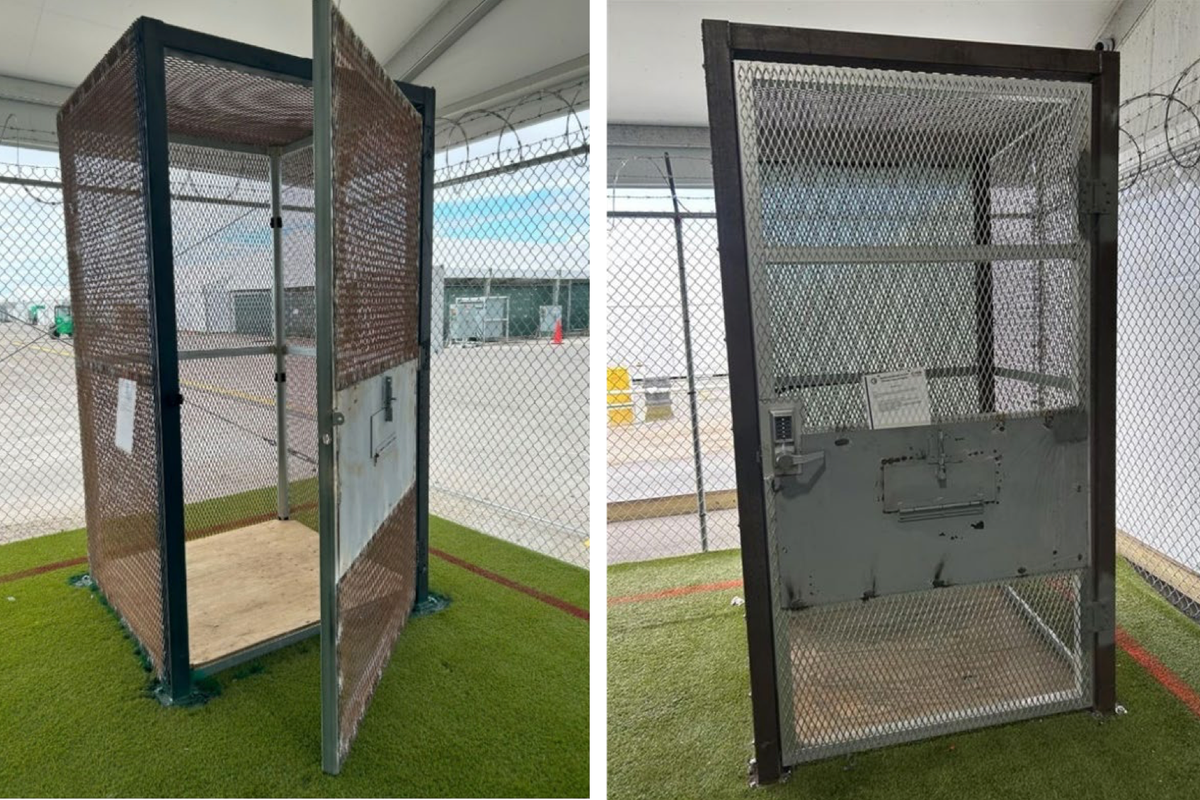
Federal monitors documented immigrants held inside phonebooth-sized cages under the bureaucratic guise of managing their emotions. The terminology alone deserves careful dissection. In the sterile lexicon of institutional enforcement, isolation ceases to be punishment. It becomes treatment. It transforms into a behavioral modification strategy deployed against people whose only formal charge is administrative noncompliance or unauthorized entry.
For decades, investigative reporters have tracked how immigration enforcement agencies borrow tactics from maximum-security penology. The deployment of micro-enclosures—spaces so restricted that physical movement is reduced to a static standing posture—represents an escalation in domestic confinement methods. These cages are not designed for long-term habitation. They are designed to extract compliance through sheer sensory deprivation and spatial claustrophobia.
When an oversight body discovers that human beings are locked in transparent enclosures barely large enough to turn around in, the public shock usually focuses on the physical dimensions. That misses the point. The physical constraint is merely the delivery mechanism for a deeper assault on psychological stability.
The Justification of Behavioral Management
Institutional administrators rarely admit to punitive intent. Instead, they rely on operational euphemisms. When internal reviews uncover conditions that violate basic human rights standards, the defense typically falls back on institutional safety, staff protection, or crisis de-escalation.
At Alligator Alcatraz, the justification offered for confining detainees in these restricted cells relied heavily on the premise of emotional management. Under this framework, any display of distress, frustration, or agitation by a detained individual is categorized as a security threat. Rather than addressing the root causes of anxiety—such as indefinite detention, lack of legal counsel, or family separation—the system responds by shrinking the physical environment.
The mechanics of this approach defy basic psychological science. Decades of research on solitary confinement and ultra-restrictive housing confirm that isolation accelerates cognitive decline, triggers acute anxiety, and exacerbates underlying trauma. Confining an already distressed person to a space the size of a telephone booth does not calm them down. It pushes them toward psychological collapse.
Yet, within the closed ecosystem of detention management, broken spirits are often misread as compliant subjects. The policy works precisely because it inflicts enough psychological pain to make resistance functionally impossible.
The Oversight Gap
External watchdogs perform a vital function, but their reports often arrive long after the damage has calcified into standard operating procedure. Inspectors general and civil rights offices operate under severe resource constraints. They must announce visits, coordinate access schedules, and review heavily redacted internal logs.
By the time a watchdog report exposes practices like those at Alligator Alcatraz, the institutional response follows a predictable script. Officials promise internal reviews, issue statements about zero-tolerance for staff misconduct, and sometimes rebrand the controversial holding spaces with new terminology. The cages remain welded to the floor. The structural logic persists.
Accountability in the immigration enforcement sector requires more than periodic inspections. It demands structural transparency that currently does not exist. Private contractors and federal agencies alike operate behind administrative firewalls that shield day-to-day practices from public scrutiny. When whistleblowers or detainees manage to smuggle descriptions of these conditions out to legal advocates, they face immediate retaliation or transfer to even more remote facilities.
The watchdog findings regarding Alligator Alcatraz serve as a rare window into a hidden apparatus. They expose how administrative convenience consistently overrides legal protections and basic human dignity.
The Broader Landscape of Confinement
The existence of telephone-booth cages within an immigration facility is not an anomaly. It is the logical endpoint of a system tasked with detaining hundreds of thousands of people annually without adequate infrastructure, medical support, or legal oversight. When capacity limits are breached and political pressure demands high-volume processing, facilities resort to extreme containment strategies.
We are witnessing the steady normalization of penal practices within civil immigration enforcement. Facilities originally designed for short-term holding have transformed into permanent outposts of maximum-security control. The line separating criminal incarceration from immigration detention has been erased entirely, replaced by a uniform culture of containment.
As long as the political mandate prioritizes deterrence through harsh conditions, oversight reports will continue to document abuses that shock the conscience without shifting the underlying policy. The cages at Alligator Alcatraz will remain occupied until the public demands a fundamental reckoning with how the state treats those who cross its borders.