Crude oil prices fluctuated sharply on Monday after Iranian state media claimed the White House offered to temporarily suspend sanctions on Tehran's oil exports, a report the Biden administration swiftly denied. The rumor briefly dragged global benchmarks down from their war-induced highs, offering a fleeting moment of relief to an energy market battered by the ongoing conflict in the Middle East. However, the market reaction exposes a deeper vulnerability: Wall Street is desperately chasing any sliver of diplomatic hope, even when the underlying geopolitical math does not add up.
The spark came from Tehran's semi-official Tasnim news agency, which claimed that Washington had delivered a fresh proposal through Pakistani mediators. According to the report, the Office of Foreign Assets Control (OFAC) was prepared to grant time-bound waivers for Iranian crude exports to foster an environment for peace talks. The response from Washington was immediate. US officials flatly rejected the claim, calling the report entirely false and reiterating that the strict sanctions regime remains fully intact.
To understand why the market swallowed this rumor, even for a few hours, you have to look at the immense pressure cooking under the hood of the global energy supply.
The Desperate Hunt for Barrels
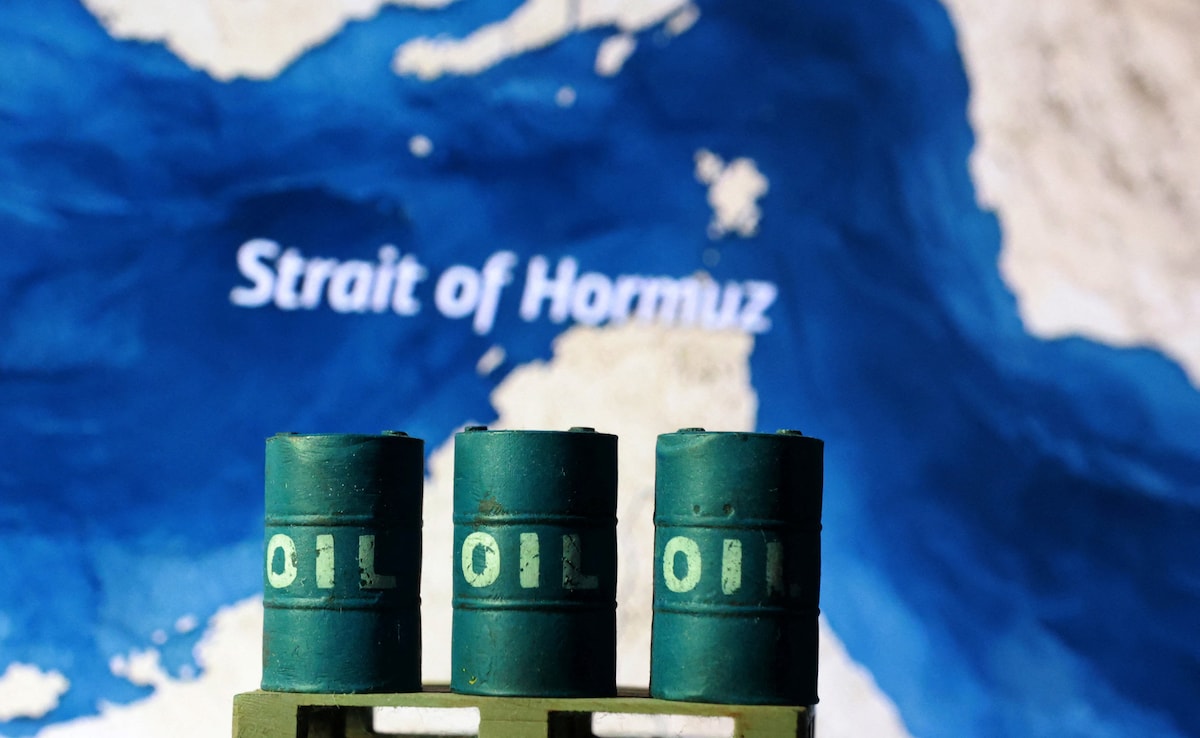
Global crude benchmarks have stubbornly hovered above $100 per barrel ever since the outbreak of hostilities earlier this year. The escalation of the regional war, punctuated by the closure of the critical Strait of Hormuz, stripped millions of barrels of daily supply out of the global market.
For the White House, the economic fallout is hitting dangerously close to home. Despite emergency measures—including aggressive draws from the Strategic Petroleum Reserve and historic waivers of the Jones Act shipping rules—domestic retail gasoline prices are pinned near $4.50 per gallon. This represents the highest level since the inflationary crisis of 2022.
The administration is cornered. Just 24 hours prior to the Iranian rumor, the US Treasury allowed a separate, critical sanctions waiver to expire—one that had permitted countries like India to legally purchase seaborne Russian crude. That waiver was an emergency mechanism designed to stave off a catastrophic supply crunch when the Strait of Hormuz first shut down. By letting the Russian waiver lapse, the Treasury signaled a return to a hardline stance, inadvertently tightening the global supply knot even further.
Traders assumed the White House was attempting a high-stakes pivot. The logic seemed plausible on its face: if you are going to slam the door shut on Russian barrels, you must open a window somewhere else to prevent a catastrophic price spike. Allowing Iranian crude back into the legitimate global supply pool would theoretically provide that safety valve.
Why a Temporary Waiver is an Illusion
The diplomatic disconnect between Washington and Tehran runs far deeper than a dispute over temporary paperwork. Even if the reported 14-point proposal delivered via Islamabad is real, the structural demands of the two nations are fundamentally irreconcilable right now.
For an international oil trader or a commercial shipping fleet, a time-bound Treasury waiver is practically useless. Moving oil is not a frictionless transaction. It requires weeks of logistics, complex maritime insurance underwriting, and long-term supply contracts. A temporary, month-to-month reprieve from OFAC does not give major refineries the legal certainty they need to reconfigure their operations for Iranian heavy crude.
"A temporary waiver is the difference between a country being able to invest in long-term export infrastructure and one that has to treat every single barrel as if it might be its last legal shipment."
Tehran knows this. Iranian negotiators have repeatedly stated that they will not accept a temporary pause that can be revoked at the whim of an American president. They are demanding a total, permanent lifting of the energy blockade as a precondition for any lasting ceasefire agreement. Washington cannot grant that without completely abandoning its geopolitical leverage in the Middle East.
The Shadow Fleet Factor
The biggest flaw in the market's reaction is the assumption that Iranian oil is actually locked away. It is not.
Despite the "maximum pressure" campaign and a flurry of targeted Treasury actions aimed at the Islamic Revolutionary Guard Corps' terror-financing networks, Iranian crude continues to flow into global markets. It moves through a massive, highly sophisticated network of un-flagged or falsely flagged tankers known as the shadow fleet.
These ships operate completely outside Western financial and insurance ecosystems. They engage in dangerous ship-to-ship transfers in the middle of the ocean, blend crude to obscure its origin, and systematically disable their automatic identification transponders.
The primary destination for this ghost oil is China. Recent high-stakes diplomatic meetings revealed that Beijing has no intention of stopping these purchases. While Chinese officials reportedly agreed not to provide direct military hardware to Tehran, they made it clear that their independent refining sectors would continue to absorb discounted Iranian barrels.
Therefore, an official US waiver would not suddenly bring a massive flood of new, hidden oil to the market. It would merely legitimize and re-route the clandestine flows that are already moving through the shadow fleet. It would move those barrels from back-alley Chinese independent refiners onto the books of transparent international buyers. The net addition to global supply would be negligible.
The High Cost of Market Credulity
The brief rally in European equity markets and the quick recovery of Nasdaq futures following the Tasnim report prove how volatile the current trading environment has become. Algorithms and trading desks are reacting to headlines rather than physical reality.
The physical reality is unyielding. The Strait of Hormuz remains heavily disrupted. The structural deficit in global refining capacity cannot be fixed by a diplomatic press release. And the US Treasury cannot easily fight a multi-front economic war against both Russian and Iranian exports without forcing domestic consumers to pay a steep price at the pump.
The administration's immediate denial of the waiver reports forced oil prices to quickly claw back their losses. The incident serves as a stark reminder to energy investors that in a war economy, information is weaponized just as effectively as physical blockades.
Traders waiting for a diplomatic silver bullet to lower energy prices are misreading the map. The geopolitical landscape has shifted permanently. Until the physical bottlenecks in the Middle East are cleared and safe transit through maritime chokepoints is restored, any headline promising a quick fix via sanctions relief is nothing more than noise. Expect more of these trial balloons to be floated out of Islamabad and Tehran as the conflict drags on, and expect the market to get burned again if it keeps mistakes rumors for reality.