The federal judiciary has quietly constructed a trapdoor beneath the feet of millions of non-citizens living in the United States.
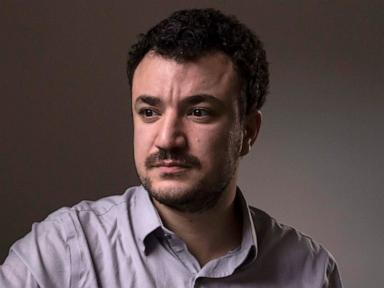
On Friday, the Third Circuit Court of Appeals issued a razor-thin 6-5 decision denying a rehearing for Mahmoud Khalil, a 31-year-old lawful permanent resident and former Columbia University student activist. The ruling means the federal court system will stand down, refusing to intervene as the Trump administration moves to rearrest and deport him over his high-profile advocacy for Palestinian rights.
By closing the courthouse doors, the appellate majority solidified a terrifying legal precedent. Non-citizens targeted by the executive branch for political speech can now be locked away indefinitely without a swift way to challenge the constitutionality of their detention in front of an independent judge.
The Mechanics of Silence
To understand how a green card holder with a U.S. citizen wife and child ended up facing immediate rearrest, one must look at the mechanical weaponization of a Cold War-era immigration provision and a single, dense line of statutory text.
In March 2025, five plainclothes Department of Homeland Security agents arrested Khalil at his home without a warrant. The catalyst was a directive from Secretary of State Marco Rubio to Homeland Security Secretary Kristi Noem, invoking a rarely used section of the Immigration and Nationality Act. This provision allows for the deportation of any alien whose presence or activities would have "potentially serious adverse foreign policy consequences" for the nation.
Khalil was not accused of a violent crime. He was a lead student negotiator during the campus protests at Columbia University, urging the institution to divest from Israel. Under the administration's view, expressing those views compromised compelling U.S. foreign policy interests.
Following his arrest, the government bypassed local facilities and transported Khalil in shackles to a detention center in Louisiana. He spent more than 100 days there, sleeping in a bunker without a blanket, ultimately missing the birth of his first child.
The legal machinery that keeps him in jeopardy relies on 8 U.S.C. § 1252(b)(9), a statutory provision known as the consolidation clause. The government argues, and the Third Circuit panel majority agreed, that this clause strips federal district courts of jurisdiction over any claim arising from a removal proceeding. Under this interpretation, a detainee must wait out the entirety of their administrative immigration case—a process managed by the executive branch itself—before ever asking a real federal judge to review a constitutional violation.
Writing the Courts Out of Relevance
The danger of this logic is that it turns a bureaucratic timeline into a weapon of attrition. Administrative immigration proceedings regularly drag on for months or years. If a person cannot file a habeas corpus petition to challenge an unconstitutional arrest while those proceedings are active, the government effectively gains a blank check for prolonged detention.
The division within the Third Circuit over this issue is stark, falling cleanly along ideological lines. The six appellate judges who voted to deny Khalil’s rehearing—all appointed by Republican presidents—offered no explanation for their decision.
The five dissenting judges, all appointed by Democrats, were explosive in their condemnation. Writing for the dissenters, U.S. Circuit Judge Cheryl Ann Krause warned that the court was willingly abdicating its structural duty to check executive power.
“The judiciary serves as an inseparable element of the constitutional system of checks and balances, protecting civil liberties and checking legislative and executive discretion,” Krause wrote. “We cannot fulfill that role if we write ourselves out of relevance and leave the executive branch to check itself.”
💡 You might also like: China’s Shadow Over Zambia and the Death of Diplomatic Sovereignty
This is not abstract legal philosophy. It is a fundamental shift in how power balances out in immigration enforcement. By giving up jurisdiction, the court has signaled that the executive branch can arrest a legal resident for speech it dislikes, place them in a remote detention center, and insulate that detention from immediate constitutional scrutiny.
A Dual-Front War and Shifting Allegations
While the battle over the Third Circuit's jurisdiction heads toward a desperate appeal at the Supreme Court, Khalil’s defense team is fighting an entirely separate, uglier battle inside the administrative system itself.
They have appealed the underlying deportation order to the Fifth Circuit Court of Appeals, alleging sweeping misconduct. Newly filed documents submitted to the Board of Immigration Appeals paint a picture of a rigged game. The filings contain declarations from former immigration judges suggesting that leadership within the Executive Office for Immigration Review actively pressured the local judge to issue a predetermined decision and fast-track the deportation to make an example of Khalil.
Furthermore, his attorneys noted that three members of the Board of Immigration Appeals highly unusually recused themselves, pointing to potential behind-the-scenes manipulation by political appointees within the Department of Justice.
The strategy appears clear. By utilizing a parallel system of executive-controlled immigration courts where judges are employees of the Attorney General rather than independent actors, the administration can insulate its political retaliations from traditional legal roadblocks.
The True Scope of the Precedent
Apologists for the administration’s aggressive immigration stance argue that non-citizens do not enjoy identical political speech protections to native-born citizens when foreign policy is on the line. They claim the executive branch must have uninhibited authority to manage international relations without domestic disruption from foreign nationals.
But that argument ignores the structural damage done to the legal system. If the government can bypass the First Amendment by framing domestic political dissent as a "foreign policy consequence," then the boundary of protected speech shrinks for everyone.
If this template succeeds against a green card holder advocating for Palestine, it can be deployed against any visa holder, permanent resident, or foreign-born academic criticizing U.S. policy on China, trade, or international alliances.
Khalil’s attorneys are scrambling to secure an immediate stay of the Third Circuit’s mandate. Without it, immigration agents can legally walk back into his home and put him back in chains before the Supreme Court even decides whether to glance at his petition. The judicial safety net has frayed to a single strand.


