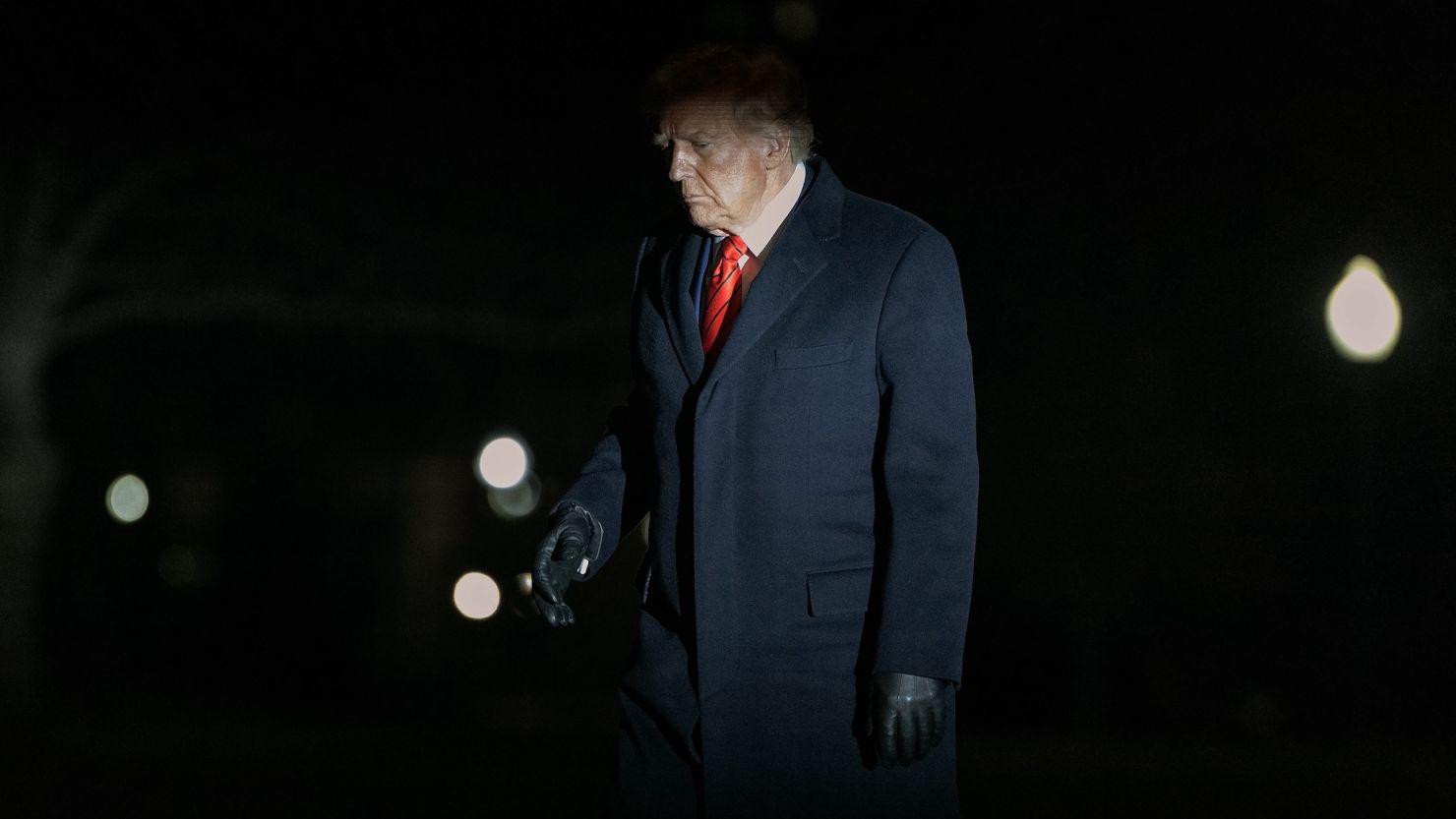
Donald Trump has just tossed a match into the world’s most volatile powderkeg, ordering a "total" naval blockade of the Strait of Hormuz after peace talks in Islamabad collapsed with a thud heard from Wall Street to Riyadh. Effective immediately, the United States Navy is tasked with sealing a waterway that carries 20% of the world’s daily oil supply and serves as the literal windpipe for the global energy market. While the administration frames this as a surgical response to Iranian "nuclear unyielding," the reality on the water is far more chaotic. This isn't just a military maneuver; it is a high-stakes economic strangulation that threatens to rewire the global financial order overnight.
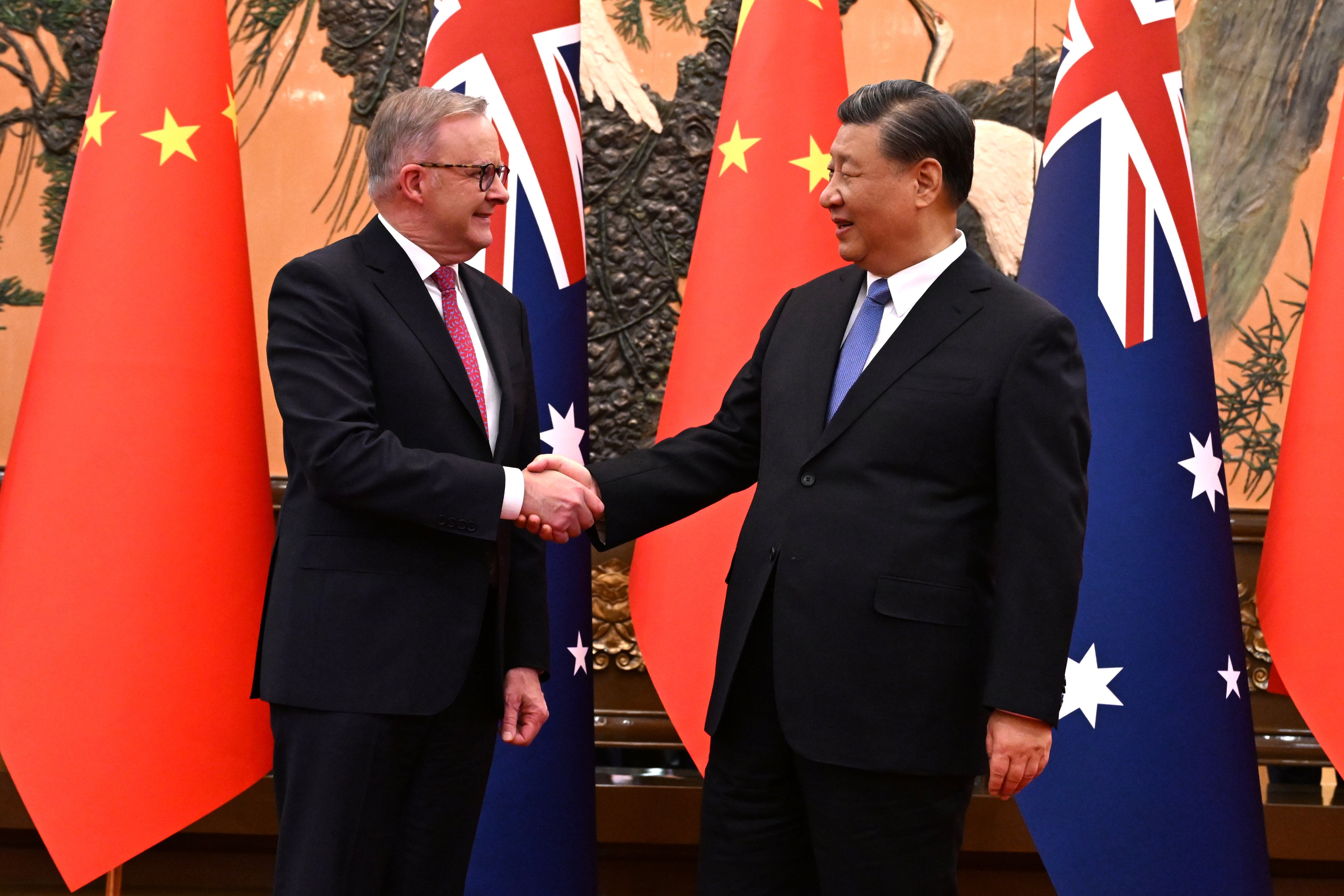
The move follows a disastrous weekend in Pakistan, where Vice President JD Vance failed to secure a deal with Iranian Parliamentary Speaker Mohammad Bagher Ghalibaf. Trump’s reaction was characteristically blunt, taking to Truth Social to declare that any ship attempting to enter or leave the Strait without U.S. clearance would be intercepted. He further authorized the destruction of any vessel that has paid "tolls" to Tehran—a direct swipe at Iran’s recent attempts to monetize the transit of the few tankers brave enough to navigate the mine-laden waters.
The Logistics of a Choke Point
To understand why this blockade is a radical departure from previous "maximum pressure" campaigns, one has to look at the geography of the Strait. At its narrowest, the shipping lanes are only two miles wide. For decades, the U.S. has operated under the doctrine of "freedom of navigation." By pivoting to a blockade, the U.S. is now effectively doing what it once threatened to go to war to prevent: stopping the flow of commerce.
The Arleigh Burke-class destroyers, including the USS Frank E. Petersen Jr. and the USS Michael Murphy, are already on station. Their mission is twofold: clear the sea mines that Iran has allegedly sown across the channel and physically interdict tankers. This is a logistical nightmare. Modern naval warfare isn't designed for "parking" a fleet in a narrow corridor where shore-based anti-ship missiles can reach out and touch you.
Why Islamabad Failed
The Islamabad talks weren't just about centrifuges; they were about the survival of the Iranian state. Tehran demanded the release of frozen assets and a cessation of the bombing campaign that has plagued the Republic for the last six weeks. When Vance walked away, he left behind a proposal that Iranian officials characterized as "capitulation disguised as diplomacy."
The core of the disagreement remains the "nuclear sunset" clauses. Trump wants a permanent end to enrichment; Iran wants the right to a civilian program as guaranteed under the original NPT. But the blockade shifts the conversation from legal rights to immediate survival. By cutting off the Strait, Trump is betting that the Iranian economy will fracture before the global economy does.
The $150 Barrel Reality
Energy markets reacted with predictable hysteria. Brent Crude, which had already been flirting with $120, is now poised to breach $150 as traders price in a prolonged outage. It is a simple, brutal equation. When you remove 20 million barrels of oil per day from the market, there is no "spare capacity" in the world that can fill the void.
Global Supply Shortfall Comparison:
- 1973 Oil Crisis: 6% of global supply removed.
- 1979 Iranian Revolution: 4% of global supply removed.
- 2026 Hormuz Blockade: 20% of global supply removed.
The impact is most acute in Asia. China, India, Japan, and South Korea receive nearly 75% of the oil that passes through Hormuz. For Beijing, this blockade isn't just a foreign policy headache; it’s an existential threat to its industrial base. We are seeing the first signs of a man-made "grocery emergency" in the Gulf states. Countries like Qatar and the UAE, which import the vast majority of their food and desalinate nearly all of their water, are suddenly cut off from the global supply chain.
The Legal Grey Zone
International law is clear on one point: the right of "transit passage" through international straits cannot be suspended, even during armed conflict. By declaring a blockade, the U.S. is stepping into a legal vacuum. The administration argues that Iran’s use of mines and "illegal tolls" has already invalidated the neutral status of the waterway.
Critics argue that by enforcing a blockade, the U.S. becomes a belligerent in a way that allows Iran to legally target any vessel in the region. It is a distinction that won't matter much to the captain of a supertanker staring down a carrier strike group on one side and an Iranian drone swarm on the other.
The Minefield Problem
Clearing the Strait is not as simple as dragging a net. Iran’s "mine droppers" may have been targeted by U.S. air strikes, but thousands of "dumb" mines—cheap, effective, and hard to detect—are likely already adrift. The Navy is deploying underwater drones and specialized minesweepers, but the process is slow.
Every day the Strait remains closed, the "force majeure" declarations from energy giants like QatarEnergy pile up. This isn't a temporary glitch in the system. It is a systemic collapse of the Gulf Cooperation Council’s economic model.
No Exit Strategy
The danger of a blockade is that it is easier to start than it is to finish. To lift it, Trump needs a win he can sell as "the greatest deal in history." To survive it, Iran needs to prove it can endure more pain than the American consumer at the gas pump.
As the first destroyers begin their patrols and the price of jet fuel doubles, the world is realizing that the "ceasefire" was just a breather before the real war began. This is no longer a localized conflict between Washington and Tehran. It is a siege of the global economy.
The U.S. Navy has been instructed to "seek and interdict." In the narrow, hot waters of the Persian Gulf, that instruction is a hair-trigger. One miscalculation, one rogue commander, or one stray mine is all it takes to turn a blockade into a regional conflagration that no one, not even the most seasoned veteran of the "maximum pressure" era, can truly control.
Ship owners are now faced with a choice: risk the mines and the missiles, or let their vessels rot at anchor while the world's lights go out. Most are choosing the anchor.