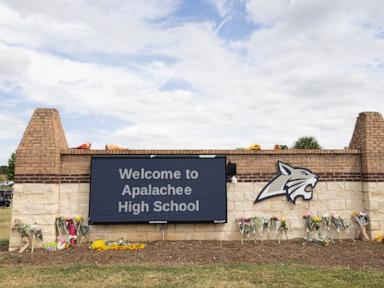
When a teenager enters a guilty plea for a high school mass shooting, prosecutors often frame the moment as a victory for justice that brings immediate closure. That narrative rarely holds up under scrutiny. The guilty plea in a youth mass violence case represents a calculated legal trade-off, trading a lengthier, unpredictable public trial for a guaranteed conviction without the possibility of parole. While this legal mechanic spares communities the trauma of reliving the event in open court, it frequently buries critical evidence regarding system failures, law enforcement response delays, and overlooked red flags.
The public trial serves a dual purpose in American jurisprudence. It determines criminal culpability, but it also acts as a public audit of the institutions charged with preventing disaster. When a defendant admits guilt before trial, the legal process halts. The underlying evidentiary record—school disciplinary files, mental health evaluations, local police records, and digital footprints—is routinely sealed or restricted from public inspection. Victims and families end up trading their right to a full accounting of institutional failure in exchange for judicial certainty.
The Legal Calculation Behind the Guilty Plea
Defense attorneys representing minors accused of catastrophic violence face an uphill battle. The evidence in mass casualty events is usually overwhelming, captured on CCTV cameras, preserved in text messages, and witnessed by dozens of survivors. Under these conditions, trial strategy shifts from pursuing an acquittal to avoiding the death penalty or mitigating conditions of confinement.
For adolescent defendants, the legal framework is particularly complex. Federal precedent prohibits the death penalty for crimes committed under the age of 18, making mandatory life imprisonment without parole the absolute maximum penalty in many jurisdictions. However, statutory changes across several states now mandate periodic juvenile sentence reviews, even for severe crimes. Defense counsel utilizes this evolving legal landscape to negotiate pleas that leave small procedural cracks open for future appeals.
Prosecutors operate under a different set of pressures. High-profile trials carry immense financial costs and administrative burdens, requiring months of testimony from traumatized minors and expert witnesses. A trial exposes state evidence to rigorous cross-examination, creating potential grounds for appeal if procedural errors occur. By securing a guilty plea, prosecutors secure a guaranteed conviction, shield vulnerable witnesses from testifying, and deliver a definitive verdict to the public. The trade-off is the loss of a public forum where systemic negligence can be exposed.
How institutional Secrecy Takes Hold
When a court accepts a plea deal, the evidentiary phase of the justice system terminates abruptly. This abrupt stop directly impacts public accountability.
+-------------------------------------------------------------------+
|                     THE POST-PLEA INFORMATION GAP                 |
+-------------------------------------------------------------------+
|  Standard Criminal Trial           |  Pre-Trial Guilty Plea       |
+------------------------------------+------------------------------+
|  Public witness testimony          |  Witnesses never testify     |
|  Cross-examination of authorities  |  Internal reviews stay private|
|  Full evidence disclosure on record|  Files sealed by court order |
|  Detailed timeline established     |  Narrative controlled by state|
+------------------------------------+------------------------------+
Without a trial, the public relies entirely on internal law enforcement reviews and school district reports. These documents are routinely delayed, heavily redacted, or withheld under the guise of pending civil litigation.
Consider the routine handling of threat assessments prior to violent incidents. School districts frequently employ threat assessment teams designed to identify at-risk students and intervene before violence escalates. When a shooting occurs, these assessment records become central to understanding how the system broke down. In a full trial, school administrators, counselors, and law enforcement liaison officers are subpoenaed to testify under oath about missing intervention protocols. In a plea scenario, those individuals never take the stand. The public receives a summary statement rather than an exhaustive examination of administrative performance.
The Civil Litigation Workaround
Faced with a closed criminal process, grieving families increasingly rely on the civil court system to force discovery. Civil lawsuits against school districts, local police departments, and gun manufacturers have become the primary mechanism for uncovering the truth behind mass violence events.
This path is fraught with legal obstacles. Government entities and public employees are protected by qualified immunity and sovereign immunity doctrines, which shield officials from civil liability unless their conduct violates clearly established statutory or constitutional rights. To bypass these legal defenses, plaintiffs must prove gross negligence or systemic constitutional violations—a standard that requires immense financial resources and years of court battles.
Civil discovery often reveals what the criminal justice system glossed over during plea negotiations. Depositions from civil cases frequently expose widespread communication breakdowns between school administrators and law enforcement, faulty emergency response systems, and ignored warnings from fellow students.
Yet civil settlements rarely result in institutional reform. Most civil suits end in confidential financial settlements backed by non-disclosure agreements, effectively buying the silence of the victims' families and keeping the full record hidden from the taxpayers who fund these institutions.
Reforming the System to Prioritize Transparency
Addressing the accountability gap created by pre-trial guilty pleas requires systemic reform in how violent crimes are adjudicated and investigated.
- Mandatory Public Fact-Finding Hearings: Legislators should establish statutory requirements for independent, public fact-finding hearings following any pre-trial plea agreement in a mass violence case. These hearings would function independently of the criminal sentencing process, ensuring that evidence regarding systemic failures is presented publicly under oath.
- Automatic Unsealing of Non-Privileged Records: Once a criminal case resolves through a guilty plea and the direct appeal window closes, state laws should mandate the automatic unsealing of all school disciplinary records, law enforcement communication logs, and government threat assessments related to the perpetrator, subject only to necessary privacy redactions for minor victims.
- Independent State Investigative Commissions: Rather than relying on local police departments or school boards to investigate their own response efforts, state legislatures must empower fully independent oversight commissions with subpoena power to conduct comprehensive reviews and publish unredacted findings within a strict timeframe.
A guilty plea brings a swift legal resolution to a horrific crime, but legal closure is not the same as truth. True justice demands an uncompromising accounting of every failure that permitted the act to occur, ensuring that the institutions designed to protect children are held to the exact same standard of accountability as the perpetrator.