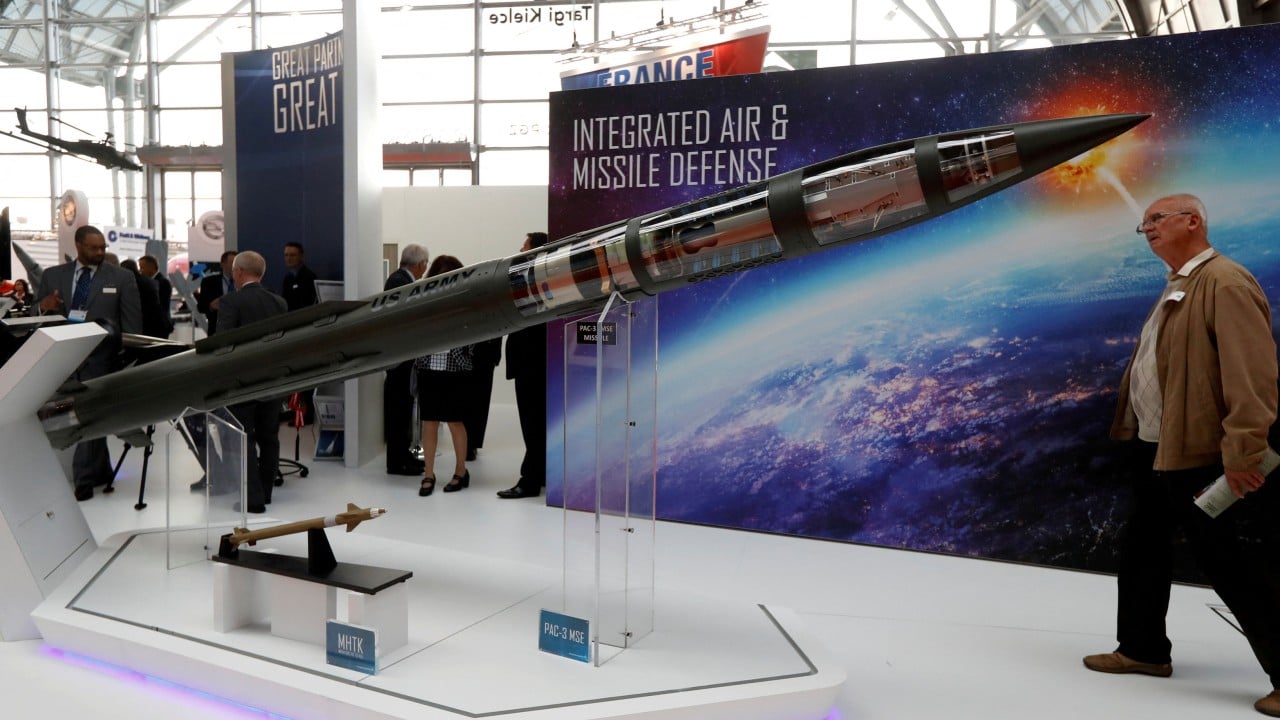
Lockheed Martin introduced the PAC-3 Adapted Capability Effector on July 20, 2026, a new Patriot missile interceptor designed to cost less than half of the current four million dollar PAC-3 MSE model. This unexpected announcement at the Farnborough Airshow directly addresses a critical vulnerability in Western defense strategies: the staggering financial asymmetry of modern warfare. For years, allied nations have fired multi-million dollar interceptors to down cheap, mass-produced drones. The new interceptor aims to reverse this unsustainable economic drain, offering a more realistic path toward mass production while altering the industrial balance between prime contractors and agile aerospace startups.
The Ruinous Math of Modern Interception
Modern attrition warfare has exposed a glaring flaw in Western military doctrine. When a nation utilizes a four million dollar PAC-3 Missile Segment Enhancement interceptor to destroy a drone built for twenty thousand dollars, the defender is losing the economic war. This dynamic has severely depleted Western stockpiles from Ukraine to the Middle East. Security architectures designed for high-end, low-volume conflicts are buckled under the weight of sustained, low-cost aerial bombardment.
The defense establishment ignored this math for far too long. Decades of consolidation left the industry with heavy bureaucracies and slow manufacturing lines optimized for profit margins rather than volume.
The industry is now facing a reckoning. The introduction of this cheaper interceptor is not an act of benevolence; it is an economic survival tactic.
Startups Forcing the Hand of Defense Giants
For the first time in generations, traditional defense conglomerates face genuine competitive pressure from agile technology newcomers. Startups across Europe and the United States have been testing low-cost anti-missile interceptors intended to counter ballistic threats and drones at a fraction of standard defense costs. These newer entities operate without the staggering legacy overhead of prime contractors, using rapid prototyping and commercial components to build functional defense hardware in months rather than decades.
Lockheed Martin had to respond. If the defense primes fail to provide affordable options, they risk losing a significant portion of their future market share to these emerging players.
Engineering the Budget Smart Interceptor
To lower production costs by over fifty percent, engineers had to re-evaluate what an interceptor actually requires. The new weapon retains the core hit-to-kill technology of the legacy series, destroying incoming targets through pure kinetic force rather than heavy explosive warheads. This precision necessitates advanced seeker technology, meaning the savings had to come from structural and manufacturing simplification.
The system bypasses lengthy, multi-year certification processes by maintaining full compatibility with the existing Patriot fire control infrastructure and the Integrated Battle Command System.
It strips away excess specialized hardware. By narrowing the operational envelope to focus heavily on cruise missiles, drones, and short-range ballistic threats, designers eliminated the expensive propulsion components needed to hit extreme-altitude hypersonic targets. The resulting missile is a specialized tool rather than an over-engineered solution for every conceivable threat.
The Geopolitical Shift to Shared European Production
The defense industrial base in the United States cannot handle current global manufacturing demands alone. Lockheed Martin intends to build this new missile through deep collaboration with European industrial partners. This marks a fundamental departure from the traditional American defense export model, which historically focused on selling completed systems abroad to maintain tight control over technology and revenue.
European governments are no longer content to simply wait in line for American factory allocations. With production backlogs extending years into the future, nations across the continent are demanding local assembly lines and technology transfers to secure their own airspace.
This cooperative model introduces clear logistical hurdles. Coordinating supply chains across multiple nations often creates bureaucratic gridlock, and sharing sensitive integration data requires navigating complex regulatory frameworks. However, the alternative—allowing Western missile stockpiles to hit empty while waiting for single-source factories in the American homeland to scale up—is far more dangerous.
The Long Road to Mass Production
Announcing a lower-cost missile is entirely different from building it at scale. Lockheed Martin estimates that initial production will take roughly thirty-six months to begin. In a high-intensity conflict, three years is an eternity.
A reduced unit price does not immediately solve the underlying material bottlenecks. The defense sector still faces widespread shortages of solid rocket motors, specialized semiconductors, and skilled aerospace technicians. If the supply chain for these core components remains choked, a cheaper design will not result in more missiles rolling off the assembly line.
True defense depth requires true manufacturing capacity. Until factories can pump out these interceptors by the thousands, military planners will still face the grim reality of rationing their air defense assets. The defense industry spent decades optimizing for a world that no longer exists, and building a cheaper missile is merely the first step in a long, difficult realignment.