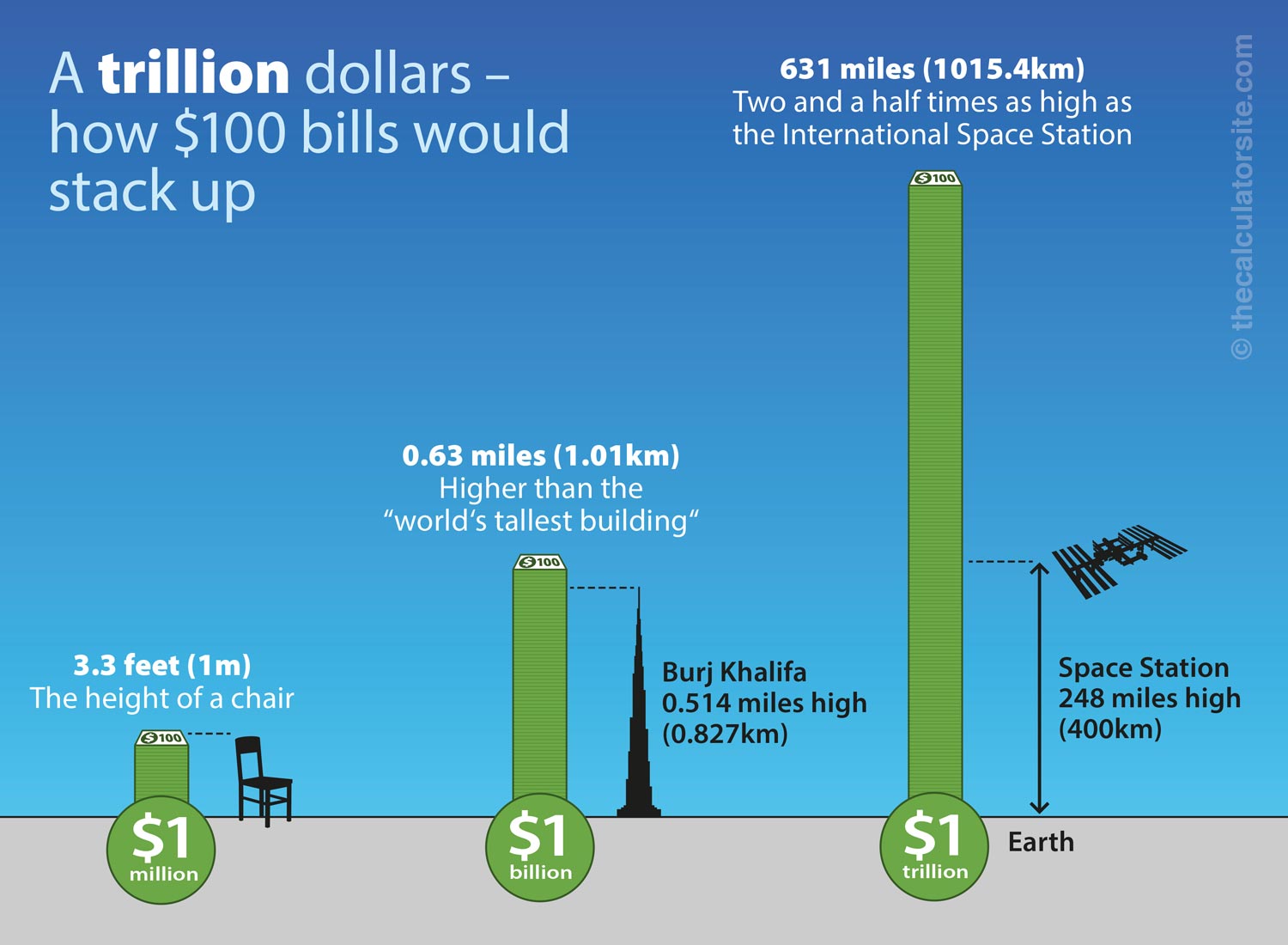
The United States Treasury Department confirmed on August 19, 2026, that the national debt has eclipsed $40 trillion. This figure is not merely a bookkeeping entry in a basement in Washington. It is a fundamental shift in the machinery of the global economy. The debt has doubled since early 2017, growing by roughly $91,000 every single second. While political actors trade barbs about who is to blame, the actual mechanism of this expansion reveals a grim reality: the federal government is now financing its own existence with borrowed money at a scale that defies historical precedent.
To understand the scale of this $40 trillion burden, consider the mechanics of a common household budget. If a family earns $50,000 a year but spends $70,000, they fill the gap with credit cards. Eventually, the interest on those cards grows so large that they are forced to stop buying groceries or paying for home repairs just to make the minimum monthly payment. The United States federal government has reached this point. In the first ten months of fiscal year 2026 alone, interest payments on the national debt surged past the cost of national defense. Don't miss our previous coverage on this related article.
This is the hidden tax. When the government spends more than it collects, it must issue Treasury securities to attract investors. To convince the world to keep lending money to a borrower that already owes $40 trillion, the Treasury must offer higher yields. These higher yields ripple outward, locking the average citizen into expensive mortgages, ballooning auto loan rates, and soaring interest on consumer credit. This is what economists identify as crowding out. The government is effectively vacuuming up the available capital in the financial system, leaving less for businesses to innovate, expand, or hire.
The acceleration is staggering. The debt grew from $39 trillion to $40 trillion in less than five months. This velocity suggests that the traditional methods of managing federal deficits—namely, hoping for economic growth to outpace borrowing—are failing. During periods of relative economic stability, the government is still running deficits in the neighborhood of $2 trillion annually. This is not a product of emergency spending on pandemics or wartime mobilization alone. It is baked into the baseline. To read more about the history of this, Reuters Business offers an excellent breakdown.
Critics and lobbyists often point to specific programs like Social Security, Medicare, or military expenditures as the primary drivers. While these are objectively the largest line items in the federal budget, the problem is structural. Revenue collection is not keeping pace with the mandatory obligations written into law by decades of legislation. When you combine an aging population, rising healthcare costs, and a political environment that views tax increases or benefit cuts as electoral poison, you are left with the only remaining variable: debt.
There is a false sense of security in the idea that the United States can simply print its way out of this dilemma. Proponents of this view ignore the reality of price discovery in the bond market. If the world loses confidence in the dollar as the primary store of value, the cost of borrowing will not just tick upward; it will spike. Investors who currently hold $32 trillion in public debt are already beginning to demand higher premiums. If that premium continues to grow, the federal budget will eventually be consumed entirely by interest payments, leaving nothing for the actual functions of government.
This is the point where the conversation often stalls, caught between partisans who want to cut spending and those who want to raise revenue. Both sides are largely ignoring the reality of the fiscal cliff. The Bipartisan Policy Center projects that the debt limit will likely hit $41.1 trillion between late winter and mid-summer of 2027. Reaching that limit will trigger yet another round of legislative theater, but it will not solve the underlying math.
Consider a hypothetical scenario where a major global bank decides that the risk of holding long-term US Treasury bonds outweighs the yield. In such a case, the Treasury would struggle to find buyers, forcing the Federal Reserve to step in as the buyer of last resort. This would inject more liquidity into the system, potentially devaluing the currency and further stoking inflation. It is a feedback loop that leads to currency debasement, a phenomenon that has toppled empires throughout history.
The political class is currently fixated on the One Big Beautiful Bill Act and its impact on the deficit, yet they fail to address the core trajectory. Even if that legislation were repealed today, the structural deficit would remain. The issue is not just the legislation of the last year or the last decade. It is the cumulative effect of fifty years of prioritizing short-term political wins over long-term fiscal stability.
The $40 trillion mark serves as an alarm bell that has been ringing for years, now louder than ever. The markets are watching. The interest rates are reacting. The reality is that every dollar borrowed today is a claim against the productivity of the next generation. If the current pace continues, the question is not whether a crisis will occur, but how the government will choose to resolve it. They can choose to impose painful tax hikes, slash essential services, or engage in inflationary policies that erode the savings of every American. None of these options offer a path back to prosperity. They only offer different degrees of decline.
The path ahead requires a level of political courage that has been absent from Washington for generations. It requires admitting that the current social contract is mathematically incompatible with the current revenue stream. Without a radical restructuring of federal spending and a pivot toward genuine fiscal responsibility, the debt will continue to compound. The engine is already sputtering, and the warning lights are flashing across every monitor on Wall Street. Ignoring the signal will not keep the machine running.