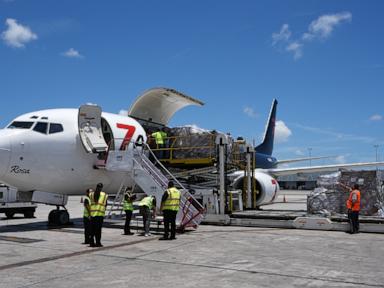
Washington sends millions of dollars in humanitarian food assistance to the Cuban population while maintaining a comprehensive trade embargo designed to isolate the island’s government. This dual-track strategy attempts to address urgent humanitarian needs without offering economic relief to the ruling regime in Havana. However, the mechanism creates an inherent tension. State-run distribution channels, private agricultural importers, and strict sanction exemptions intersect in a complex system that frequently undermines both humanitarian goals and foreign policy objectives.
The Dual Track Dilemma
Foreign policy rarely operates in a vacuum of pure intent. In Havana, basic food staples like rice, black beans, and powdered milk face chronic shortages. Washington's response balances two conflicting goals. The first is preventing outright famine on an island ninety miles off the Florida coast. The second is avoiding any action that bolsters the financial standing of the Cuban state.
humanitarian aid exceptions have existed within U.S. sanctions frameworks for decades. Under the Trade Sanctions Reform and Export Enhancement Act, American agricultural producers can sell food items directly to entities in Cuba. However, these sales must occur on a strict cash-in-advance basis. Third-party financing is banned.
This setup creates a strange economic dynamic. The United States frequently ranks among Cuba’s largest suppliers of poultry and agricultural commodities, even as political rhetoric between the two capitals remains hostile. Washington permits the flow of food, but the financial mechanics governing these transactions remain heavily restricted.
Financial Restrictions and Logistics
Direct commercial food sales and donated humanitarian aid follow entirely separate supply chains, yet both run into the same systemic bottlenecks.
- Cash-in-advance mandates force Cuban procurement agencies to liquidate scarce foreign currency reserves before shipments leave American ports.
- Shipping limitations restrict vessels that dock in Cuba from entering U.S. ports for freight purposes for six months, driving up shipping costs.
- Distribution control remains largely under Cuban government oversight, raising concerns about allocation and political favoritism.
The system allows food to enter the country, but the financial architecture makes every ton of grain significantly more expensive to deliver than standard market rates dictate.
How Sanctions and Aid Collide in Practice
The execution of humanitarian aid amidst economic sanctions presents operational hurdles for international non-governmental organizations and private exporters alike.
+------------------+     Strict Cash Terms     +-------------------+
|  U.S. Exporters  | ------------------------> |  Cuban Imports    |
+------------------+                           +-------------------+
         |                                               |
         | Approved Exemptions                           | Local Allocation
         v                                               v
+------------------+                           +-------------------+
| Humanitarian Aid | ------------------------> | Civilian Population|
+------------------+                           +-------------------+
Consider a hypothetical regional relief organization trying to deliver fifty metric tons of enriched flour to a community in Santiago de Cuba. Under standard international operations, shipping freight involves simple credit lines and localized distribution contracts. Under the current U.S.-Cuba regulatory environment, that same organization must secure specific clearance from the Treasury Department's Office of Foreign Assets Control.
Once cleared, the shipment arrives at a port managed by state-controlled enterprises. The relief group must then ensure the food reaches civilians without being diverted into state-run tourism venues or military-operated grocery chains.
The Cuban government points to sanctions as the primary cause of widespread malnutrition and economic collapse. Officials in Washington counter that Havana’s centralized economic model, inefficient agricultural policies, and refusal to allow free enterprise are the true root causes of the crisis.
Economic Control vs Humanitarian Relief
The central friction point rests on whether aid neutralizes or exacerbates political pressure.
Supporters of maintaining strict sanctions argue that untargeted economic relief simply subsidizes government inefficiency. If Washington relaxes financial restrictions without demanding structural economic reforms, the state apparatus retains its monopoly on national commerce. Food shipments prevent immediate starvation, but they also relieve pressure on state leaders to reform domestic agriculture.
Critics argue the opposite. They contend that restricting trade damages the emerging private sector more than it hurts political elites. Small-scale Cuban farmers and independent restaurant owners struggle to source fertilizer, livestock feed, and equipment due to banking restrictions.
The Impact on Cuba's Private Sector
The emergence of small and medium-sized enterprises in Cuba, known locally as mipymes, has added new layers to this dynamic.
- Private businesses can now legally import goods directly from international suppliers.
- American exporters can sell to these private Cuban entities under updated regulatory guidance.
- High inflation and limited access to foreign currency hamper the ability of these small businesses to scale operations.
Because the state controls major infrastructure, even private imports must clear government-operated customs hubs and transport networks. The line between private commerce and state oversight remains thin.
Strategic Realities on the Ground
Food security in Cuba is declining. Agricultural production on the island has fallen sharply over the past decade due to shortages of fuel, fertilizer, and machinery parts.
Imports now account for the vast majority of consumed calories. When the Cuban central bank runs out of foreign currency reserves, imports stall. The resulting food lines stretch across neighborhoods in Havana, Camagüey, and Holguín.
Emergency aid shipments from the United States offer temporary relief, but they do not alter the underlying economic decay. The policy of supplying food aid while restricting broader commercial relations keeps the population from complete collapse while ensuring the broader economic system remains fundamentally constrained.
This balance is fragile. Dependance on foreign donations and cash-strapped food imports leaves millions of citizens vulnerable to global supply shocks, price spikes, and diplomatic shifts. Washington’s aid policy provides a short-term buffer, but it leaves the systemic economic crisis untouched.