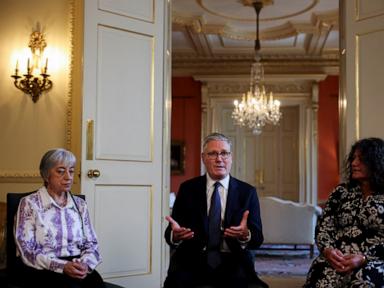
Prime Minister Keir Starmer has delivered a historic, long-delayed formal apology in Parliament to the victims of Britain’s systemic forced adoption practices, acknowledging the state’s direct role in the state-sanctioned separation of an estimated 185,000 babies from unmarried mothers. Between 1949 and 1976, public institutions, social services, and religious organizations operated a highly coordinated system designed to pressure, shame, and coerce vulnerable women into surrendering their newborn children. The formal admission marks a fundamental shift in the official national record, reversing decades of state denial and bureaucratic deflection that left thousands of families broken.
The words spoken on the floor of the House of Commons finally shift the burden of guilt from the victims to the perpetrators. For generations, these mothers were told they had voluntarily abandoned their infants. The reality was far more sinister. It was an industrialized process of family separation funded by taxpayers and enforced by moral authorities.
While the government has unveiled a £4 million financial package to support record tracing and peer support, the underlying architecture of this historical injustice reveals a darker truth about British social policy. The apology addresses the past, but it leaves unresolved the lingering bureaucratic wall that still prevents thousands of adult adoptees from uncovering their true identities.
The Machinery of Coercion Behind the Postwar Baby Scoop
The scale of family separation in postwar Britain was not an accident of conservative social values. It was an organized, institutional policy. Following the passage of the 1949 Adoption Act, the legal process of adoption became significantly faster, more secretive, and heavily weighted against unmarried biological parents. The state created a system where legal anonymity was highly prized by adoptive couples, who frequently sought to pass off these children as their own biological offspring.
To satisfy this demand, public authorities relied on a vast network of mother-and-baby homes, many run by religious institutions including the Church of England and the Catholic Church. Pregnant unmarried women, often still in their teenage years, were banished to these institutions by families desperate to avoid social ruin. Once inside, they faced a coordinated campaign of psychological degradation.
Social workers and medical staff operated with a shared objective. They believed that a child born outside of marriage was inherently endangered by the mother's "deviant" social status. John Bowlby’s early theories on maternal deprivation were weaponized in an ironic twist. Instead of reinforcing the bond between the biological mother and child, institutional authorities argued that immediate, permanent separation was necessary to ensure the child grew up in a traditional nuclear family.
Mothers were routinely denied information about their legal rights. Many were forced to sign consent forms while heavily medicated, under intense duress, or immediately after undergoing traumatic births without pain relief. In many instances, the baby was removed within days or weeks of birth, leaving the mother with no recourse and a lifetime of state-enforced silence.
The Financial and Bureaucratic Realities of the Four Million Pound Package
The state's apology comes accompanied by a financial commitment of £4 million spread over three years. The funding is intended to clear the severe backlogs in accessing adoption records through specialized organizations, improve intermediary tracing services, and establish peer-led support groups.
To many campaigners, this financial offering is a drop in the ocean. The damage inflicted by decades of forced separation cannot be fixed by minor administrative funding. Decades of psychological trauma, broken lineages, and the absolute loss of identity require systemic medical and psychological support that the current National Health Service is ill-equipped to provide.
The practical mechanics of tracing biological families remain an uphill battle. The state enabled a system where records were frequently altered, incomplete, or destroyed by local authorities and voluntary adoption societies. For an adult adoptee, finding a biological mother involves navigating a fragmented archive of missing documents and protracted waiting times that can span years.
The measure of this apology will not be the words spoken today, but the actions taken tomorrow. For those who lost their wider family, medical history, culture, language or nationality, the damage is already permanent.
Furthermore, the £4 million package lacks any provision for a comprehensive national financial redress or compensation scheme. Other nations confronting similar historical atrocities have gone significantly further. The British state has stopped short of offering direct financial compensation to the women whose bodies and children were treated as commodities by the postwar welfare system.
How the British State Spent Decades Evading Responsibility
The path to this parliamentary apology was blocked for years by successive administrations utilizing a strategy of legal self-defense. In 2022, the Joint Committee on Human Rights issued a scathing report concluding that the government bore ultimate responsibility for the public institutions and state employees that railroaded mothers into unwanted adoptions. Despite these findings, the Conservative government in 2023 officially declined to issue a formal state apology.
The previous administration argued that because the practices were carried out by a mix of local authorities, voluntary societies, and religious bodies rather than direct central government decree, a formal state apology was legally inappropriate. This argument ignored the reality of state funding. The central government set the legislative frameworks, provided the administrative funding, and relied on these institutions to manage the social realities of unmarried pregnancy.
By framing the issue as a collection of isolated historical tragedies rather than a centralized systemic failure, the state successfully avoided liability for decades. This resistance stood in sharp contrast to the devolved governments in Scotland and Wales, which moved forward with their own official apologies in 2023. The Westminster government remained the final holdout, protecting the state from legal and financial precedents that could arise from admitting systemic accountability.
The Global Context of State Sanctioned Family Separation
Britain is far from unique in its historical treatment of unmarried mothers, but it has lagged behind its global peers in addressing the fallout. Australia set the international standard in 2013 when Prime Minister Julia Gillard delivered an unreserved national apology for the country’s history of forced adoptions. Australia accompanied its words with significant structural reforms, recognizing that the practice was an abuse of human rights that required ongoing national resources.
Ireland faced a similar reckoning regarding its notorious mother-and-baby homes. A comprehensive public inquiry revealed that thousands of infants died in these degrading, church-run institutions while tens of thousands of women were subjected to forced labor and systematic separation from their children. The Irish state responded with a multi-million-euro redress scheme and widespread institutional reform.
The British model of forced adoption relied less on visible institutional confinement like Ireland's laundries, hiding instead behind the respectable veneer of professional social work and localized medical care. This administrative suburbanization of the practice made it harder to expose. Because the operations were decentralized across hundreds of municipal authorities and local hospital wards, the systemic nature of the abuse was easily masked as individual bad luck or personal choice.
The Unresolved Crisis of Erased Identities and Medical Histories
For the adult adoptees created by this system, the state's apology highlights an ongoing crisis regarding personal identity and genetic history. Tens of thousands of individuals are growing older without any access to their biological family medical histories. This lack of data creates immediate, practical dangers in modern preventative healthcare, where understanding hereditary risks for cancer, cardiac conditions, and genetic anomalies is vital.
The current legal framework around historic adoption records is still restrictive. Adoptees face statutory barriers, high costs, and a lack of specialized staff capable of handling the delicate nature of late-stage family reunions. Many mothers and children spent their entire adult lives looking for one another, only for one party to pass away just before the records could be unlocked.
The historical shame engineered by the state also means that many reunions fail due to unresolved trauma. Biological mothers who were told for fifty years to hide their secret often struggle to integrate the sudden reappearance of a child into their current families. The state created the psychological fracture, but the responsibility for healing it is entirely abandoned to the individuals involved.
Changing the Official Historical Narrative
The testimony of survivors proves that the term "voluntary surrender" was a linguistic lie used to legitimize state overreach. Women were told that if they attempted to keep their children, they would face destitution, social ostracization, and the active intervention of child protection services. The state used the threat of absolute poverty as a lever to extract children for married couples deemed more economically worthy.
By formally stating that the shame belongs entirely to the state and its institutions, the modern government is forced to rewrite its own social care history. The narrative can no longer be about the changing moral perspectives of the mid-twentieth century. It must be viewed as an era of systemic human rights violations carried out against citizens who lacked the political power to fight back.
The focus now shifts to how the state intends to handle modern child protection and adoption frameworks. Critics note that while historic forced adoptions are rightly condemned, the current UK legal framework still permits non-consensual adoptions through the family courts at rates higher than many European neighbors. The structural belief that the state knows how to build a family better than biological parents remains an active element of British social engineering, raising questions about whether the core lessons of the postwar era have truly been understood.