The final countdown of a modern political campaign is not the chaotic sprint portrayed on cable news, nor is it a last-minute battle for undecided hearts and minds. It is a cold, mathematically predetermined logistics operation focused entirely on turnout modeling and resource allocation. By the time a race enters its closing seventy-two hours, persuasion is dead. Campaign managers are no longer trying to convince voters that their candidate is right; they are executing a high-stakes mobilization plan designed to drag a pre-identified slice of the electorate across the finish line before the clock hits zero.
Anyone who has spent decades watching war rooms operate during the last week of an election knows the public narrative is mostly theater. Reporters follow the candidates from tarmac to tarmac, dissecting stump speeches for signs of momentum or fatigue. Meanwhile, the real campaign happens in windowless basement offices and cloud servers. Data directors stare at propensity scores, deciding down to the individual precinct where to deploy the last remaining dollars and volunteers. The final countdown is where idealism meets brute-force arithmetic.
The Myth of the Undecided Voter
Cable networks love the undecided voter. They make for great television, sitting in diner booths in swing counties while a correspondent asks them how they feel about the economy. In reality, truly undecided voters make up a microscopic fraction of the modern electorate, and chasing them in the final days is a rookie mistake that burns cash without yielding returns.
Most people who claim to be undecided in late October are actually low-propensity partisans. They already lean heavily toward one side, even if they refuse to admit it to a pollster. The real question is not who they will vote for, but whether they will bother to show up at all.
Consider a hypothetical example to see how this plays out on the ground. Imagine a voter in a suburban district who has voted in two of the last four federal elections. Her consumer data, registration history, and neighborhood demographics tell the campaign she aligns with their platform roughly eighty percent of the time. Sending a canvasser to her door to debate tax policy is a waste of oxygen. Instead, the campaign treats her like a customer who left an item in an online shopping cart. The goal during the final countdown is simply to remove friction—reminding her where her polling place is, offering a ride, or ensuring her mail-in ballot was actually accepted by the county clerk.
When campaigns panic and pivot their messaging in the final week to chase mythical swing voters, they almost always lose. It signals internal polling distress. Discipline during the closing stretch means ignoring the noise on social media and sticking strictly to the base mobilization numbers built months earlier.
Where the Last Dollars Actually Go
Follow the money in the final ten days of a race and you will see what a campaign truly believes about its chances. Public statements are always optimistic; media buys never lie.
Television ad inventory in major swing markets sells out months in advance, leaving late-spending campaigns to fight over scraps at exorbitant rates. Because broadcast television is a blunt instrument, smart operations shift their remaining liquidity into hyper-targeted digital channels and ground-game infrastructure. This is the era of geofencing and programmatic ad placement, where a voter walking into a specific grocery store sees a thirty-second spot on their phone tailored to the exact issue they care about most.
The Ground Game Reality Check
A massive volunteer army looks impressive in press releases, yet raw headcount means very little without strict operational control. Knocking on the wrong doors is worse than knocking on no doors at all, because accidentally reminding an opposition voter that an election is happening actively hurts your margin.
Modern field operations rely on predictive modeling to build walk lists that look bizarre to the average observer. A canvasser might walk past four houses on a quiet street just to knock on the fifth, skip the next six, and hit the seventh. To the volunteer, it feels inefficient. To the data team back at headquarters, every single knock is calculated to maximize net vote gain per hour of labor.
- Ballot Chase Operations: In jurisdictions with widespread mail-in voting, the final countdown starts weeks before Election Day. Field teams track public records showing who has requested a ballot but failed to return it, turning campaign workers into glorified debt collectors.
- Cure Teams: Thousands of mail ballots are rejected every cycle due to missing signatures or mismatched dates. Dedicated legal and field teams spend the final days tracking down these specific voters to fix their paperwork before statutory deadlines expire.
- Poll Watching and Legal Rapid Response: Campaigns station lawyers and trained observers at key precincts not just to watch for irregularities, but to track real-time turnout pacing against their internal projections.
The Psychology of the War Room
Sleep deprivation is an occupational hazard in politics, and by the final weekend, decision-making inside a campaign headquarters begins to fray. Exhausted operatives start reading tea leaves. A slightly smaller crowd at an airport rally in Ohio or a weird cross-tab in a tracking poll can trigger hours of unproductive panic.
This is where veteran campaign managers earn their retainers. Their primary job during the final countdown is to act as a firewall between the candidate and the daily emotional swings of the press corps. Candidates naturally want to respond to every attack and chase every headline. Giving in to that impulse during the closing stretch pulls the entire operation off-message and wastes precious bandwidth.
The Danger of Echo Chambers
Data makes campaigns smarter, but it also creates blind spots. When every metric is filtered through a proprietary algorithm, it becomes dangerously easy to mistake your own projections for reality. History is littered with campaigns that trusted their turnout models right up until the moment the actual precinct returns began rolling in and shattered their assumptions.
Models rely on historical behavior, and human beings occasionally break their own patterns. An unexpected weather event, a sudden local controversy, or a quiet surge in enthusiasm among a demographic group that pollsters under-sampled can render months of careful math obsolete in a single afternoon. Acknowledging that margin of error is hard when millions of dollars and hundreds of careers ride on the outcome.
Why Early Voting Changed the Clock
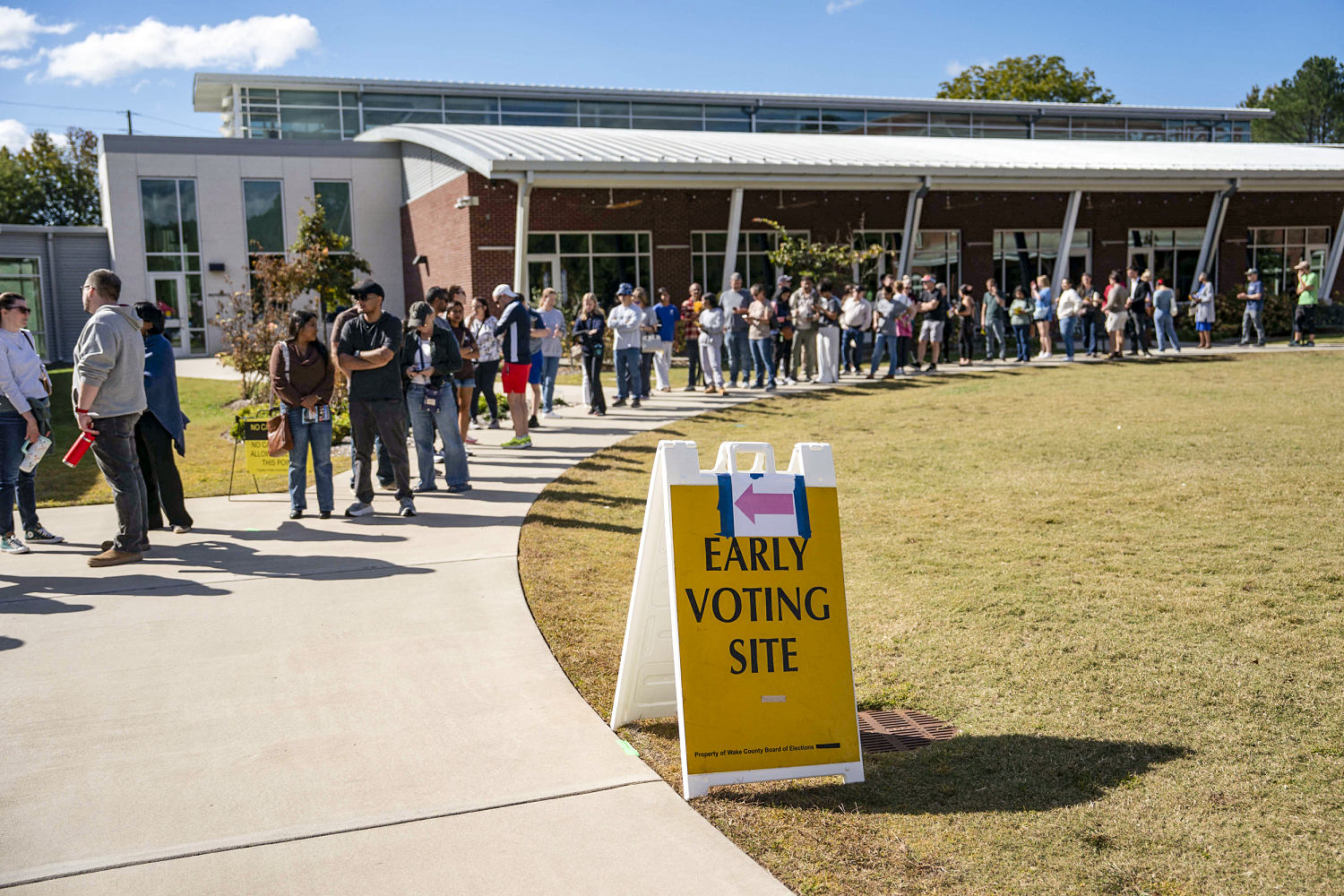
The phrase "Election Day" is an anachronism. In most states, it is simply the final day of a rolling, month-long voting period. That structural shift has completely rewritten the playbook for the final countdown.
Years ago, a campaign could hold back an explosive piece of opposition research until the Friday before the election, knowing the opposing side would have barely seventy-two hours to respond before voters went to the polls. Today, dropping an "October Surprise" in the final week means half the electorate has already cast their ballots. The leverage is gone.
Instead, campaigns now operate on a series of mini-countdowns tied to specific administrative milestones:
- The opening of early in-person voting, which requires an immediate surge of earned media to bank reliable votes early and take those people off the persuasion lists.
- The deadline to request an absentee ballot, which triggers a massive push across email, text messaging, and direct mail.
- The final weekend, when residual low-propensity voters are targeted with high-frequency reminders designed to break through daily life distractions.
Banking votes early allows a campaign to reallocate resources dynamically. Every supporter who casts a ballot three weeks out is one less person the field team has to worry about on Tuesday. It shrinks the battlefield, letting the operation focus its remaining energy on the hardest-to-reach targets.
The Brutal Arithmetic of the Final Hours
When the polls finally open on that last Tuesday, the candidate becomes largely irrelevant. Aside from casting their own ballot in front of the cameras and doing a few local radio interviews in key markets, there is nothing left for them to do. Control passes entirely to the data analysts and field directors watching the precinct-level returns.
If the morning turnout numbers in a friendly suburban county are running three percentage points behind projections by noon, the war room immediately shifts into triage mode. Automated text blasts go out to every unvoted supporter in those specific zip codes. Paid canvassers are pulled from safer districts and redirected into the lagging precincts. Ride-share codes are pushed out to community leaders.
There is no romance in it, no grand speeches about the soul of the nation, and no sudden bursts of political magic. The final countdown is simply an industrial exercise in finding every last sympathetic human being on a spreadsheet and making sure their name gets checked off a roll before the doors lock at seven o'clock.