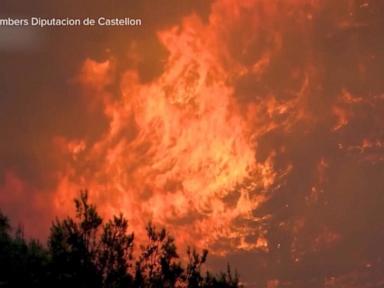
Hundreds of thousands of residents and tourists face forced evacuations across Europe as raging wildfires tear through parched landscapes, exposing a structural emergency that goes far beyond simple weather anomalies. The continent's annual battle with infernos has mutated from a seasonal firefighting challenge into an existential systems failure. Governments continue to treat these catastrophes as isolated natural disasters while emergency services stretch to a breaking point.
The smoke clears from the Mediterranean basin only to reveal the sobering truth behind the headlines. Decades of institutional inertia, agricultural abandonment, and outdated suppression models have turned millions of acres of European countryside into loaded powder kegs. Fire departments throw water at walls of flame while the underlying economic and ecological drivers of the crisis accelerate unchecked.
The Anatomy of a Continental Tinderbox
Weather gets the blame every single time. Heatwaves bake the soil, relative humidity plunges into the single digits, and erratic winds whip embers across firebreaks. Yet meteorology alone fails to explain why fires spread with such terrifying velocity across regions that have burned for millennia.
The transformation began decades ago when rural populations abandoned traditional land management. Small-scale farming, livestock grazing, and wood harvesting once created a natural mosaic of managed plots that slowed the march of flames. When those rural economies collapsed under the weight of urbanization, dense undergrowth rushed in to fill the vacuum.
Nature abhors a vacuum, but civil protection agencies abhor wild forests. Without continuous clearance or controlled burns, organic fuel loads accumulate year after year. A pine needle layer three inches deep in 1980 becomes a foot-deep combustion engine by 2026.
The Suppression Trap
Modern firefighting relies heavily on an aggressive suppression doctrine. Every time a small ignition occurs, airplanes drop tons of retardant and ground crews rush in to extinguish it immediately. On paper, this looks like success. In practice, it creates a dangerous feedback loop known as the suppression paradox.
By preventing small, low-intensity fires that naturally clear out dead timber, agencies allow fuel to build up indefinitely. When a fire eventually breaches containment lines during an extreme weather event, the sheer volume of accumulated fuel turns a routine blaze into a crown fire that defies all human intervention.
"We are not managing ecosystems anymore; we are managing explosive storage facilities," notes a veteran forest ecologist who has spent thirty years studying Mediterranean fire regimes. "Every gallon of water we drop buys us a few days of quiet while the underlying problem grows twice as large."
The Human and Economic Toll Beyond the Flames
Evacuation orders displace communities numbering in the tens of thousands almost overnight. Coastal resorts in Greece, rural hamlets in Spain, and vineyard regions in Portugal transform into ghost towns within hours. The logistics of moving hundreds of thousands of people through narrow mountain passes and coastal highways highlight a profound vulnerability in European civil defense infrastructure.
Tourism economies take a direct hit. Travelers cancel bookings months in advance, fearing smoke-filled skies and trapped highways. Small business owners who rely on a three-month summer window to survive the entire year watch their livelihoods vanish in a single afternoon.
Insurance markets face a parallel reckoning. Property underwriters in high-risk zones across southern Europe are quietly rewriting policies, raising premiums to unaffordable levels, or pulling out of entire regions altogether.
- Municipal budgets are exhausted by July, forcing local authorities to divert funds from education and healthcare to pay for emergency diesel and overtime.
- Agricultural yields suffer permanent damage as root systems burn and topsoil washes away during the autumn rains that follow the fires.
- Public health expenditures skyrocket as particulate matter travels hundreds of miles, triggering respiratory crises in urban centers far removed from the fire lines.
The Policy Failure of Reactive Defense
European Union funding mechanisms heavily favor suppression over prevention. Brussels allocates billions to lease firefighting aircraft and mobilize civil protection rescEU reserves, yet preventative forestry budgets remain an afterthought in national fiscal planning.
Political incentives dictate this imbalance. A prime minister standing in front of a water-dropping helicopter projects strength and immediate action. Planting deciduous trees, subsidizing goat grazing, or paying landowners to thin out undergrowth yields no dramatic photo opportunities and takes twenty years to show results.
Elected officials operate on four-year electoral cycles. Forest management operates on a century-long horizon. Until this temporal mismatch is resolved, the continent will remain trapped in an annual cycle of panic and remorse.
The Myth of Technological Salvage
Silicon Valley firms and defense contractors pitch artificial intelligence monitoring systems, thermal drone swarms, and satellite early-warning networks as the ultimate cure. While these tools improve detection times, technology cannot replace boots on the ground or alter the laws of thermodynamics.
An alert received two minutes faster means nothing if the nearest engine crew is forty miles away down a blocked logging road. Satellites can map the perimeter of a disaster in real time, but they cannot rake a forest or reintroduce livestock to abandoned hillsides.
What True Adaptation Looks Like
A handful of communities have begun rejecting standard playbooks in favor of radical adaptation. In parts of central Portugal, local cooperatives are restoring native oak and chestnut forests, which retain moisture far better than monoculture eucalyptus plantations introduced for the paper industry.
Eucalyptus trees burn like kerosene due to their volatile oils and peeling bark. Replacing them with fire-resistant broadleaf species breaks the continuity of the fuel bed. It requires upfront investment, long-term community organizing, and the courage to tell timber companies that profit margins must yield to public safety.
Controlled burns must also scale up dramatically, despite the political risk. Smoke drifting over cities during spring months draws furious complaints from residents and tourists alike, yet it remains the single most effective tool for preventing catastrophic summer blowups.
Governments must choose between managing smoke on their own terms during favorable weather or enduring unmanageable smoke accompanied by mass casualties and total property loss during peak heatwaves.
The smoke on the horizon is not an anomaly. It is the new baseline of a continent reckoning with the accumulated debt of ecological mismanagement. The evacuation orders will come again next year, and the year after that, until the focus shifts permanently from fighting the fire to changing the landscape.