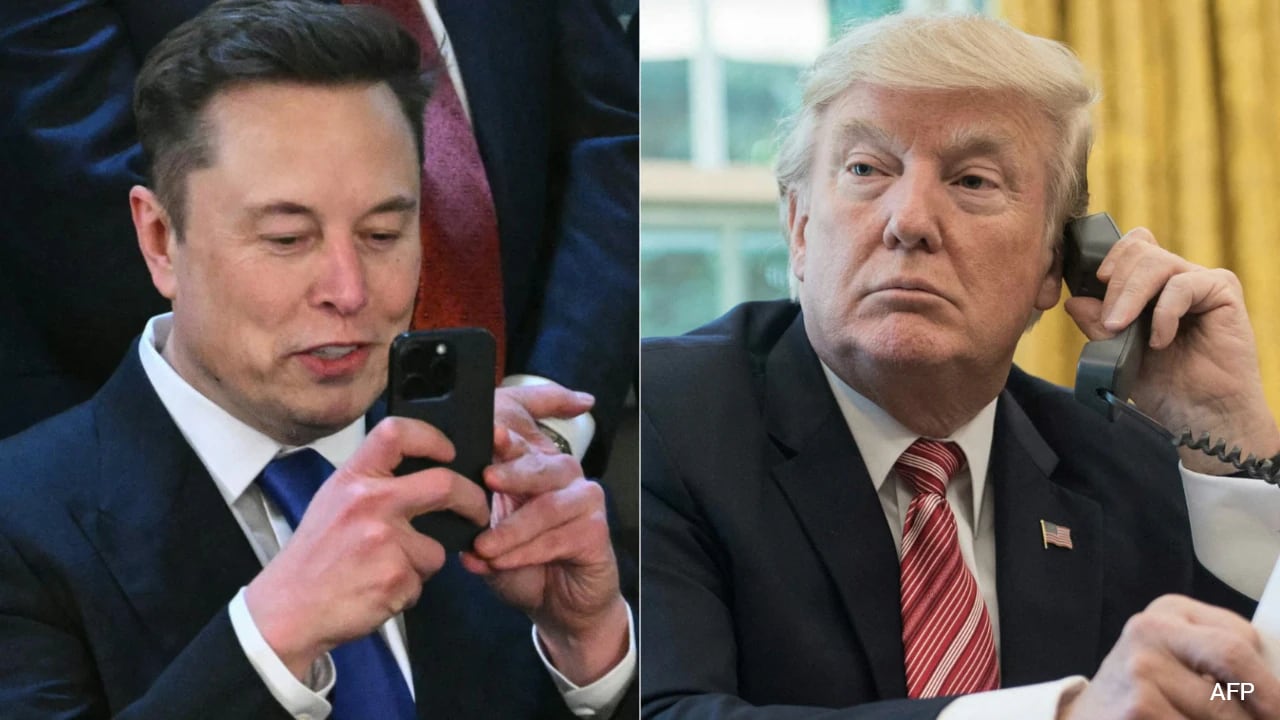
Public financial disclosures reveal that President Donald Trump acquired between $15,001 and $50,000 worth of shares in Elon Musk's SpaceX on June 23. This transaction occurred roughly two weeks after the aerospace firm completed the largest initial public offering in Wall Street history, achieving a staggering valuation of $1.77 trillion. While the capital amount remains modest relative to the broader market, the intersection of executive power, federal contracting, and public equity ownership draws renewed scrutiny to how political office and private wealth intertwine.
The timing of the purchase stands out. SpaceX floated its massive offering on June 12, altering the index landscape by lobbying for rapid inclusion rules that pulled institutional and automated funds into the stock. By June 23, the initial hype had cooled slightly from early trading highs, with the equity sliding closer to its baseline offer price of $135. Trump's portfolio execution was not an isolated event; the filing details more than 1,000 individual securities transactions made by the president during that single month, totaling millions of dollars in volume.
Defending the transaction, White House representatives emphasized the structural separation governing the president's assets. Third-party financial institutions manage the portfolio independently, utilizing automated strategies that mirror recognized benchmarks such as the Schwab 1000 index. According to administration spokespeople, neither the president nor his family maintain the capability to direct, alter, or inject input regarding specific asset allocation, timing, or individual stock acquisitions.
Yet, ethics watchdogs note that structural insulation does not entirely erase public policy intersections. SpaceX operates as a primary aerospace and defense contractor for the United States government, requiring constant navigation of federal agency approvals, spectrum allocations, and multi-billion-dollar military payloads. Days prior to the public release of the disclosure filing, executive directives instructed administrative teams to aggressively expand domestic commercial space launch capabilities—a sector where SpaceX holds near-monopolistic dominance.
The connection mirrors other administration-linked financial alignments involving Elon Musk's corporate ecosystem. High-profile officials, including Small Business Administration head Kelly Loeffler, hold substantial personal stakes tied to Musk's ventures, ranging from early artificial intelligence funding rounds to post-IPO positions. These overlapping financial channels create a distinct modern precedent where regulatory architects and key industry beneficiaries operate within shared economic loops.
Market realities also complicate the narrative of executive trading prowess. Following the initial market enthusiasm, SpaceX equity retreated significantly from peak valuations that briefly crossed the $200 threshold. Trading back down toward its initial public offering price point, the position acquired in late June sits in an underwater territory, reflecting broader market corrections across high-growth technology sectors.
Federal disclosure laws require asset values to be reported only within broad tiered ranges rather than precise dollar figures, concealing the exact entry price and current loss metrics of the presidential stake. What remains clear is that public ledgers will continue tracking how modern political leadership intersects with trillion-dollar corporate titans.