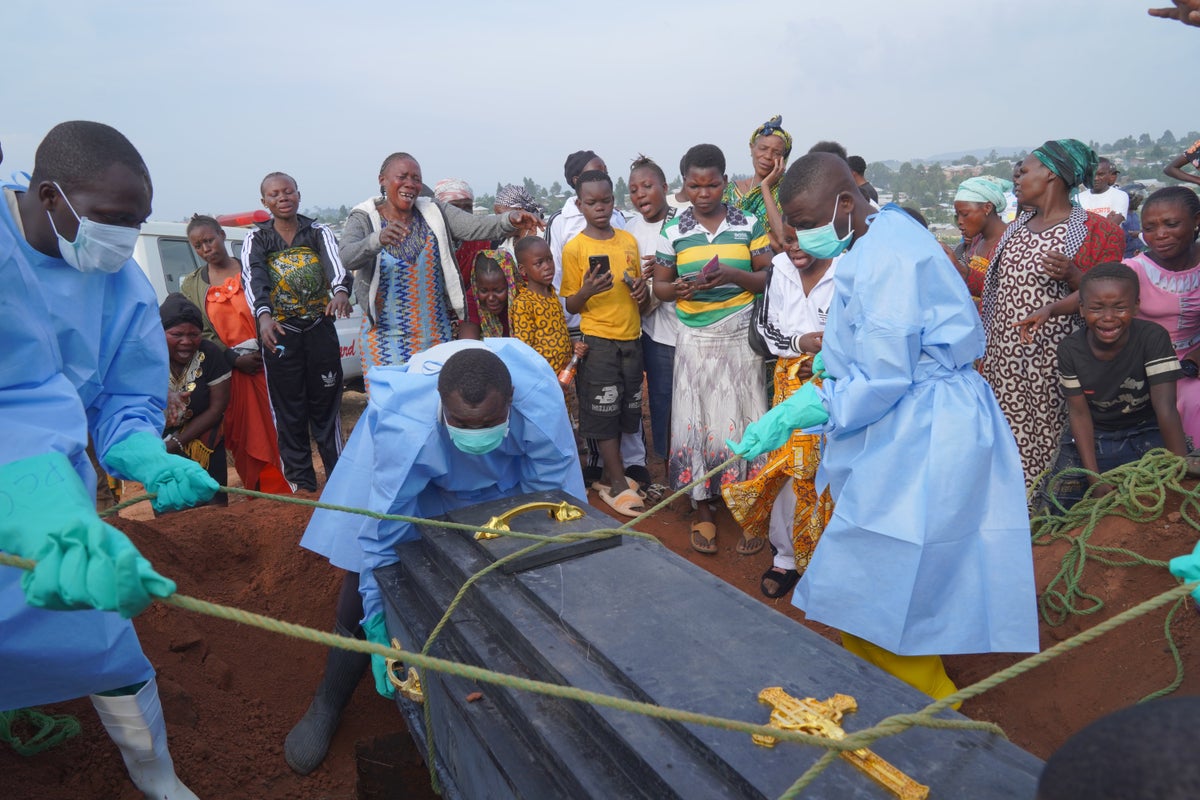
The numbers are staggering, cold, and entirely inadequate for the human catastrophe unfolding in Central Africa. In the Democratic Republic of the Congo, an ongoing epidemic has claimed 2,325 lives out of 4,945 confirmed cases, officially making it the deadliest Ebola outbreak in the country’s history. It has surpassed the grim milestone of the 2018-2020 crisis, moving at a speed that has left international health organizations scrambling backward. Yet focusing solely on the tally misses the structural rot allowing the virus to thrive. This is not merely a medical emergency. It is a man-made disaster born of institutional neglect, abandoned communities, and geopolitical budget choices that stripped the region bare before the first patient ever showed symptoms.
To understand how a pathogen outruns the most sophisticated global health apparatuses on earth, one must look closely at the invisible months that preceded the official declaration. Genomic sequencing reveals that while health authorities only recognized the threat in May, the epidemic actually began in February. That silent window of transmission gave the pathogen a devastating head start. By the time social media reports forced officials to look, fifty people were already dead.
The strain driving this wave is the rare Bundibugyo virus. Unlike the Zaire strain that terrified the world during past epidemics, this variant arrived with zero approved vaccines or licensed pharmaceutical treatments. Clinical trials are underway in the hardest-hit Ituri province, but trials are reactive science. They offer little immediate protection to a nurse working without proper personal protective equipment or a family burying a relative in secret out of deep-seated mistrust.
The Anatomy of Institutional Failure
Epidemiology is rarely just about biology. It is a stress test of infrastructure, trust, and resource distribution. The Democratic Republic of the Congo features a fractured health landscape where years of localized conflict have shattered sanitation networks. Armed groups fracture control across the eastern provinces, rendering entire zones inaccessible to mobile vaccination teams or surveillance officers.
When state presence is defined primarily by neglect or military friction, communities look inward. Decades of unfulfilled promises from central governments and international bodies create fertile ground for rumors. When health workers arrive in full hazmat suits to manage a mysterious bleeding fever, fear easily overtakes reason. Rumors spread that the treatment centers themselves are vector points rather than places of healing.
Compounding the geographical and social barriers is a stark economic reality. Foreign aid cuts instituted over the prior year choked off critical funding for local surveillance networks. Early warning systems that should have flagged unusual clusters of hemorrhagic fever in February were underfunded, understaffed, or entirely non-existent. Medical personnel on the front lines have repeatedly staged strikes over unpaid wages. An unpaid doctor cannot maintain rigorous contact tracing. A compromised clinic cannot isolate suspected cases before they walk back into crowded local markets.
The case fatality ratio now sits at an alarming 46 percent. Nearly one out of every two confirmed individuals dies. Public health doctrine dictates that as an outbreak matures, this ratio should drop because health workers map transmission chains and treat patients earlier. Instead, the ratio climbed from roughly 20 percent in the early weeks. This upward creep signals a broken pipeline. People are arriving at treatment facilities too late, or they are dying within their communities entirely off the radar of official statisticians.
The Dangerous Shadow of Past Outbreaks
Global health fatigue compounds the danger. The international community watched the West African epidemic of 2014 to 2016 claim more than 11,000 lives, mobilizing billions of dollars in emergency response. When subsequent outbreaks occurred, donor fatigue set in. Wealthy nations face competing domestic crises and shifting political priorities, resulting in dramatic pullbacks in global health security funding.
The contrast with neighboring regions illustrates what is possible when early intervention meets institutional capability. Earlier in the year, the same rare Bundibugyo strain crossed into Uganda. Ugandan authorities moved swiftly, leveraging existing community trust, active surveillance, and rapid isolation protocols. The result was twenty infections and two deaths before the country was declared clear.
In the Congo, however, the response remains a desperate exercise in playing catch-up. United Nations officials have openly admitted that the virus is winning the race. Pouring tens of millions of dollars into an emergency fund weeks after an epidemic has already entrenched itself across six provinces is akin to buying a fire extinguisher after the house has burned to the foundation. Emergency funding is vital, but it cannot substitute for permanent, robust primary healthcare infrastructure maintained during times of relative calm.
Breaking the Chain
Containing this trajectory requires more than experimental therapeutics or temporary influxes of foreign personnel. It requires structural repair. First, local healthcare workers must be guaranteed regular, dependable salaries to prevent crippling labor disputes during a public health emergency. Second, community engagement strategies must pivot away from top-down enforcement toward genuine partnerships with local leaders, healers, and civil society groups who understand local grievances.
Without addressing the underlying insecurity and the economic desperation of populations displaced by conflict, medical interventions will continually crash against a wall of resistance. The virus exploits every single fracture in human society. Until those fractures are mended, tracking the numbers will remain an exercise in documenting an avoidable tragedy.