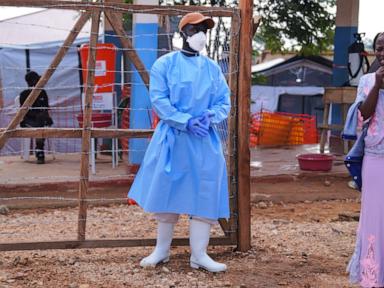
The Democratic Republic of Congo is facing the fastest-growing Ebola outbreak on record, with confirmed cases nearing 3,000 and deaths surpassing 1,300, a trajectory driven by a rare viral strain, administrative failures, and strikes by unpaid frontline health workers. The crisis is concentrated heavily in the eastern province of Ituri, which accounts for roughly ninety percent of all documented infections. Yet the real catastrophe lies beneath the raw numbers. It is a compounding failure of bureaucratic neglect, systemic financial breakdown, and structural vulnerabilities that leave both local communities and medical staff exposed to a pathogen without an approved vaccine.
The Human Cost of Administrative Breakdown
When doctors, nurses, and security personnel walk off the job at treatment facilities like the Elikya Ebola Treatment Center in Bunia, they do so not out of political posturing, but out of absolute survival. These workers have spent weeks treating highly infectious patients without receiving basic salaries or performance bonuses.
The arithmetic of a public health response collapses when the people managing biohazard zones are worried about feeding their own children. Ministry of Health officials have acknowledged persistent administrative errors regarding human resources lists and delayed fund distribution. However, recognizing a bureaucratic bottleneck does nothing to comfort a nurse working double shifts inside stifling personal protective equipment without financial security.
Strikes paralyze the very infrastructure meant to contain the spread. When treatment wards are abandoned or scaled back, isolation protocols fail. Patients wander away, family members handle the deceased without protective measures, and hidden chains of transmission multiply in the shadows.
Confronting the Bundibugyo Strain
Managing this specific epidemic requires understanding the distinct biological profile of the invader. Unlike past major epidemics in the region caused by the Zaire species—for which proven vaccines and licensed therapeutics exist—this outbreak is driven by the Bundibugyo virus.
This rare strain carries a terrifying case fatality rate, typically ranging from thirty to fifty percent. Medical teams are fighting a pathogen that currently lacks an approved, widely available commercial vaccine or standardized curative treatment protocol. Clinical trials evaluating experimental therapeutics have only recently begun enrollment in Ituri.
Frontline workers face high occupational risks. More than one hundred healthcare providers have contracted the virus since the start of the outbreak. Every infected doctor or nurse represents a double loss. The community loses an essential healer, and the local workforce shrinks further, increasing the burden on those who remain.
The Anatomy of Distrust and Conflict
Epidemics do not occur in a vacuum. Eastern Congo has long been torn apart by armed conflict, displacement, and deep-seated community mistrust toward state authorities and international aid organizations.
Decades of instability have bred skepticism. When local residents witness military and health officials imposing restrictions on traditional burial practices—such as banning the ritual washing of bodies—resistance flares up. Communities that feel marginalized by the central government often view emergency health mandates with intense suspicion.
This friction erupts into physical violence. Health facilities have been stormed by angry mobs, burial teams have faced direct threats in cemeteries, and humanitarian workers have been forced to relocate from remote rural hot spots to the relative safety of Bunia. Every security incident disrupts epidemiological tracking. When contact tracers cannot safely enter a village, patient zero remains unidentified, and thousands of potential contacts disappear into mining camps or displaced populations.
Operational Realities on the Ground
Epidemiology is fundamentally an exercise in logistics and human behavior. Public health frameworks assume a baseline of stability that simply does not exist in Ituri.
Consider the operational hurdles:
- The Invisible Chain: The absence of a confirmed patient zero makes it difficult to model transmission vectors accurately.
- Mobility: Widespread displacement driven by local armed groups means exposed individuals cross health zones constantly.
- Supply Chain Gaps: Delays in delivering personal protective equipment leave workers vulnerable and fuel anxieties.
- Funding Lag: International aid pledges often move through sluggish bureaucratic channels, failing to translate into immediate cash for daily operations.
These factors create a widening gap between the official response and the realities on the ground. Health authorities are attempting to scale up treatment capacities and testing, but containment efforts consistently lag behind the virus's propagation rate.
Navigating the Gray Areas of Global Health Interventions
There are no clean solutions to a multi-layered emergency of this magnitude. Pouring money into international logistics hubs fails if the capital does not reach the nurse standing at the bedside of an isolation ward. Deploying security forces to protect clinics often backfires, escalating community tensions and reinforcing the narrative that the health response is an imposition rather than a service.
The global risk remains low because Ebola spreads primarily through direct contact with infectious bodily fluids rather than airborne transmission. Yet, local containment failure carries immense regional consequences.
The path forward demands a complete overhaul of how frontline personnel are integrated into the emergency architecture. Guaranteeing immediate, non-negotiable compensation for workers is not merely a labor issue. It is the primary prerequisite for epidemiological control. Until the structural grievances of the people holding the line are resolved, the outbreak will continue to outpace every intervention thrown in its path.


