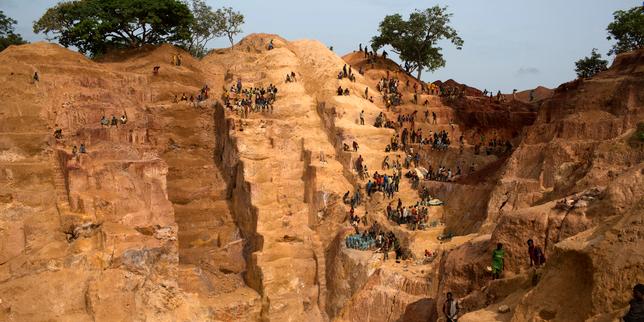
The ground gave way without warning in western Central African Republic, swallowing more than one hundred artisanal gold miners in a single catastrophic collapse.
At the artisanal mining site in Zamboyé, near Baboua and close to the Cameroonian border, unstable earth simply surrendered to gravity. The tragedy unfolded on a Tuesday that began like any other, with hundreds of men descending into deep, unreinforced shafts in search of precious metal. When the walls collapsed, they buried not just workers, but entire local economies dependent on informal extraction. Local reports confirm that at least four Cameroonian nationals were among the dead, highlighting the cross-border draw of these perilous pits. Rescue operations immediately met the hard limits of remote geography and missing heavy machinery.
Tragedies of this scale rarely arrive as sudden anomalies. They are the predictable outcome of systemic pressures operating across the region.
The Economics of Desperation
Why do men continue to dig into walls of wet dirt that threaten to cave in at any second? The answer lies in the harsh economic reality of the Central African Republic. Years of conflict, institutional fragility, and structural poverty have left few alternatives for young men seeking cash income.
Gold acts as an immediate liquid currency. Industrial concessions exist on paper, but much of the country's mineral wealth is funneled through informal networks where regulation is absent. Artisanal miners operate with hand tools, shovels, and sheer muscle. They tunnel blindly into hillsides during rainy seasons when the soil is heavily saturated and lethally unstable.
Government oversight is practically non-existent in these remote western prefectures. Local authorities lack the fuel, vehicles, and personnel to monitor safety codes across hundreds of scattered dig sites. When an accident happens, the response is reactive and localized.
+-----------------------------------+-----------------------------------+
| Systemic Factor                   | On-the-Ground Impact              |
+-----------------------------------+-----------------------------------+
| Complete lack of regulatory enforcement | Unshored, deep manual tunnels     |
| Extreme rural poverty             | Willingness to accept fatal risks |
| Porous borders                    | Cross-border migrant labor flows  |
+-----------------------------------+-----------------------------------+
The Illusion of Safety in Informal Pits
Safety standards require timber shoring, proper ventilation, and controlled slope angles. None of these features exist in unauthorized artisanal pits. Miners dig straight down or horizontally into fragile clay and gravel layers.
When a collapse occurs, survival depends on proximity to the surface and the speed of fellow workers. There are no professional rescue teams stationed near Zamboyé. Survivors and local villagers use bare hands and basic farming implements to claw through tons of heavy soil. By the time organized help arrives from regional centers, hours or days have passed, turning rescue missions into body recovery operations.
This disaster follows a nearly identical catastrophe earlier in the year at the Bé-Mbari mining site in the nearby Nana-Mambéré prefecture, which claimed dozens of lives. The pattern is repetitive and brutal. Each incident sparks momentary outrage, temporary promises of tighter enforcement, and a rapid return to the status quo.
The Wider Supply Chain Blind Spot
International gold markets rarely trace the physical origins of artisanal metal. Smuggled across porous borders into neighboring countries like Cameroon, the gold from sites like Zamboyé enters regional trading hubs without compliance paperwork. It blends seamlessly into global supply chains, washing away the blood of the miners who pulled it from the earth.
Without targeted economic alternatives or formalization programs that provide basic engineering support, miners will continue to gamble with their lives. The earth at Zamboyé has stopped shifting for now, but the conditions that drove those hundred men underground remain entirely unchanged.