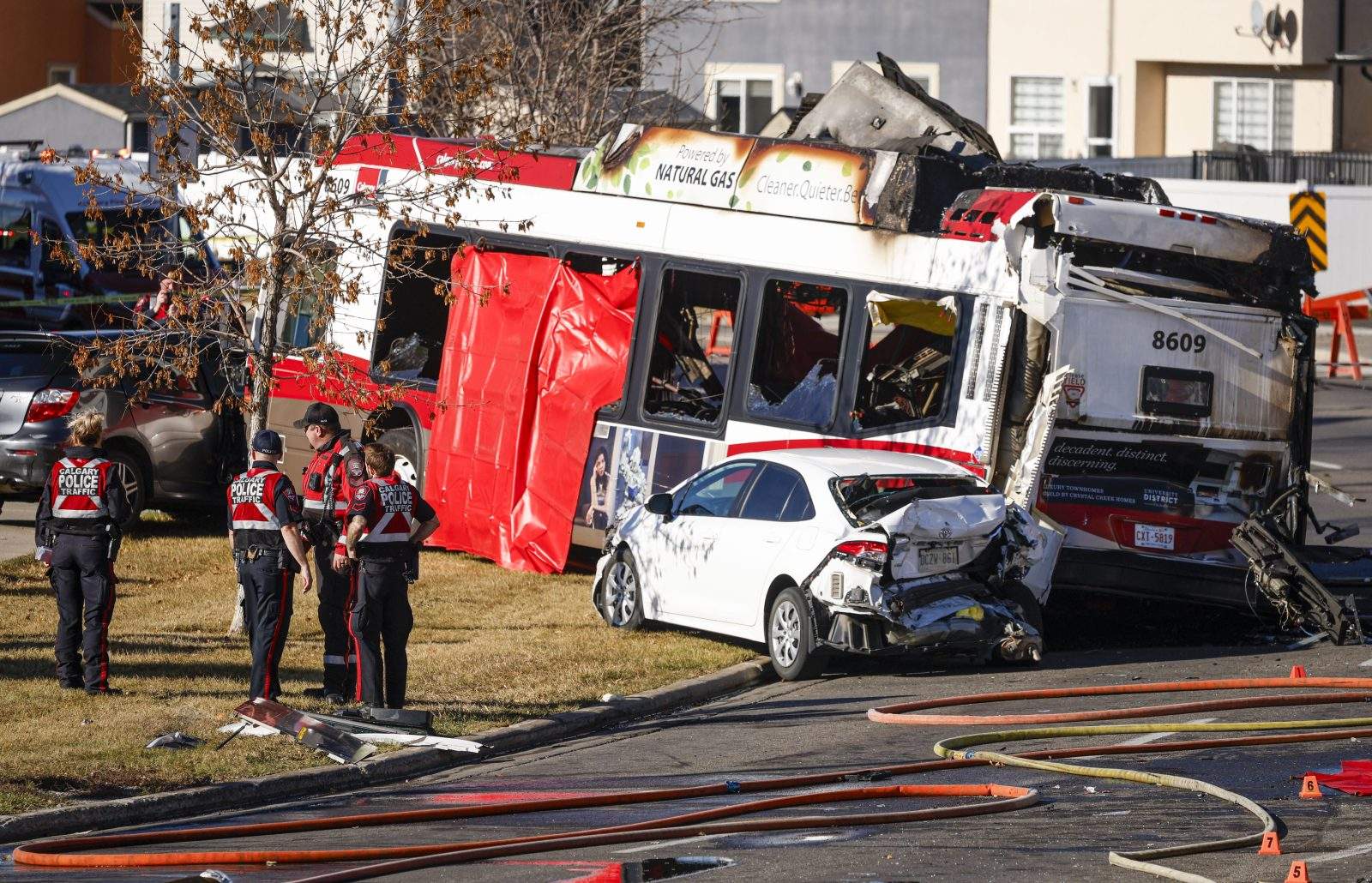
Compressed natural gas transit buses are generally safe on paper, yet three passengers died after a chain-reaction crash in Calgary's Saddle Ridge neighbourhood on October 15, 2026, turned a municipal bus into a burning, exploding wreck.
Headlines rushed to reassure riders that natural gas transit buses carry a strong safety record across Canada. That comfort misses the real question. When a vehicle rated for tough conditions still suffers a fatal fire and explosion during a multi-vehicle collision, declaring the bus model "safe" tells commuters very little about how real-world crashes defeat engineered safeguards. Discover more on a connected subject: this related article.
Why Safe Hardware Still Fails in Multi-Vehicle Wrecks
Engineers test compressed natural gas cylinders under controlled conditions. Laboratory standards examine pressure cycling, hydrostatic burst strength, and bonfire exposure. Those benchmarks verify how a tank behaves when tested to rulebooks.
Real streets rarely follow test scripts. Around 1:10 p.m. on October 15, 2026, a collision along the 800 block of Saddletowne Circle N.E. near 80 Avenue N.E. involved two Calgary Transit buses and multiple other vehicles. Flames and thick black smoke rose from the roof of a natural gas bus, followed by an explosion and fire inside the cabin that killed three passengers and left 16 others injured. More journalism by Al Jazeera explores similar views on the subject.
A transit crash should not end with passengers dying in a fire. When a low-carbon fleet experiences a catastrophic thermal event, the gap between certification and street reality demands scrutiny.
Transportation analysts pointed out that a collision between transit buses can damage fuel lines even if the primary storage cylinders are built to withstand heavy impacts. A ruptured line releases pressurized gas into an active crash scene filled with hot metal, friction sparks, and electrical faults. Once gas ignites, heat escalates rapidly.
How Compressed Natural Gas Systems Work Under Stress
Compressed natural gas is stored at high pressure, typically inside specialized cylinders mounted on transit vehicles. Unlike liquid diesel, which tends to puddle and burn more slowly without vaporizing first, natural gas is a pressurized fuel that can jet out if piping or fittings fail.
Safety designs rely on temperature pressure relief devices and pressure release systems to vent gas safely when heat rises. In theory, controlled venting reduces the risk of a tank bursting under thermal stress.
- Fuel line vulnerability: High-pressure lines and fittings outside the main cylinder core can suffer mechanical damage during multi-vehicle impacts.
- Heat and venting dynamics: Relief valves depend on heat reaching the sensor and venting gas away from hazardous zones before cylinder strength drops.
- Roof-mounted exposure: Roof placement keeps tanks clear of ground debris during routine driving, yet roof fires and explosions still pose severe hazards to occupants and nearby responders.
- Evacuation limits: Smoke, heat, and panic slow exits, especially when a crash involves multiple vehicles and a trapped operator.
None of these factors mean natural gas buses are uniquely reckless on every route. Calgary began phasing in natural gas buses in 2014 to cut emissions, and other Canadian cities run similar fleets. Saying a bus model meets maintenance and testing guidelines is true as far as it goes, yet it treats a crash as a single-component test rather than a chain of failures.
The Overlooked Bottlenecks Beyond the Bus
Focusing solely on whether the bus model is good or bad lets other critical pieces off the hook. A fatal transit crash sits at the intersection of vehicle design, road layout, traffic volume, and emergency response.
Consider a hypothetical commuter corridor where two high-frequency bus routes converge near a tight commercial intersection at midday. Even with well-maintained vehicles, heavy traffic volume, frequent stops, and tight turning geometry leave narrow margins when a driver or vehicle loses control.
In Calgary, local elected officials raised questions after the crash about whether Saddletowne Circle and nearby terminal capacity were strained, alongside calls for a broad independent review. Police also appealed for passengers who left the scene before speaking with investigators, a reminder that post-crash reconstruction often lacks complete witness accounts.
| System Layer | What Supporters Emphasize | What Investigators Must Check |
|---|---|---|
| Fuel Architecture | Cylinders undergo strict testing and frequent inspections. | Whether impact damaged lines, valves, or shields. |
| Roadway & Terminal Design | Transit routes serve high-demand neighbourhoods. | Whether congestion or layout contributed to the chain crash. |
| Fleet Transition Pace | Natural gas lowers emissions compared with older diesel. | Whether maintenance and emergency training scaled with growth. |
| Passenger & Responder Safety | High-floor or heavy transit frames absorb many impacts. | How fast fire spreads and how occupants exit under threat. |
Fleet Electrification and the Climate Tradeoff
The Saddle Ridge tragedy quickly pulled municipal climate policy into the argument. Some local officials questioned whether pushing alternative-fuel buses in pursuit of emissions goals carried overlooked safety risks compared with diesel.
That debate cuts both ways. Diesel buses do not carry high-pressure natural gas, yet no fuel system is immune to severe collisions and post-crash fires. Meanwhile, shifting to battery-electric buses swaps compressed gas for high-energy lithium-ion packs, which bring their own thermal runaway and fire-suppression challenges.
Riders deserve straight answers rather than tribal talking points. A fleet can lower tailpipe emissions over a decade and still expose serious vulnerabilities during an eight-vehicle pileup. Treating low-carbon transit as either a sacred cow or a dangerous gimmick only delays practical fixes.
What a Real Investigation Needs to Answer
Police and fire investigators look at physical evidence, crash dynamics, and contributing factors such as speed, distraction, or impairment. Those findings matter, yet an external, system-wide review can examine issues outside a standard traffic file.
Investigators should map the exact sequence from first impact to ignition and cabin fire. They should inspect fuel routing, shutoff behavior, and heat exposure rather than stopping at whether the bus model passed standard inspections.
Transit agencies across Canada watching Calgary should audit their own high-density corridors and fuel-system emergency protocols right now.