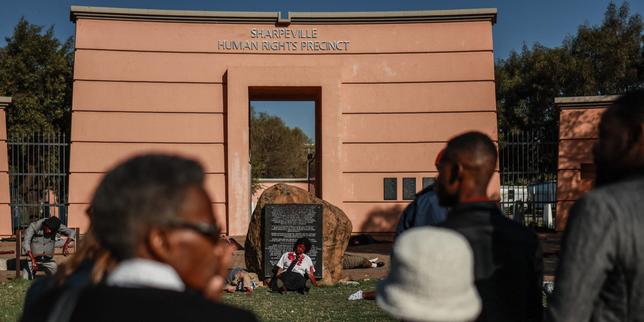
Thirty years have leaked through the hourglass since the formal collapse of South Africa's racial segregation regime, yet the earth still refuses to keep its dead buried. Families across the townships and rural provinces are mobilizing to tear open classified archives and force judicial authorities to reopen dormant investigations into apartheid-era state terror. The Truth and Reconciliation Commission traded criminal prosecution for public confession decades ago, leaving thousands of victims in a strange legal purgatory where the architects of state-sponsored murder received amnesty while accountability vanished into thin air. Today, a new generation of investigators, human rights attorneys, and aging relatives are rejecting the historical compromise that swept unresolved murders under the rug. They are demanding actual criminal trials for crimes against humanity that never received a proper hearing.
The architecture of impunity was built with precise administrative care. When the transition from minority white rule to democratic governance occurred in the mid-nineties, the architects of the new state faced a grim calculus. To prevent a catastrophic military counter-revolution from heavily armed security forces, Archbishop Desmond Tutu and the political leadership established a mechanism where perpetrators could win freedom by making full confessions. The promise was simple yet devastatingly hollow for those left behind. Truth in exchange for indemnity. But the promised investigations that were supposed to follow those who refused amnesty rarely materialized. Files gathered dust in damp basement archives. Prosecutors appointed by successive administrations lacked the political will, the financial resources, and sometimes the institutional inclination to pursue aging security policemen who spent careers operating above the law.
Walking through the corridors of the National Prosecuting Authority offices in Pretoria reveals an institutional exhaustion that borders on paralysis. Decades of bureaucratic inertia have turned active cold cases into historical artifacts. Prosecutors who inherited these dockets often face a wall of missing evidence, shredded surveillance logs, and dead witnesses whose testimonies were never properly recorded during the transition. When families push for action, they encounter polite stonewalling. State attorneys whisper about statute limitations, jurisdictional hurdles, and the sheer impossibility of securing convictions against former generals who now live out comfortable retirements in gated coastal estates.
Yet the victims refuse to accept silence as their inheritance. Grassroots legal collectives have emerged to challenge the state's passive complicity. Organizations like the Foundation for Human Rights are utilizing civil litigation to compel the National Prosecuting Authority to act on recommendations made by the Truth and Reconciliation Commission that were quietly shelved thirty years ago. These lawyers are not looking for symbolic apologies or commemorative plaques on heritage sites. They want indictments. They want murder charges brought against retired security branch officers who orchestrated disappearances, torture sessions, and extrajudicial assassinations during the dark years of the emergency regulations.
The legal strategy relies on reframing apartheid atrocities as ongoing crimes against humanity rather than isolated historical infractions. Under international law, enforced disappearance constitutes a continuous crime that persists until the fate of the victim is officially accounted for. This legal pivot bypasses traditional domestic statute limitations that prosecutors previously used as convenient shields against action. If a body remains unrecovered, or if the state actively conceals the circumstances of a death, the clock on criminal culpability never starts ticking. It is a brilliant, aggressive maneuver that weaponizes international jurisprudence against a local judicial system that would rather look forward than backward.
Consider the evidentiary hurdles facing these revived investigations. A hypothetical case involving a student activist who vanished in nineteen eighty-two illustrates the monumental scale of the challenge. The original police file contains a falsified suicide note and a coroner's report signed off by a state-compliant doctor who conveniently failed to document fractured ribs and severe head trauma. The primary investigating officer retired to a farm in the Karoo years ago. The physical exhibits room where bloodstained clothing and seized documents were stored suffered a mysterious fire in nineteen ninety-eight. Every single door leads to a dead end designed by professionals whose entire job description was the obliteration of paper trails.
Despite these barriers, forensic science has evolved into an unexpected weapon for justice. Advanced DNA profiling techniques can now identify skeletal remains recovered from unmarked paupers' graves across the country, matching them to descendants who have spent half a century searching for closure. Anthropologists and forensic pathologists are exhuming bodies buried under false names during the height of the state security crackdowns. These scientific breakthroughs strip away the plausible deniability that protected perpetrators for generations. A bone fragment does not lie, and a DNA match cannot be dismissed by a defense attorney claiming political necessity.
The political ramifications of reopening these files send tremors through the upper echelons of the current political establishment. The transition from liberation movement to governing party required compromises that bound old enemies together in uneasy bureaucratic alliances. Digging into the security operations of the past risks exposing uncomfortable overlaps and pragmatic accommodations made during the dark room negotiations of the early nineties. Accountability is rarely a sterile legal exercise when the people who signed death warrants walk the same parliamentary corridors as the relatives of the disappeared.
Public frustration has reached a boiling point in communities that bore the brunt of state violence. In places like Cradock, where four anti-apartheid leaders were brutally murdered and incinerated by security police in nineteen eighty-four, families have watched successive administrations promise accountability while delivering nothing. The frustration is no longer channeled through quiet grief. It erupts in packed community halls, fierce press conferences, and direct confrontations with prosecutors who attempt to hide behind caseload excuses. The demand is absolute and uncompromising.
The fight extends beyond individual murder dockets. It addresses a systemic moral failure that haunts the national identity. South Africa chose a path of reconciliation that prioritized national stability over retributive justice, a choice that saved the country from immediate racial conflagration. But deferred justice is denied justice, and the interest on that unpaid moral debt has accumulated over three decades. When victims state that they simply want their pain acknowledged through the formal machinery of a criminal court, they are highlighting a profound truth about state legitimacy. A democracy built on the unpunished bones of its citizens will always struggle to maintain moral authority when its institutions protect the executioners instead of the families.
As these legal battles grind through the appellate courts, the window for accountability narrows by the day. The men who designed the interrogation rooms and authorized the covert death squads are dying of old age. Every obituary published in the national press represents another closed door, another architect of terror slipping away into historical anonymity without ever hearing a judge read a guilty verdict. The lawyers and relatives pushing these dockets are engaged in a desperate race against biology. They know that a court verdict delivered posthumously is a pale shadow of actual accountability, but for a nation desperate to heal its deepest fractures, even a late reckoning is better than eternal silence.