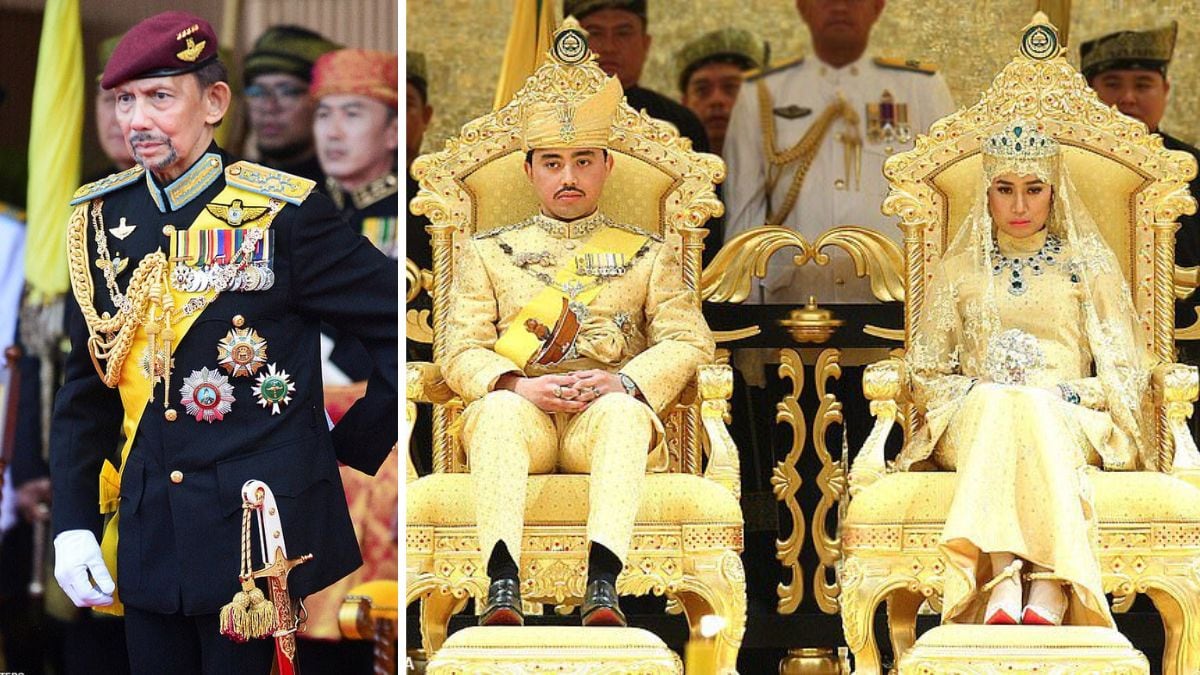
The royal decree arrived without a warning siren or a leaked manuscript. It simply dropped through the bureaucratic machinery of the Office of the Grand Chamberlain in Bandar Seri Begawan, carrying the absolute weight of absolute monarchy. Pengiran Raabi'atul Adawiyyah, wife to Prince Abdul Malik and a mother of four, was stripped of her high-ranking royal styles and titles with immediate effect.
The official justification pointed to conduct deemed unbecoming of a royal spouse, citing a direct blow to the monarchy's pristine image and an unacceptable lack of deference toward Sultan Hassanal Bolkiah. State media broadcasted the bulletin, public channels circulated the decree, and an impenetrable wall of silence immediately slammed shut. No follow-up press conferences were scheduled. No investigative leaks surfaced from palace insiders. The machinery of the House of Bolkiah simply swallowed the transgression whole, leaving observers across Southeast Asia scrambling to decode an unprecedented disciplinary action inside one of the wealthiest sovereign households on earth.
Absolute power operates on a different frequency than constitutional monarchies. In London or Stockholm, the stripping of a royal title usually follows months of tabloid scrutiny, public petitioning, or carefully managed structural downsizings designed to slim down the working family. In Brunei, the dynamic is entirely direct. The Sultan serves concurrently as Prime Minister, Minister of Defense, and Minister of Finance, maintaining a total monopoly over governance, resource allocation, and state narrative. When a royal title is revoked while the marriage technically remains intact—unlike previous historical instances where wives lost titles strictly following formal divorces—the signal sent to the court is severe. It means the monarch perceived a breach not merely of domestic harmony, but of sovereign dignity itself.
The silence surrounding the exact nature of Pengiran Raabi'atul Adawiyyah’s infraction is a masterclass in modern palace containment. Prince Abdul Malik married her in a ten-day extravaganza in 2015, a glittering display of diamond-encrusted shoes, gold-threaded garments, and unchecked opulence that broadcasted the absolute financial security of the oil-rich sultanate to the international stage. For over a decade, she occupied a secure position within the inner tier of the royal household, bearing four children whose individual titles remain untouched by the recent decree.
To suddenly erase the styles of a senior princess points to a fracture too deep to be smoothed over by private reprimands. Observers familiar with the strict protocols of the Malay Islamic Monarchy framework understand that public disrespect toward the sovereign is the ultimate systemic taboo. Yet, the total vacuum of verified details has transformed the capital into a hotbed of whispered speculation. Rumors flicker through diplomatic circuits and regional messaging apps, ranging from alleged protocol breaches during high-level state functions to unauthorized commercial ventures leveraging royal patronage. Without institutional transparency, the rumor mill fills the void, illustrating the inherent vulnerability of closed-door autocracies in an interconnected era.
State-controlled media outlets like Radio Television Brunei (RTB) delivered the news with clinical detachment. They offered zero context beyond the formal wording of the Grand Chamberlain's statement. This approach highlights the stark contrast between traditional absolute rule and the Western model of celebrity monarchy, where scandals are routinely monetized, debated, and dissected across talk shows and digital platforms. In Brunei, the crown views public scandal not as a public relations challenge to be managed through strategic interviews, but as a state security matter to be neutralized through swift administrative amputation.
The children of Prince Abdul Malik and the deposed princess remain insulated from the fallout, at least on paper. Their places in the line of succession and their formal styles have not been formally revoked by the sovereign's pen. This selective targeting suggests a surgical strike rather than a broad family purge. The Sultan aimed strictly at the individual whose behavior allegedly crossed the invisible line of royal decorum, choosing to penalize the adult actor while preserving the dynastic continuity represented by the grandchildren. It is a calculated exercise in damage control executed by a ruler who has navigated decades of internal palace intrigues and global economic shifts.
Analyzing this extraordinary descent from grace requires looking closely at how absolute monarchies police their own boundaries. Modern courts across the globe are grappling with the friction between private individual autonomy and public institutional representation. From Scandinavian reductions of non-working royals to British systemic purges, crowns are attempting to protect their brands from excess. Yet Brunei’s approach stands apart because it relies entirely on feudal authority rather than public consensus. There is no parliamentary debate, no constitutional check, and no appeal process. The decree is issued, the titles evaporate, and the individual steps back into the shadows of private life.
The international press corps often struggles to cover these developments because the royal household of Brunei operates behind a dense curtain of wealth and absolute legal immunity. Foreign correspondents cannot camp outside palace gates to interview disgruntled courtiers, and local journalists operate under stringent media laws that treat criticism of the monarchy as a criminal offense. Consequently, an event of major geopolitical and social significance is reduced to a few paragraphs of official wire copy.
What remains is a stark reminder of the precarious nature of life at the absolute top. The gold-plated carriages and diamond-encrusted ceremonies of 2015 feel remarkably distant for a woman who has now been officially declared persona non grata within her own household. As the Sultan continues to tighten the reigns of his dynasty against any hint of insubordination, the message to the remaining members of the royal family is unmistakable. Proximity to absolute power is a privilege entirely dependent on absolute compliance, and the distance between a royal throne and complete obscurity can be bridged by a single stroke of a royal pen.