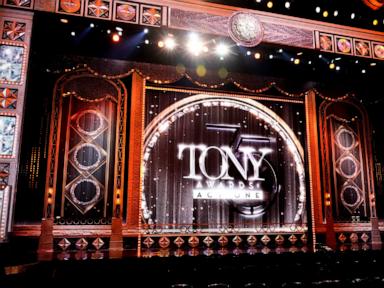
The upcoming 79th Tony Awards on June 7, 2026, will celebrate a historical milestone on paper. The Broadway League just announced that the 2025–2026 season crossed a record-breaking $1.91 billion in total grosses. But inside the Shubert Alley boardrooms and behind the velvet curtains of Radio City Music Hall, the mood is closer to panic than pride.
The industry is keeping a dirty secret. The record gross is an illusion driven entirely by astronomical, predatory VIP pricing on a handful of bulletproof star vehicles, while the rest of the ecosystem is hollowed out.
Look beneath the headline numbers. Attendance is actually down, and the cost of mounting a production has escalated to a point where a show can fill 90% of its seats and still lose hundreds of thousands of dollars a week. When the Tony envelopes are opened, the trophies won't just represent artistic validation. They will serve as high-stakes economic life rafts for bleeding productions.
The glittering surface of Broadway’s biggest night masks a structural crisis threatening the very future of commercial theater.
The Mirage of the Billion Dollar Season
To understand the desperation underlying this year's awards, one must examine how that $1.91 billion was actually built.
It was not built on sustainable, mid-tier commercial theater. It was built on the backs of shows like the smash-hit revival of Every Brilliant Thing, which just set a new house record. Tickets for that production, driven by the star power of Daniel Radcliffe, routinely command hundreds of dollars on the secondary and premium markets.
But theater cannot survive on three-man prestige plays and limited-run star vehicles alone.
The true health of the Main Stem is dictated by the big-budget, open-ended new musicals—the exact category currently facing an existential reckoning. This year's two frontrunners for Best Musical tell the story perfectly. The Lost Boys and Schmigadoon! each pulled in 12 Tony nominations. In a normal decade, a dozen nominations would trigger an immediate box office surge, locking in advance ticket sales for the next six months.
Instead, both shows are fighting for survival.
Since April, The Lost Boys has been underperforming its theoretical average gross capacity by 13%. Schmigadoon! is in even deeper trouble, tracking a staggering 32% below its financial projections. The Tony nominations did not create a stampede to the box office. They barely functioned as a tourniquet.
The math behind a modern Broadway musical has turned toxic. High labor costs, pandemic-era debt service, and inflation on physical materials mean that a musical that once cost $10 million to mount now requires $15 million to $20 million before the first preview. Weekly running costs have risen concurrently.
Consider Two Strangers (Carry a Cake Across New York), a critical darling that secured 8 nominations. Forbes estimates its weekly operating costs are exceptionally lean, hovering just under $500,000. Yet, despite ecstatic reviews, the show has barely managed to eclipse that break-even mark for most of its run. If a lean, well-reviewed show with eight nominations is barely scraping by, the macroeconomic reality for the rest of the industry is grim.
The Bloodbath in the Revival Categories
The structural imbalance is even more pronounced in the revival categories, where the line between high-art risk-taking and corporate nostalgia bait has blurred.
This season witnessed an unprecedented showdown between massive IP properties and high-concept theatrical reinventions. On one side stands Ragtime, a lavish, traditional production that pulled 11 nominations and is currently beating financial projections by 23%. On the other stands Cats: The Jellicle Ball, a radical, queer, ballroom-inspired reimagining that secured 9 nominations but has divided traditional theatergoers.
The financial disparity between these two approaches highlights a dangerous trend.
Producers are growing intensely risk-averse. They are leaning heavily on recognizable brand names and nostalgic intellectual property to coax tourists into buying tickets. The musical Chess managed 5 nominations but has already announced an early closure because nostalgia alone could not sustain its massive weekly overhead.
When original writing struggles and revivals must rely on shock value or pristine nostalgia to break even, the creative pipeline begins to dry up. Theater becomes a museum for the wealthy rather than a living, breathing art form.
The Voter Psychology Shift
The panic isn't isolated to the financial ledgers. It has fundamentally altered how the roughly 800 Tony voters cast their ballots.
Historically, Tony voters functioned as a mix of artistic purists and long-term industry strategists. They voted for the show that pushed the medium forward, trusting that quality would eventually find its financial footing. Today, that voting bloc is reacting to the immediate economic survival of their peers.
A vote for Best Musical is no longer just an aesthetic judgment. It is an economic stimulus package.
Voters are acutely aware that their choices dictate who stays open through the lean summer months and who posts a closing notice by Monday morning. This reality puts a show like Two Strangers in a complex position. It is exactly the kind of intimate, original piece that voters love to reward, but can the industry afford to give the top prize to a quiet show while multi-million-dollar spectacles like The Lost Boys face empty mezzanine seats?
Furthermore, the play categories are experiencing a crowded, chaotic logjam that reflects a broader industry bottleneck.
Star-driven vehicles like Death of a Salesman featuring Nathan Lane and Giant featuring John Lithgow are cannibalizing each other's audiences. In the Lead Actor in a Play category, the race is a complete toss-up between Lane, Lithgow, and Radcliffe.
Because non-musical plays have shorter lifespans and lower margins, the Tony is the only asset that can guarantee a post-Broadway national tour or international licensing deal. The desperation in the air during the vanity campaigns this May was palpable. Publicists were not campaigning for prestige. They were campaigning for their clients' financial survival.
The Disconnect Between New York and the Road
The deepest structural flaw of the current Broadway ecosystem is the growing chasm between what succeeds in New York and what can travel across the country.
The Broadway League loves to tout the $1.91 billion figure because it looks great to city politicians and tourism boards. Theater drives revenue to Midtown hotels, restaurants, and parking garages. But the Broadway model relies on a secondary engine: Touring Broadway.
The shows that win big at the Tonys are expected to hit the road, filling 3,000-seat venues in Ohio, Texas, and California for weeks at a time. That is where real, generational wealth is made for theatrical investors.
But how do you tour a show like Cats: The Jellicle Ball, which relies entirely on an immersive, specific ballroom layout? How do you tour Schmigadoon!, a meta-musical whose entire comedic premise requires the audience to have a deep, encyclopedic knowledge of Golden Age theater tropes?
The current crop of Tony contenders is highly localized, hyper-specific, and deeply reliant on New York taste profiles. If the shows winning the big prizes cannot replicate their success in regional markets, the entire financial pipeline that funds experimental theater in New York will collapse.
Investors will simply stop writing checks for original work. They will park their money in reliable, permanent jukebox hits or Disney transfers.
The Broken Ticket Distribution Machine
The ultimate barrier to entry remains the broken mechanics of how theater tickets are bought and sold.
The average ticket price since April sits at $123.04. That number is artificially suppressed by cheap rush tickets and balcony seats. The reality for a prime weekend seat to a nominated show is closer to $300.
The industry has trapped itself in a vicious cycle.
Because production costs are astronomical, producers must charge exorbitant ticket prices to recoup their investments. Because ticket prices are exorbitant, audiences refuse to take risks on new, unproven stories. They only buy tickets for things they already know they will like: stars, revivals, and famous movie adaptations.
The Tony Awards broadcast on CBS is effectively a three-hour commercial designed to break this cycle. It is a desperate plea to the American public to believe that live theater is still worth the cost of admission.
But a shiny television broadcast cannot fix a broken business model.
When the lights go down at Radio City Music Hall and the winners walk backstage with their statues, the champagne will taste a bit sour. They know that by the morning of June 8, the press releases about record-breaking seasonal grosses will fade.
The industry will be left staring at the same cold reality: an art form that is becoming too expensive to produce, too expensive to witness, and too fragile to survive without a radical restructuring of its financial foundations.