Brazil is walking into the United Nations climate talks with a plan designed to force wealthy nations to put real money behind their green promises, shifting the global energy transition from vague pledges to binding financial mechanisms. Rather than simply asking industrialized countries to cut emissions faster, Brasilia is proposing a structured economic framework that ties renewable energy expansion directly to sovereign debt relief, targeted green subsidies, and industrial supply chain transfers for developing economies.
For decades, UN climate conferences have followed a predictable script. Wealthy nations announce ambitious decarbonization targets, developing nations point out that they lack the capital to build the necessary infrastructure, and everyone leaves with a non-binding communique that changes very little on the ground. Brazil wants to break that cycle. By leveraging its status as both a major oil producer and a renewable energy superpower—with roughly 80% of its electricity already coming from clean sources—the country is positioning itself as the indispensable broker between the Global North and the Global South.
The Architecture of Brazil's Energy Proposal
At the core of Brazil's diplomatic push is a simple economic reality. Developing nations cannot transition away from fossil fuels when borrowing money to build a solar farm in Latin America or Africa costs three to four times more than building the exact same facility in Europe or North America. High interest rates and perceived currency risks create a massive green investment gap that private markets refuse to bridge on their own.
Brazil's proposal attacks this bottleneck through three primary channels:
- Sovereign Debt-for-Climate Swaps: Allowing heavily indebted nations to redirect bilateral and multilateral debt payments into domestic renewable energy grids and forest conservation projects.
- Standardized Carbon Pricing: Establishing an interoperable global carbon market that prevents wealthy nations from imposing unilateral green tariffs—like the European Union's Carbon Border Adjustment Mechanism—that punish exports from developing countries.
- Technology and Supply Chain Localization: Requiring green energy financing from international development banks to include local manufacturing mandates, ensuring developing economies do not merely become buyers of foreign solar panels and wind turbines, but producers of the underlying hardware.
The mechanics here are entirely pragmatic. If a developing country is forced to choose between keeping the lights on with cheap coal or taking on predatory debt to buy imported wind turbines, coal wins every single time. Brazil is arguing that the energy transition will fail globally unless the financial plumbing is rebuilt to make clean power the cheapest, easiest option for emerging markets.
The Petrobras Paradox
You cannot analyze Brazil's climate diplomacy without confronting the glaring contradiction sitting right in the middle of its own economy. Brazil is simultaneously campaigning to lead the global green transition while aggressively expanding its offshore oil production.
State-controlled oil giant Petrobras continues to pour billions of dollars into deepwater pre-salt oil fields, and the Brazilian government has openly entertained exploring new oil reserves near the mouth of the Amazon River. Critics from environmental organizations and European delegations have been quick to label this hypocrisy. How can a nation demand a rapid global phase-out of fossil fuels while actively pumping more crude to fund its domestic budget?
Brasilia's answer is blunt, and frankly, hard to dismiss if you look at global energy math. Brazilian officials argue that the world will still need oil for decades during the transition, and that revenue from state-owned oil exports is precisely what funds Brazil's social programs and its domestic green infrastructure. More importantly, they point out that wealthy nations like the United States, Norway, and Canada have not halted their own oil and gas expansion, yet they expect developing nations to leave their natural resources in the ground without compensation.
This is the central friction point of modern climate politics. Wealthy nations built their industrial bases on cheap, unrestricted fossil fuels and now want to pull up the ladder under the banner of environmental protection. Brazil is refusing to play along with that double standard, insisting instead on a managed transition where developing countries are allowed to monetize their resources to pay for their own decarbonization.
Why Industrialized Nations Are Nervous
Washington, Brussels, and Tokyo have greeted Brazil's upcoming presentation with cautious, behind-the-scenes resistance. The discomfort has nothing to do with the technical merits of renewable energy and everything to do with industrial competitiveness and geopolitical control.
Over the last few years, the United States and the European Union have shifted away from free-market climate policies toward aggressive green protectionism. Legislation like the US Inflation Reduction Act uses massive domestic subsidies to lure clean energy manufacturing back to American soil. Meanwhile, Europe's border taxes penalize foreign steel, cement, and aluminum made with high-carbon power.
Brazil's UN plan directly challenges this protectionist model. By pushing for global rules that restrict unilateral green tariffs and demand open technology transfers, Brazil is attempting to stop wealthy nations from hoarding the economic benefits of the green economy.
The Battle Over Critical Minerals
Beneath the diplomatic language about solar panels and wind farms lies a fierce struggle over critical minerals. Transitioning the global economy to renewable energy requires staggering amounts of lithium, copper, nickel, and rare earth elements. Brazil sits on massive reserves of these exact materials, particularly nickel, graphite, and rare earths.
Historically, resource-rich countries in the Global South have extracted raw minerals, shipped them abroad for pennies on the dollar, and bought back finished high-tech products at a massive markup. Brazil is signaling that those days are over. A key pillar of its climate negotiation strategy involves forming alliances with other mineral-rich developing nations to demand local refining and battery manufacturing before raw materials ever leave their borders.
For Western automakers and tech companies desperate to break China's near-monopoly on mineral processing, Brazil's stance presents a complicated dilemma. They need Brazil's resources to diversify their supply chains, but they are reluctant to hand over proprietary refining technologies or build expensive processing plants in South America.
The Biofuel Wildcard
While European policymakers remain fixated on total electrification—pushing battery-electric vehicles as the sole solution for transportation—Brazil is bringing a radically different technological vision to the UN table. It wants sustainable biofuels recognized as a premier decarbonization tool on equal footing with wind, solar, and electric vehicles.
Brazil has spent fifty years building the world's most sophisticated sugarcane ethanol and biodiesel infrastructure. Almost every car on Brazilian roads is a flex-fuel vehicle capable of running on 100% hydrous ethanol. According to Brazilian energy analysts, this domestic biofuel network has already prevented hundreds of millions of tons of carbon emissions without requiring the massive grid upgrades or rare mineral mining that electric vehicles demand.
At the upcoming climate talks, Brazil plans to pitch this biofuel model to nations across Asia and Africa. For countries with weak electrical grids and vast agricultural sectors, growing their own fuel is far more realistic than building millions of EV charging stations from scratch.
Yet this push faces fierce pushback from European delegates and environmental scientists. Critics point to the indirect land-use change problem. Even if sugarcane or soy is grown on existing pastureland, expanding biofuel crops can push cattle ranching deeper into sensitive ecosystems like the Amazon rainforest or the Cerrado savanna. Furthermore, combustion engines running on biofuels still emit local air pollutants, even if their lifecycle carbon footprint is lower than gasoline. Brazil will have to prove that its traceability systems can guarantee biofuel crops are not driving deforestation if it wants this part of its plan to gain international traction.
The Hypothetical Reality of Grid Integration
To understand why Brazil's focus on grid modernization and financing matters so much, consider a hypothetical example of how renewable energy economics play out on the ground.
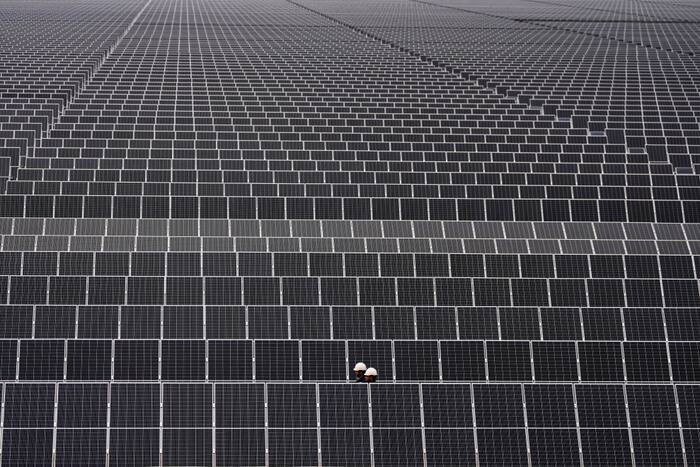
Imagine a mid-sized developing nation with abundant sunshine and strong coastal winds. A foreign consortium offers to build a massive 500-megawatt solar park. On paper, it is a climate triumph. In reality, if that country's national power grid was built in the 1970s to carry steady, predictable power from a few centralized coal plants, dumping intermittent solar power into the system causes voltage fluctuations and blackouts.
Without billions of dollars invested in high-voltage transmission lines, smart transformers, and utility-scale battery storage, that brand-new solar park ends up curtailed—meaning grid operators have to shut it off during peak sunny hours because the wires simply cannot carry the load. Investors lose money, electricity prices spike, and the government quietly approves a new natural gas plant just to keep the grid stable.
Brazil knows this problem intimately. Despite its clean energy dominance, Brazil has repeatedly struggled with transmission bottlenecks that force wind and solar farms in its sunny northeast to curtail generation because the power lines running south to major industrial centers like Sao Paulo are maxed out. That hard-won operational experience is why Brazil's UN proposal places heavy emphasis on funding grid infrastructure and energy storage, rather than just subsidizing the construction of new solar panels.
The Geopolitical Chessboard
Brazil's renewable energy push is also a calculated geopolitical maneuver. As the host of major international summits and a leading voice within the expanded BRICS bloc, Brazil is actively working to reshape global governance institutions like the World Bank and the International Monetary Fund.
Brasilia's diplomats recognize that climate change is no longer just an environmental issue; it is the primary arena where global trade rules and financial power are being renegotiated. By positioning itself as the chief architect of a fair energy transition for the developing world, Brazil gains immense diplomatic clout. It can extract trade concessions from the European Union, secure infrastructure investments from China, and command attention in Washington—all while cementing its own regional leadership in South America.
China, in particular, is watching Brazil's moves closely. Chinese companies already dominate the global supply chains for solar panels, wind turbines, and electric vehicles, and they have poured billions into Brazilian power transmission lines and EV factories. While China benefits from Brazil's push against Western green tariffs, Beijing is less enthusiastic about Brazil's demands for strict local manufacturing mandates that could eventually limit Chinese exports. Brazil is walking a tightrope, trying to use Chinese capital to build its green economy without becoming entirely dependent on Beijing's technology.
What Actually Happens on the Negotiation Floor
When the speeches end and the closed-door drafting sessions begin at the UN climate talks, Brazil's ambitious framework will collide with the harsh realities of consensus-based diplomacy. Every single word in a UN climate agreement must be approved by nearly 200 countries, giving petro-states like Saudi Arabia and major coal consumers like India effective veto power over language that threatens their core economic interests.
Expect wealthy nations to applaud Brazil's rhetoric on renewable energy targets while quietly watering down any binding commitments on debt relief, technology transfers, or trade tariff exemptions. Finance ministries in Washington, London, and Berlin are facing tight domestic budgets and rising political pushback against foreign spending. Signing a check to overhaul another country's power grid is a tough sell to voters struggling with domestic inflation.
Brazil's negotiators know they will not get everything they are asking for in a single summit. That is not how UN diplomacy works. Instead, they are playing a long game, using these talks to establish the political baseline and institutional machinery for future summits—especially as Brazil prepares to host the COP30 climate conference in the Amazonian city of Belem. By forcing the issues of borrowing costs, green protectionism, and local supply chains onto the official agenda now, Brazil is ensuring that wealthy nations can no longer hide behind lofty emissions targets while ignoring the financial mechanics required to actually achieve them.