When the Panama-flagged bulk carrier MV Ocean Winner vanished from maritime tracking systems and sank approximately 240 nautical miles off the Paradip coast in Odisha, the immediate reflex of the global news apparatus was to report a standard maritime emergency. An international crew of 24, a cargo of iron ore bound for Singapore, a sudden loss of communication, and a frantic rescue effort spearheaded by the Indian Coast Guard and Indian Navy. Two survivors pulled from separate life rafts by a diverted merchant tanker. Twenty-two souls missing in the volatile swells of the Bay of Bengal.
Strip away the routine bureaucratic updates, however, and a much darker reality emerges. This incident is not merely an isolated accident born of bad weather or sudden mechanical failure. It exposes the systemic vulnerabilities inherent in high-volume mineral transport, the murky world of open registries, and the immense dangers facing the crews who keep global supply chains functioning while operating in the shadows of maritime oversight.
The Anatomy of a Ghost Ship Disappearance
To understand how a massive 225-metre bulk carrier can effectively drop off the grid, one must look closely at the mechanics of modern commercial shipping. MV Ocean Winner departed from the port of Paradip carrying a heavy consignment of iron ore. Iron ore is dense, abrasive, and notoriously unforgiving if moisture management or cargo trimming goes wrong. When bulk carriers load heavy mineral cargoes, any shift in weight distribution during transit can create structural torque that compromises the hull in a matter of minutes.
Yet, long before the vessel went down, questions began to accumulate regarding its tracking footprint. Ships of this scale are mandated to run Automatic Identification Systems (AIS) continuously. When a vessel disappears from these networks before sending out a formalized distress call, it usually points to catastrophic power failure, rapid structural fragmentation, or sudden flooding that knocks out electrical grids instantly.
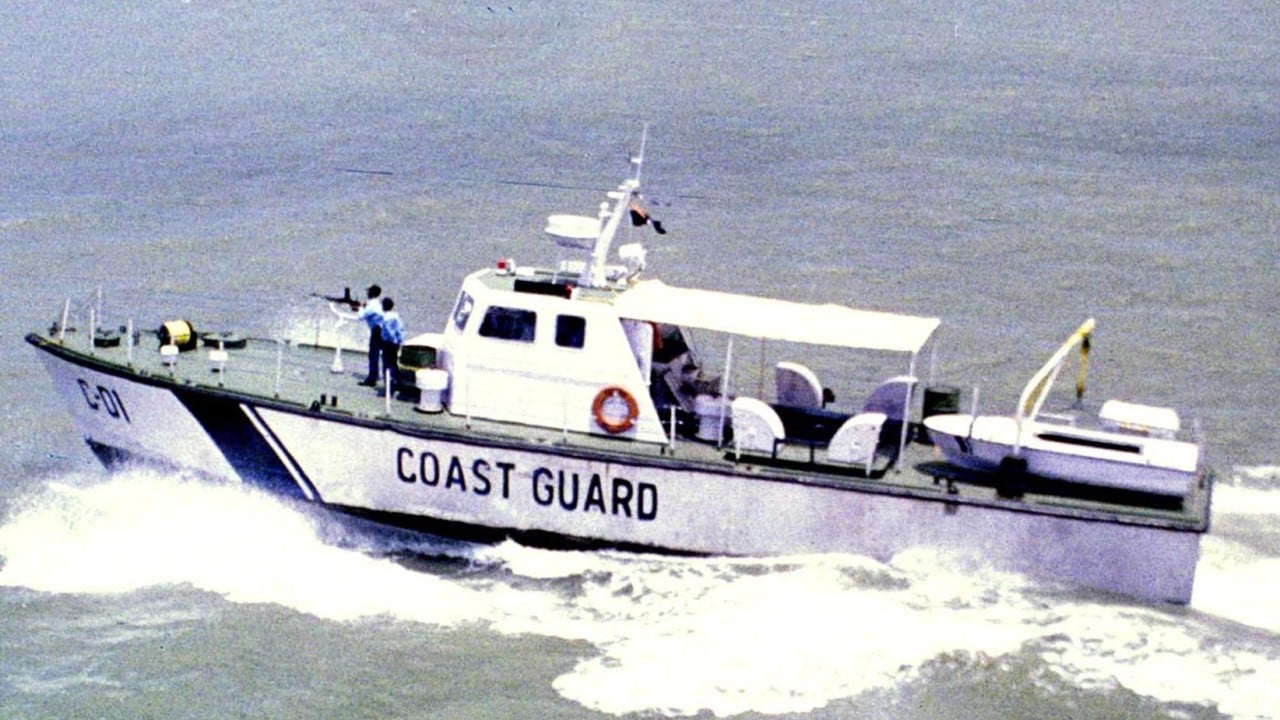
The Maritime Rescue Coordination Centre activated the International Safety Net, redirecting the merchant vessel MT Aisopos, which managed to recover two survivors from separate life rafts. But finding two survivors in a debris field spanning hundreds of square miles of open ocean is a minor miracle, not a systematic containment of the disaster. The vast majority of the crew—consisting of twenty Chinese nationals, three individuals from Myanmar, and one Bangladeshi citizen—remained unaccounted for as multi-unit search sweeps involving Coast Guard vessels like the ICGS Varad and ICGS Anmol pressed forward.
The Panama Flag Problem
Every time a vessel like MV Ocean Winner meets a grim fate under a flag of convenience, maritime safety experts groan quietly behind closed doors. Panama boasts the largest ship registry in the world by deadweight tonnage. Shipowners flock to these open registries for lax tax structures, minimal regulatory overhead, and simplified crew employment laws.
While many vessels operating under these flags maintain high standards, the model inherently creates an enforcement gap. When an accident occurs hundreds of miles off the coast of eastern India, accountability becomes an international bureaucratic maze. Who inspects the structural integrity of a bulk carrier that changes hands through multiple shell companies? How rigorously are load lines monitored when commercial pressure dictates quick turnarounds at busy mineral ports?
The economic incentive to overload or push aging bulk carriers through rough seas is constant. Freight rates fluctuate, port congestion eats into profit margins, and charterers demand absolute schedule adherence. When a ship leaves an Indian port loaded down with raw steel-making ingredients, the commercial momentum pushes it forward regardless of marginal weather warnings or creeping structural fatigue.
The Invisible Workforce of the Open Ocean
We consume finished goods, build skyscrapers, and manufacture automobiles, rarely pausing to consider the human cost embedded in a ton of iron ore. The crew manifest of MV Ocean Winner tells a familiar story of globalization's forgotten workforce. Twenty Chinese officers and ratings, alongside men from Myanmar and Bangladesh, form the invisible backbone of maritime trade. They work punishing contracts spanning many months, isolated from land, operating massive industrial platforms through complex machinery spaces and unpredictable ocean weather.
When a bulk carrier sinks rapidly, the window for abandoning ship safely is terrifyingly narrow. Life rafts must be deployed manually or float free as hydrostatic releases activate under pressure. In deep-water sinkings far from the continental shelf, survival depends entirely on immediate surface visibility, sea temperature, and the swiftness of regional rescue coordination.
India's maritime agencies have proven exceptionally capable of mounting long-range rescue missions in the eastern seaboard sector, utilizing aircraft and offshore patrol vessels from regional commands. But search and rescue is, by definition, a reactive measure. It begins only after the catastrophe has already unfolded.
The questions that linger in the wake of the MV Ocean Winner disaster go far beyond the immediate tactical coordination of the Indian Coast Guard. They touch on the willingness of international maritime organizations to crack down on sub-standard vessel maintenance, lax oversight in mineral loading ports, and the human toll of a logistics system that values speed above structural security.
As the search sweeps narrow and the probability of finding further survivors fades into the deep currents of the Bay of Bengal, the silence left behind is deafening. Another ship is gone, swallowed by the sea, leaving investigators to piece together a tragedy that should never have happened in the first place.