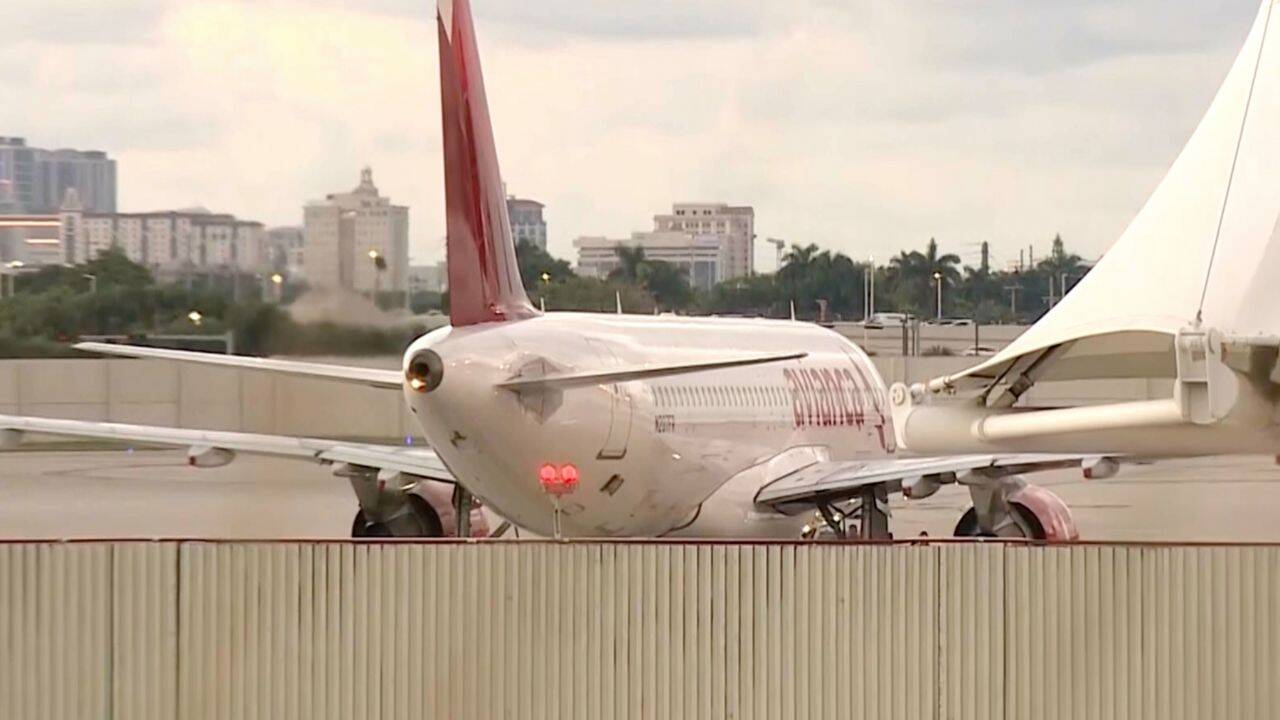
An Avianca flight making an emergency landing in Miami following severe, unpredicted clear-air turbulence left at least eight passengers and crew injured, laying bare a terrifying vulnerability that commercial aviation continues to struggle with. Clear-air turbulence struck without warning over the Caribbean, slamming passengers against overhead bins and exposing the limits of modern meteorological forecasting. When commercial aircraft descend into emergency situations due to violent atmospheric disruptions, the immediate headlines focus on hospitalizations and structural cabin damage. Yet the deeper crisis involves a systemic failure in predictive tracking, airline safety protocols, and the escalating frequency of high-altitude weather anomalies driven by shifting climatic patterns.
Severe turbulence is no longer an occasional anomaly or an inconvenient bump on a long-haul journey. It is becoming a structural hazard for global carriers. Atmospheric scientists have tracked a measurable surge in high-altitude wind shear over the past four decades, largely tied to rising global temperatures altering the jet stream. When heavy metal tubes carrying hundreds of passengers intersect with these invisible atmospheric rivers, the physics are unforgiving.
Standard weather radar fails to detect clear-air turbulence because there is no moisture or precipitation to bounce signals back to the flight deck. Pilots fly blind into these pockets until the airframe itself begins to shudder. This structural limitation transforms routine flights into high-stakes gambles.
The Anatomy of an Emergency Diversion
When a commercial flight declares an emergency and diverts to a major hub like Miami International Airport, a precise chain reaction unfolds behind the scenes. Cabin crew members, often the primary victims during sudden G-force fluctuations, take the brunt of the kinetic energy. Because flight attendants frequently service passengers with hot beverages or manage trolley carts when turbulence hits without warning, they suffer the highest rate of severe trauma.
Airlines emphasize seatbelt compliance, yet the human element remains unpredictable. Passengers sleep, use lavatories, or simply ignore the initial chime during subtle shifts in air density.
The aviation industry relies heavily on post-flight pilot reports, known as PIREPs, to warn subsequent aircraft. This analog system feels archaic in an era of hyper-connected digital avionics. Relying on a pilot to manually type out a weather warning while fighting a bucking aircraft is an inefficient safety net.
Advanced predictive algorithms and satellite-based Doppler systems exist, but their adoption across global fleets remains inconsistent. Budget constraints, equipment weight considerations, and regulatory lag mean that carriers often operate with outdated atmospheric awareness tools.
The Cost of Climate Shifts on Flight Paths
The jet stream is behaving erratically. Jet stream wind speeds have increased, and the boundaries between stable and unstable air masses are fracturing more frequently. Transatlantic and Caribbean corridors are experiencing hotspots of severe clear-air turbulence that defy historical seasonal patterns.
Airlines face a difficult economic choice. Rerouting around suspected turbulence zones burns additional fuel, inflates operating costs, and disrupts tight scheduling matrices. Carriers constantly weigh passenger comfort and safety against the brutal economics of fuel consumption and carbon taxation.
When an incident like the Miami emergency landing occurs, the public focuses on the immediate human toll. Passengers share cell phone footage of cracked plastic panels and oxygen masks dangling from the ceiling.
Insurance claims skyrocket, and regulatory bodies launch routine investigations. But the underlying systemic issue remains unaddressed until the next violent encounter shakes another cabin.
Re-Engineering Passenger Safety Protocols
Protecting passengers requires a fundamental overhaul of cabin design and operational procedures. Ergonomic seat redesigns, reinforced overhead bin latches, and mandatory harness-style restraints for passengers during entire flight durations are often discussed in engineering circles. Yet, these measures face massive resistance due to weight additions and passenger pushback.
A lighter cabin interior saves fuel. Passenger comfort drives ticket sales. The industry has historically prioritized these commercial incentives over worst-case scenario hardening.
Flight deck training has evolved to incorporate advanced threat recognition, but human pilots can only react to what instruments display or what physics immediately impose upon the airframe. Artificial intelligence models are currently being tested by major carriers to process real-time atmospheric data from preceding aircraft. This mesh network approach attempts to create a digital warning shield across popular flight corridors.
If successful, this technology could transmit micro-burst and wind shear warnings to trailing flights milliseconds before impact. Adoption, however, requires international cooperation and standardized data-sharing protocols that cross competitive airline alliances—a notoriously slow bureaucratic hurdle.
The Reality Beyond the Runway
As the wounded passengers from the Miami emergency landing recover and legal teams begin parsing liability, the broader aviation ecosystem absorbs another data point in a worsening trend. The skies are growing rougher. The atmospheric engine driving global weather is changing under the weight of climate pressures.
Airlines can no longer treat clear-air turbulence as an act of God beyond human mitigation. The technology to map, predict, and avoid these invisible hazards exists in nascent forms, but capital allocation has lagged behind the escalating threat. Until global regulators mandate advanced predictive avionics and redesign cabin interiors to withstand extreme G-force shifts, passengers will continue to bear the physical cost of an industry catching up to a changing sky.