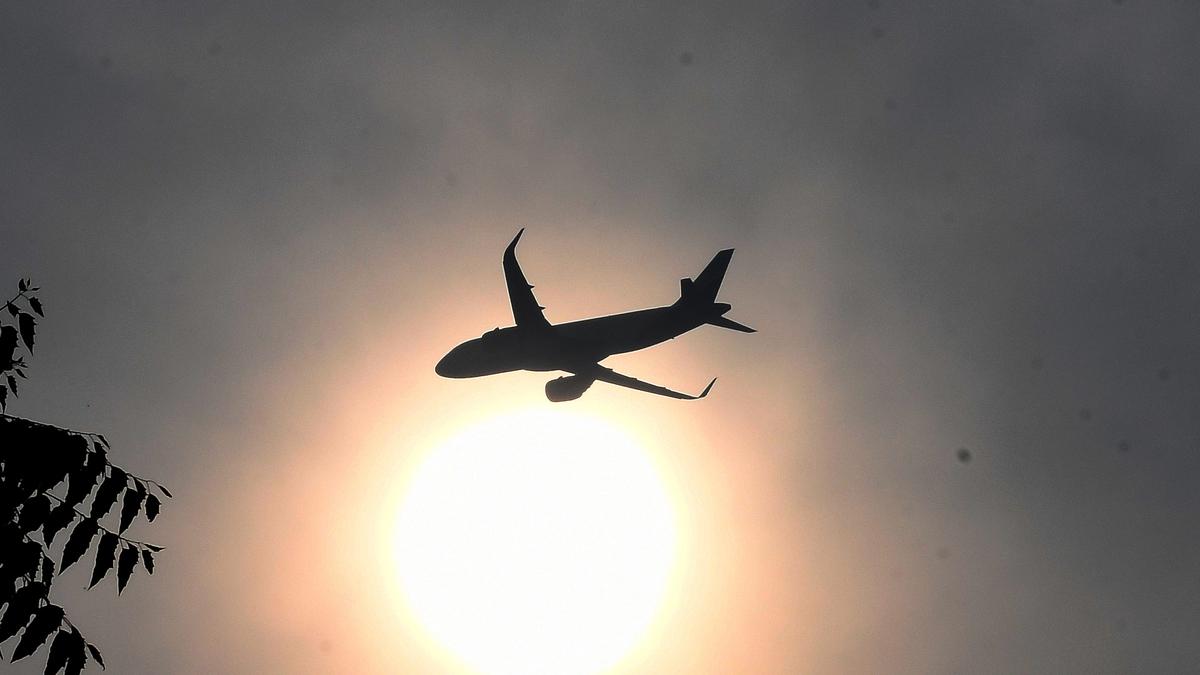
A Boeing 737-400 freighter operated by K2 Airways has vanished into the Arabian Sea after executing a series of violent, erratic altitude changes that defy standard mechanical failure profiles. The Pakistan-registered cargo plane, carrying five crew members from Sharjah to Karachi, reported a navigational system malfunction at 9:18 pm local time before entering a catastrophic plunge just three minutes later. Ground telemetry captures a terrifying final sequence: a sudden 5,000-foot drop, an immediate 6,000-foot surge back upward, and a final, terminal dive at an abnormal vertical rate of 22,400 feet per minute.
A multi-agency military search led by the Pakistan Navy's frigate PNS Zulfiqar is currently scanning the waters 155 nautical miles west of Karachi near Ormara. While early media reports point toward a generic technical glitch, a deeper analysis of the aircraft's tracking data and operational history reveals a far more complex crisis involving aging airframes, secondary market cargo conversions, and the extreme physical limits of manual piloting during spatial disorientation.
The Three Minutes of Aerodynamic Violence
The primary focus of the investigation must center on the sheer violence of the flight profile transmitted to Flightradar24 before the transponder went dark. A standard aircraft experiencing a dual engine failure or a complete loss of electrical power does not plunge and climb like a rollercoaster. It glides. Aerodynamic physics dictate that a commercial jetliner at cruising altitude possesses immense potential energy, allowing pilots miles of forward travel to diagnose issues.
What occurred aboard the K2 Airways flight was not a passive mechanical failure. The rapid succession of a steep descent followed by a massive, high-G climb indicates a severe struggle for control. When air traffic control attempted to guide the plane following the crew's report of a navigational failure, the aircraft was already deviating wildly.
A vertical descent rate of 22,400 feet per minute translates to roughly 250 miles per hour straight down. At that speed, the airframe of a classic 737 is subjected to structural loads near or beyond its design limits. The rapid correction upward suggests either a desperate manual overcorrection by the flight crew or a series of aerodynamic stalls caused by compromised control surfaces.
The Hidden Risk of the Converted Freighter
The missing aircraft, registered as AP-BOI, is a 27-year-old airframe. It began its life in 1999 as a passenger jet for Russia's Aeroflot, passed through various operators including Garuda Indonesia, and was eventually converted into a freighter in 2012. K2 Airways, a private Karachi-based cargo outfit established in 2018, only brought this single aircraft into service in 2024. Prior to Tuesday's flight, data shows the plane had been grounded since June 28.
This operational profile highlights a critical vulnerability within the global logistics sector: the heavy reliance on aging, second- and third-hand passenger aircraft converted for freight use.
- Structural Fatigue: Passenger airframes are pressurized and depressurized thousands of times over decades, weakening the aluminum skin.
- The Cargo Conversion Shift: Cutting a massive cargo door into the side of an old passenger fuselage alters the structural dynamics of the airframe, requiring careful balance and load management.
- Maintenance Lag: Small, single-aircraft start-up airlines operate on razor-thin margins. Keeping a 27-year-old jet airworthy requires an immense capital outlay for specialized parts and constant diagnostic monitoring.
When an airline’s entire operational footprint rests on a single, aging asset that has spent weeks sitting on a tarmac, the margin for mechanical error drops to zero.
Navigational Failures and the Spatial Disorientation Trap
The crew’s final radio transmission specifically cited a "navigational system issue." In the dark over the Arabian Sea, with no visible horizon, a sudden failure of primary flight displays or attitude indicators can be fatal. This phenomenon, known as spatial disorientation, occurs when a pilot's sensory perceptions conflict with the actual instrument readings.
If the navigational computers began feeding erroneous data to the cockpit, or if the pilots lost their artificial horizon while flying over open water at night, the chaotic altitude fluctuations become chillingly logical. A pilot attempting to correct a perceived dive based on a broken instrument can inadvertently pull the aircraft into a steep climb, triggering an aerodynamic stall. Once a heavy cargo jet enters a deep stall at night without reliable instrumentation, recovery is statistically improbable.
The crew on board included a pilot, a first officer, a loadmaster, and two onboard engineers. The presence of two engineers on a routine short-haul flight from the UAE to Pakistan hints at an underlying awareness that the aircraft required close, constant technical supervision.
Broader Implications for Regional Aviation Safety
This disappearance reopens deep wounds for the Pakistani aviation sector. It marks the most significant incident since the May 2020 crash of a Pakistan International Airlines Airbus A320 into a residential area near Karachi, which killed 97 people. That disaster was ultimately attributed to systemic human error, pilot distraction, and air traffic control failures.
While the 2020 crash exposed institutional rot within commercial passenger airlines, the disappearance of the K2 Airways freighter exposes a completely different vulnerability: the largely unscrutinized, under-regulated world of private regional air cargo. Freight operations frequently fly older airframes, operate during late-night windows with fatigued crews, and utilize secondary airports with less robust radar coverage.
The ongoing search involving Navy ATR surveillance aircraft and merchant vessels may eventually recover the flight data recorders from the sea floor. Until those black boxes are analyzed, the data suggests that the tragedy was not the result of a simple, single component failure, but rather a catastrophic confluence of an aging airframe, sudden instrument failure, and the violent aerodynamic forces that take over when human control is lost in the dark.


