Alberta is becoming uninsurable, and the traditional corporate talking points are no longer sufficient to explain why. While industry groups blame a sudden cluster of bad luck, the reality is a structural collapse of risk management. Home insurance premiums across the province shot up by 55.8 percent between December 2020 and December 2025, culminating in a jaw-dropping 391.6 percent surge over the last two decades. This represents the steepest rate escalation in Canada, far outstripping the national average and leaving working-class homeowners exposed to a predatory combination of climate volatility, international reinsurance shifts, and skyrocketing reconstruction costs.
The standard narrative tells you that a single dark cloud over Calgary or a random spark in the boreal forest is responsible for your doubling premiums. That is a convenient fiction. The truth is that insurance companies are quietly recalibrating their entire approach to Western Canada, treating the province as a high-stakes casino where the house is losing its edge.
The Three Billion Dollar Hour and the Multiplier Effect
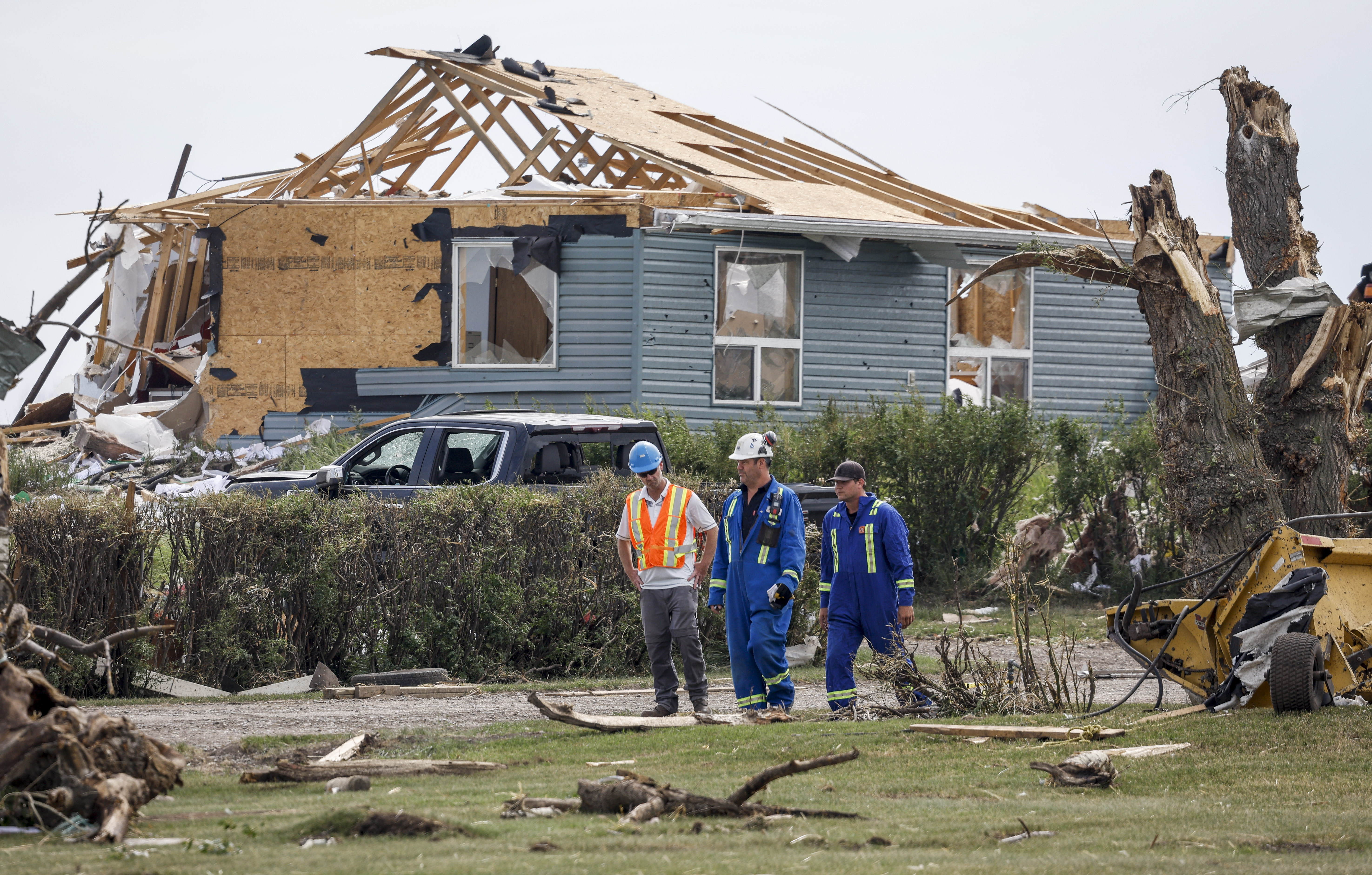
To understand the scale of the structural rot, one must look at the events of late summer 2024. In a compressed thirty-day window, Canada suffered an unprecedented run of catastrophic weather losses that totaled 8.6 billion dollars nationwide, obliterating the previous historic record set during the 2016 Fort McMurray disaster. Alberta sat squarely at the epicenter of this financial shockwave.
A single hailstorm slicing through Calgary in August 2024 managed to rack up 3 billion dollars in insured damages in less than sixty minutes. Weeks earlier, a massive wildfire tore through Jasper, swallowing iconic tourism infrastructure and leaving an additional 1.1 billion dollar bill in its wake.
But looking strictly at the insured losses misses the deeper economic crisis.
For every dollar an insurance provider pays out to replace a shattered vinyl siding panel or a torched roof truss, the broader economy absorbs two to four dollars in uninsured secondary costs. These hidden expenses take the form of fractured municipal water mains, melted electrical grids, and destroyed highway infrastructure. Local governments are forced to cover these gaps by drawing heavily from the federal Disaster Financial Assistance Arrangements program or, more commonly, by aggressively hiking municipal property taxes. The homeowner is essentially hit twice: once through their private insurance premium renewal notice, and again on their annual tax bill.
The Reinsurance Squeeze and Global Capital Flight
Local weather is only half the equation. The more insidious driver behind Alberta's punishing premium hikes exists thousands of miles away in the boardroom towers of Zurich, Munich, and London.
Primary insurance companies do not carry all their own risk. They purchase their own backup coverage through global entities known as reinsurers. This international secondary market acts as a shock absorber for local catastrophes. For decades, Alberta was viewed by global capital as a profitable, predictable territory where hailstorms were small and predictable.
That predictability has vanished.
Following consecutive years of global weather disasters, international reinsurers drastically altered their pricing models. In late 2023, global reinsurance rates spiked dramatically, with some providers demanding premium increases of forty to fifty percent just to keep backing Canadian property portfolios. Because primary insurers operating in Edmonton or Calgary cannot legally or financially operate without this reinsurance backstop, they have no choice but to pass these structural costs directly to individual policyholders.
When a severe convective storm damages a neighborhood in northeast Calgary, the financial penalty is calculated using global loss metrics. Alberta is no longer judged on its own merits. It is evaluated as part of a volatile global risk pool, competing for scarce capital against hurricane-prone Florida and wildfire-ravaged California.
The Construction Inflation Trap
Even if the storms ceased tomorrow, premiums would remain artificially elevated due to a severe imbalance in the supply chain. The underlying math of property insurance relies on the exact cost to rebuild a home from scratch, known in the industry as the replacement value.
Between the final months of 2019 and the close of 2025, the residential building construction price index in Canada skyrocketed by 69.4 percent. A severe shortage of skilled trades, combined with an explosion in the cost of basic commodities like lumber, copper wiring, and drywall, means that a house that cost 300,000 dollars to construct six years ago now requires nearly 500,000 dollars to replace.
RECONSTRUCTION COST ESCALATION (2019 - 2025)
============================================
Residential Construction Index:   +69.4%
Home Maintenance & Repair Costs:  +19.1%
National Average Premium Rise:    +38.6%
Alberta Premium Rise:             +55.8%
When a severe storm hits Hailstorm Alley—the volatile geographic corridor stretching between Calgary and Red Deer—hundreds of homes require immediate, simultaneous remediation. This creates localized demand surges. Roofers, siding contractors, and material suppliers can command massive premiums for their services. Insurers are forced to settle claims at these hyper-inflated emergency rates, causing their internal personal property claims ratios to breach 102 percent during peak disaster quarters. When an industry spends 1.02 dollars in claims and expenses for every single dollar it collects in premiums, an aggressive upward rate adjustment in the next quarter becomes mathematically inevitable.
Policy Failure and the Flood Insurance Mirage
The political response to this mounting crisis has been characterized by bureaucratic paralysis and buck-passing. The provincial government has formed cross-ministerial working groups tasked with exploring home resilience, yet these initiatives often translate into public relations campaigns advising citizens to clear their gutters or purchase impact-resistant shingles out of their own pockets.
Simultaneously, the federal government’s long-gestating national flood insurance program remains trapped in administrative limbo. Originally slated for a high-profile rollout by April 2026 with a 450 million dollar funding commitment, federal emergency management officials admitted earlier this year that the program could not be delivered on schedule, citing immense logistical complexities.
This delay leaves thousands of Albertans living near vulnerable river valleys or within urban low-zones completely exposed. Standard home insurance policies routinely exclude overland flooding caused by rising rivers or extreme rainfall events. To get this protection, homeowners must purchase expensive riders, which many cash-strapped families decline. When a basement fills with water and the private policy denies coverage, the financial ruin falls squarely on the individual, further depressing local real estate values and eroding the provincial tax base.
The Fiction of Regulatory Protection
Many consumers believe that provincial insurance regulators protect them from predatory pricing. In Alberta, this regulatory protection is largely an illusion when it comes to property lines. While the province enforces rigid rate caps on basic automobile insurance coverage, the property market operates with a high degree of pricing freedom.
Insurers argue that if the government attempts to cap home insurance premiums, companies will simply stop writing policies in high-risk zones altogether. This is not a hypothetical threat. We have already seen major underwriters pull entirely out of California and coastal Louisiana when state regulators refused to permit necessary risk-adjusted rate increases. If the Alberta government caps property premiums, capital will flee the province within weeks, leaving homebuyers unable to secure the mortgages that financial institutions refuse to issue without active property insurance.
This leaves the average homeowner caught in a vice. They are required by their mortgage contracts to hold comprehensive property coverage, yet they have no statutory protection against thirty percent year-over-year premium hikes.
Structural Adaptation Over Token Mitigation
The path out of this crisis requires a complete abandonment of token environmental strategies. Building codes must be retrofitted to mandate thick, impact-resistant roofing materials and non-combustible exterior siding for all new residential developments along the eastern slopes of the Rockies. Municipalities must stop permitting dense suburban sprawl in historic floodplains and high-risk wildland-urban interfaces.
The Canadian Climate Institute noted that spending four billion dollars annually on proactive infrastructure adaptation nationwide would save between five and ten billion dollars in avoided disaster costs. Yet, infrastructure spending remains stubbornly reactive, focused on cleaning up debris rather than reinforcing the grid. Until municipal infrastructure, provincial land-use planning, and building construction techniques are fundamentally overhauled to withstand the baseline weather realities of the decade, the cost of living in Alberta will continue to climb. The insurance bill arriving in your mailbox is not an error. It is an accurate, unvarnished appraisal of a province that is rapidly losing its ability to defend its own footprint.


