The weight of a piece of paper is negligible. It slips under a door, slides into a mailbox, or rests on a mahogany desk without making a sound. Yet, for dozens of high-profile individuals across Australia, a simple sheet of paper has recently carried the crushing weight of an anvil.
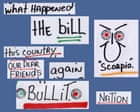
For months, an anonymous shadow operating under the moniker "Scorpio" has waged a silent war of nerves against politicians, business leaders, and public figures. This is not a story about cyber warfare or high-tech espionage. It is a return to an older, deeper form of terror. It is the story of words weaponized, delivered not through encrypted servers, but through the mundane channels of the daily post.
Now, the silence is breaking. Australian federal and state authorities are narrowing the dragnet around this modern-day ghost, turning a sprawling psychological puzzle into a concrete forensic hunt.
The Anatomy of an Unseen Terror
Imagine opening your morning mail. Amid the bills, invitations, and promotional flyers sits a plain envelope. Inside is a message written with meticulous, chilling intent. It contains details of your private life, explicit promises of harm, and a signature that offers no face, only a sting.
That is the reality for Scorpio’s targets. When an individual achieves prominence, they accept a certain level of public scrutiny. They do not accept the violation of their fundamental safety. The psychological toll of receiving a targeted, threatening letter is immense. It alters how a person walks to their car, how they look at crowds, and how they sleep at night. The threat is ambient. It is everywhere and nowhere.
Historically, anonymous letter writers have occupied a specific niche in criminal psychology. They seek control. By injecting fear into the lives of the powerful, an otherwise powerless individual experiences a intoxicating rush of omnipotence. Scorpio has fed on this high for a considerable time, watching from the shadows as security details were beefed up and public officials looked over their shoulders.
But every time an author presses pen to paper, or fingers to a keyboard, they leave a ghost of themselves behind.
The Digital Ghost in a Physical World
The common misconception about modern anonymity is that old-school methods are foolproof. A criminal might think that avoiding the internet makes them invisible to the state's modern apparatus. They believe that a physical letter avoids the digital footprint that routinely dooms online bad actors.
They are wrong.
Consider what happens next in a forensic laboratory when a threatening letter arrives. The investigation does not merely read the words; it interrogates the physical object. Every piece of paper has a genealogy. The exact composition of the wood pulp, the specific chemical signature of the ink, and the microscopic imperfections of the printer or typewriter used are all unique identifiers.
Federal investigators have been quietly assembling a massive jigsaw puzzle. Each letter sent by Scorpio provides a fresh set of coordinates.
- The Paper Trail: Analyzing the specific brands and batches of paper to trace where they were purchased.
- The Geographic Nexus: Mapping the postmarks to isolate the physical locations where the letters were dropped into mailboxes.
- Forensic Linguistics: Studying the syntax, word choices, spelling errors, and rhythmic patterns of the writing to build a psychological and educational profile of the author.
The digital and physical realms collide in the mail sorting facilities. Modern postal systems do not just move envelopes; they photograph them. High-speed sorting machines log images of every piece of mail, capturing tracking data, timestamps, and routing information. By cross-referencing the arrival times of Scorpio's letters across different states, analysts have been able to construct a timeline of the author's movements.
The anonymous antagonist believed they were operating in a vacuum. In reality, they were walking through wet cement.
The Turning of the Tide
Law enforcement agencies do not typically announce they are closing in on a suspect unless the ground beneath the target's feet has already shrunk to a postage stamp. The recent operational shifts in Australia signal that the investigation has moved from a reactive posture to an active trap.
The strategy is shifting toward isolation. By making it known that the circle is tightening, authorities apply immense psychological pressure to the perpetrator. A suspect who believes they are safe behaves differently than one who knows the police are knocking on doors in their neighborhood. Pressure breeds mistakes. A rushed letter, a careless drop-off, a momentary lapse in operational security—any of these could provide the definitive piece of evidence needed for an arrest.
The public often views these cases as sudden breakthroughs, a dramatic moment where a detective solves a riddle overnight. The truth is far more tedious. It is the result of hundreds of hours of mundane cross-referencing, lab technicians staring through microscopes at fiber grains, and intelligence analysts charting postal routes on digital maps.
The Human Cost of the Hunt
Behind the headlines of police operations lie the human targets who have spent months living in a state of hyper-vigilance. The true malice of Scorpio’s campaign isn't just the potential for physical violence; it is the guaranteed theft of peace of mind. To threaten a public figure is also to threaten their family, their staff, and the institutions they represent.
This investigation is about restoring the boundary between public service and private safety. When the anonymity is stripped away, these figures of terror almost always shrink. The terrifying phantom of the morning mail invariably resolves into a deeply resentful, isolated individual sitting in a room surrounded by old newspapers and bitter thoughts.
The hunt for Scorpio is reaching its final act. The letters will stop, not because the author chose to cease, but because the cold, methodical machine of modern forensic science has finally caught up with the heat of their malice. The ink is running dry.