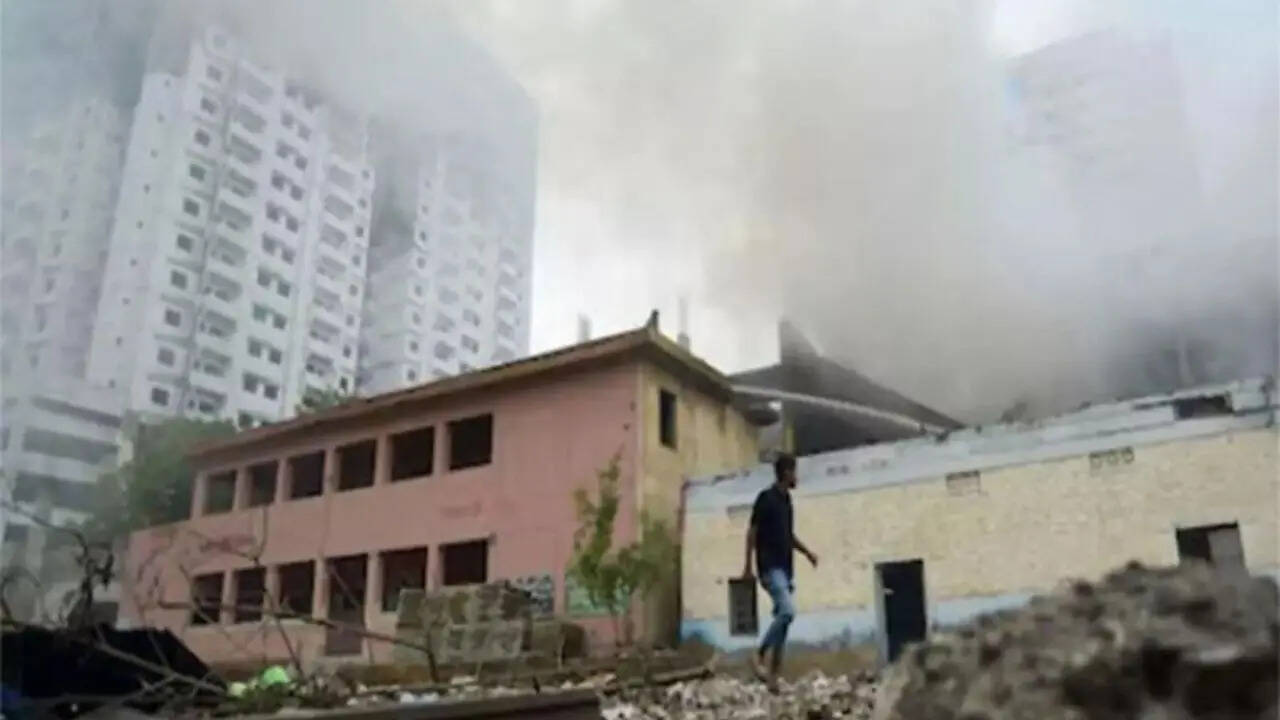
The explosion of a high-pressure gas pipeline in the Khyber Pakhtunkhwa (KP) province of Pakistan, resulting in eight fatalities, is not an isolated tactical failure but a symptom of systemic infrastructure fragility and inadequate safety protocols. While initial reporting focuses on the immediate human toll, a rigorous analysis must dissect the event through three specific vectors: mechanical integrity failure, inadequate spatial buffer zones, and the breakdown of emergency shutdown (ESD) response times. Understanding these variables provides the blueprint for preventing similar catastrophic failures in volatile energy corridors.
The Kinematics of Pipeline Rupture and Thermal Radiation
A high-pressure gas pipeline failure operates as a sequence of rapid energy releases. When a containment breach occurs, the internal pressure—often exceeding 800 to 1,000 PSI in major transmission lines—converts potential energy into a massive shockwave. This is followed by the "fireball" phase if an ignition source is present, which is almost certain in densely populated or industrializing areas of Pakistan.
The lethality of the KP incident is defined by the Thermal Radiation Flux. In gas explosions, the danger is not merely the blast radius but the heat intensity measured in kilowatts per square meter ($kW/m^2$).
- 5 $kW/m^2$: The threshold for second-degree burns within 60 seconds of exposure.
- 12.5 $kW/m^2$: The level at which wooden structures ignite and plastic tubing melts.
- 37.5 $kW/m^2$: The point of immediate fatality and total structural failure.
The eight deaths in Khyber Pakhtunkhwa suggest that the victims were within the "Total Fatality Zone," where the thermal flux exceeded $35 kW/m^2$. This proximity indicates a critical failure in Right-of-Way (RoW) management. In developing infrastructure corridors, the encroachment of residential dwellings onto the pipeline's buffer zone creates a high-density target for what would otherwise be a manageable industrial accident.
The Triad of Failure Causation
To move beyond the vague "explosion" narrative, we must categorize the potential triggers using an industrial forensic framework. Pipeline failures in this region generally stem from three distinct root causes.
1. Stress Corrosion Cracking (SCC) and Material Fatigue
Pakistan’s midstream infrastructure often suffers from antiquated cathodic protection systems. Cathodic protection uses a low-voltage current to prevent the electrochemical oxidation of the steel pipe. When these systems fail, or when the protective coating (such as coal tar or fusion-bonded epoxy) delaminates, the pipe becomes susceptible to SCC. Over time, the internal pressure cycles create micro-fissures that eventually reach a critical length, leading to a longitudinal "unzipping" of the pipe.
2. Third-Party Interference and Encroachment
The KP region faces unique challenges regarding land use. Third-party interference includes both accidental strikes during unauthorized construction and intentional sabotage. In a data-driven safety model, the frequency of "near-miss" reporting is a leading indicator of a major rupture. If the pipeline operator in KP lacked a robust aerial or ground-based patrol frequency, the risk of a third-party breach increased exponentially.
3. Geotechnical Instability
Khyber Pakhtunkhwa’s terrain is prone to seismic activity and soil shifts. A pipeline is a rigid structure; any significant lateral or vertical soil movement introduces bending moments. If the pipeline was not engineered with sufficient flexibility or if the soil-to-pipe friction was underestimated, a landslide or minor tremor could have induced a mechanical breach without any external "strike."
The Logic of Response Latency
The magnitude of a gas fire is directly proportional to the volume of fuel available between isolation valves. This is governed by the Mass Flow Rate Equation. Once a rupture is detected, the objective is to minimize the "blowdown time"—the duration required for the gas trapped between two shut-off valves to evacuate through the breach.
The KP incident highlights a potential bottleneck in Automated vs. Manual Isolation. If the pipeline was equipped with Manual Block Valves (MBVs) rather than Remote Control Valves (RCVs) or Automatic Shut-off Valves (ASVs), the time to isolate the section could range from 30 minutes to several hours. In a high-pressure scenario, every minute of unisolated flow adds thousands of cubic meters of fuel to the fire, expanding the "Burn Zone" and preventing first responders from approaching the site.
Quantifying the Safety Gap: The Social Cost of Infrastructure Neglect
The economic and human impact of this explosion can be modeled using the Value of a Statistical Life (VSL) and infrastructure downtime costs. However, in the context of Pakistan’s energy security, the "Systemic Risk" is more pressing.
A single rupture in a primary transmission line in KP creates a cascading deficit across the power generation and industrial sectors. The loss of eight lives is the immediate tragedy; the secondary tragedy is the erosion of public trust and the heightening of "Sovereign Risk" for future energy investments. If the regulatory body—the Oil and Gas Regulatory Authority (OGRA)—cannot enforce stringent RoW protocols and technical standards, the cost of capital for future projects will rise to account for the increased probability of catastrophic failure.
Technical Barriers to Mitigation
Solving the pipeline safety crisis in Pakistan requires overcoming three specific technical and bureaucratic hurdles:
- Data Asymmetry: There is a lack of publicly available "Inline Inspection" (ILI) data. Without regular "pigging"—the process of sending electronic sensors through the pipe to measure wall thickness—the operator is essentially flying blind.
- Regulatory Capture: When infrastructure providers also act as self-regulators, safety margins are often compressed to meet short-term delivery quotas or to reduce maintenance CAPEX (Capital Expenditure).
- The Urban-Industrial Interface: Relocating populations that have settled on pipeline RoW is a political and logistical nightmare. However, failing to enforce these boundaries ensures that the next mechanical failure will result in another high-casualty event.
Engineering the Solution: A Tiered Strategy for Pipeline Integrity
To prevent a recurrence of the Khyber Pakhtunkhwa disaster, the operator must shift from a reactive "break-fix" mentality to a predictive "Integrity Management" (IM) model.
Phase 1: High-Resolution Inline Inspection
Immediate deployment of "Smart Pigs" equipped with Magnetic Flux Leakage (MFL) and Ultrasonic Testing (UT) sensors. These tools identify internal and external corrosion, dents, and cracks with sub-millimeter precision. Any anomaly exceeding 10% of the wall thickness must be prioritized for excavation and repair.
Phase 2: Supervisory Control and Data Acquisition (SCADA) Overhaul
Transitioning to a real-time SCADA system that utilizes leak detection algorithms based on mass-balance calculations. If the "Inflow" at Station A does not match the "Outflow" at Station B (minus calculated take-offs), the system must trigger an automatic alarm and, in high-risk zones, initiate an automatic valve shutdown.
Phase 3: Community Buffer Zones and Satellite Monitoring
The use of High-Revisit Satellite Imagery (HRSI) can automate the detection of new structures or construction activity along the pipeline corridor. This removes the reliance on infrequent physical patrols and provides a legally defensible record of RoW encroachment, allowing for earlier intervention.
The explosion in Khyber Pakhtunkhwa was a predictable outcome of a system operating beyond its safety parameters. Until the mechanical integrity of the steel and the geographical integrity of the buffer zones are treated as non-negotiable variables, the energy infrastructure of Pakistan will remain a liability rather than an asset. The strategic move for the provincial government and federal energy authorities is to mandate an immediate "Integrity Audit" of all high-pressure lines crossing residential areas, backed by an enforceable relocation policy for those living within the calculated 37.5 $kW/m^2$ thermal radiation zone.