The return of cricket to the Olympic program for Los Angeles 2028 is not a sentimental recovery of a lost tradition; it is a calculated capital deployment aimed at the world’s second-most popular sport. The construction of a state-of-the-art stadium in California functions as the primary physical anchor for a sport that has historically suffered from a "ghost inventory" problem in North America—high demand within specific demographic pockets but a total absence of Tier-1 specialized infrastructure to monetize that demand.
Cricket’s reentry after a 128-year hiatus requires more than a pitch; it requires a specialized ecosystem capable of meeting the rigorous broadcast and spectator standards of the International Olympic Committee (IOC) while simultaneously proving the viability of Major League Cricket (MLC) as a long-term commercial entity.
The Triad of Cricket Infrastructure Viability
To understand why a dedicated stadium in California changes the trajectory of the sport, one must analyze the three structural pillars that define cricket’s success in a non-traditional market:
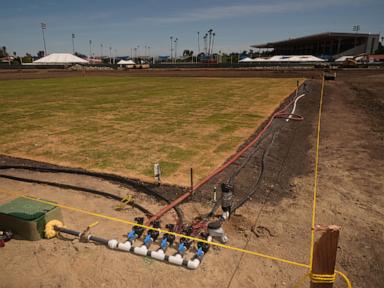
- Surface Engineering and Agronomy: Unlike baseball or soccer, the "pitch"—the 22-yard central strip—is the most critical variable in cricket performance. In the United States, the lack of "natural" turf pitches led to the use of artificial matting or hybrid surfaces, which fundamentally alter the physics of the ball. A world-class stadium provides a "square" (a block of multiple pitches) grown with specific clay content and grass types (like Bermuda or Rye) capable of sustaining the wear of a multi-day tournament.
- Broadcast Geometry: Cricket is a 360-degree sport. Standard American rectangular stadiums (NFL/MLS) or diamond-shaped stadiums (MLB) create suboptimal sightlines and camera angles. A purpose-built oval allows for the "wagon wheel" broadcast coverage essential for modern data analytics and viewer engagement.
- Commercial Scalability: Temporary "pop-up" venues, such as the one used in New York for the 2024 T20 World Cup, carry an unsustainable cost-to-utility ratio. Permanent infrastructure allows for year-round academy training, high-performance centers, and hospitality suites that generate revenue beyond the 40-day window of a major tournament.
Economic Incentives and the Olympic Catalyst
The IOC’s decision to include Cricket (specifically the T20 format) in the 2028 Los Angeles Games is an exercise in market penetration. For the IOC, the incentive is the Indian subcontinent’s broadcast market. For the United States, the incentive is the formalization of a fragmented sporting economy.
The Media Rights Equation
The valuation of Olympic media rights in India is currently a fraction of its potential. By including cricket, the IOC can expect a projected increase in broadcast revenue from the region by a factor of ten. This influx of capital trickles down to the United States through the USAC (USA Cricket) and MLC, providing the liquidity needed for stadium debt service.
Demographic Concentration vs. Infrastructure Gaps
California represents a critical node in the "Cricket Heat Map." The Silicon Valley and Los Angeles corridors contain the highest density of the South Asian diaspora in North America—a demographic with high discretionary income and an ingrained affinity for the sport. However, until now, this demographic had to travel to Florida or Texas (the only existing ICC-certified venues) to witness professional-grade matches.
The California stadium closes this 2,000-mile gap, turning a passive television audience into a physical gate-paying audience.
Engineering the T20 Product for American Consumption
The T20 (Twenty20) format is the only viable entry point for the US market because it fits the "three-hour window" standard of American sports consumption (MLB, NBA, NFL). The stadium in California is being engineered specifically for this format, emphasizing:
- Boundary Dynamics: The size of the oval is calibrated to balance the "power hitting" era of cricket. Small boundaries lead to high scores but can feel "cheap" to purists; large boundaries demand higher athletic output and strategic running.
- Lighting and Prime Time: To capture the massive Asian broadcast market, matches in California must be played at times that correlate with morning or evening slots in India and Pakistan. This necessitates advanced LED lighting systems capable of flicker-free high-speed broadcast capture for slow-motion replays.
Structural Risks and the Maintenance Burden
While the excitement surrounding the California stadium is high, the project faces significant operational hurdles that the "growth" narrative often overlooks.
- The Pitch Maintenance Deficit: Unlike a football field, a cricket pitch requires highly specialized curators. There is currently a talent shortage of ICC-certified groundsmen in North America. The failure to maintain a "true" pitch—one that offers a fair contest between bat and ball—results in low-scoring, boring matches that alienate new viewers.
- Seasonality and Usage Density: A cricket stadium is a high-maintenance asset with a low usage density compared to a multi-purpose arena. To remain solvent, the California venue must solve the "White Elephant" problem by integrating high-performance training hubs or finding ways to host non-sporting events without damaging the sensitive turf of the central square.
The Strategic Shift from Participation to Consumption
For decades, the strategy for US cricket was "grassroots growth"—getting kids to play in parks. That strategy failed to produce a professional tier. The new strategy is "Infrastructure-Led Consumption." By building a cathedral for the sport, the organizers are betting that a top-down approach (Professional League -> Olympic Spotlight -> Stadium Experience) will create a culture of viewership that eventually fuels participation.
The California stadium serves as the proof-of-concept for this model. It is not merely a place to play; it is a signal to global sponsors that cricket in America has moved from the periphery of local parks to the center of the industrial sports complex.
The Competitive Bottleneck
The primary threat to this expansion is not a lack of interest, but the "Congestion of the Calendar." The global cricket schedule is oversaturated. For the California stadium to be a successful asset, it must secure a fixed window in the International Cricket Council (ICC) Future Tours Programme (FTP). Without guaranteed international matches or a robust MLC season, the facility risks becoming an expensive monument rather than a functioning engine of growth.
Forecasting the 2028 Impact
The success of the 2028 Olympic cricket event will be measured by its "legacy utility." If the stadium facilitates a rise in local broadcasting rights and attracts a secondary tier of sponsors (non-endemic American brands), it will trigger a wave of similar constructions in New York, Chicago, and Atlanta.
The immediate tactical move for stakeholders is the vertical integration of the stadium experience with digital betting and high-end hospitality. In the US market, sport is the vehicle, but "entertainment-plus-access" is the product. The California stadium is the first site where cricket will be packaged not as a legacy British sport, but as a high-stakes, data-rich American entertainment product.
To maximize the ROI of this facility, management must prioritize:
- Year-round high-performance residency: Attracting global stars to train in California during the off-season.
- Technological Integration: Implementing "Smart Stadium" features that provide real-time player data (ball speed, exit velocity, heart rate) to fans in the stands via augmented reality.
- Local Governance Alignment: Ensuring the stadium is a multi-use hub that serves the surrounding community to mitigate the high property costs and taxes associated with California real estate.
The trajectory of the sport in the US now depends entirely on whether this physical infrastructure can produce a consistent, high-quality broadcast product. The stadium is the foundation, but the execution of the 2028 Games will be the ultimate stress test of its structural integrity.