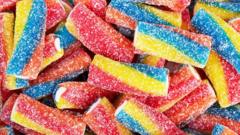
When the economy feels like a slow-motion car crash, people don't stop spending money. They just change what they spend it on. You aren't buying that three-piece sectional sofa or booking a flight to Milan when your grocery bill looks like a mortgage payment. Instead, you buy a five-dollar bag of Swedish fish or a vintage Charleston Chew.
It's called the Lipstick Index. Economists love talking about how small luxury sales spike during recessions because humans need a cheap dopamine hit when the world is burning. Right now, New York City is proving that theory right, but with sugar instead of cosmetics. Independent candy stores across the five boroughs aren't just surviving the current economic sludge—they're raking it in.
If you think this is just about kids wasting allowance money, you're missing the bigger picture. The survival of these shops tells us everything about how consumer behavior shifts when budgets get tight.
The Margin Magic of Cheap Thrills
Running a retail business in Manhattan or Brooklyn usually requires a special kind of financial masochism. Landlords expect blood, supply chains are a mess, and commercial electricity bills alone can tank a small shop. Yet, multi-generational landmarks like Economy Candy on the Lower East Side keep the doors open and the bins filled.
Why? Because the unit economics of candy are beautiful.
When you buy a pound of bulk gummy bears for five bucks, you feel like you won. You got a heavy bag of joy for less than the price of a generic iced latte. For the store owner, that bulk candy was purchased at a wholesale rate that leaves plenty of room for a healthy markup. Unlike high-end boutiques that sit on expensive, slow-moving inventory, candy stores turn over stock fast. Sugar doesn't go out of style, and it doesn't have a shelf life of three weeks like fresh produce.
Typical Candy Store Inventory Breakdown:
- Nostalgia / Vintage: 40% (High margin, drives foot traffic)
- International / Trending: 35% (TikTok driven, younger demographic)
- Bulk / Penny Candy: 25% (Volume driver, lowest barrier to entry)
During a financial downturn, this setup acts like an economic shield. Families cut back on expensive dinners out. They skip the Broadway show. But parents still want to say "yes" to their kids. Taking the family to a classic candy store lets a parent feel generous for twenty bucks total. That psychological win is worth more than the sugar itself.
Nostalgia Is a Hell of a Drug
Walk into any surviving old-school sweet shop and you'll notice the crowd isn't just Gen Z looking for sour strips. It's full of thirty-somethings and retirees.
We're living through an era of aggressive uncertainty. When people are worried about layoffs or rent hikes, they crave familiarity. Seeing a wall covered in candy cigarettes, Big League Chew, and wax bottles triggers a visceral reaction. It reminds you of a time when your biggest worry was getting home before the streetlights came on.
- The Gen X Comfort Trap: Finding a specific regional soda or a candy bar that stopped major distribution in 1994 makes people feel like they found buried treasure.
- The TikTok Effect: Younger shoppers flock to these stores not for history, but for novelty. Freeze-dried candy and hyper-sour gels go viral every Tuesday, driving massive weekend foot traffic to local shops that stock them faster than big-box chains can.
This dual-market appeal keeps the registers ringing. The older crowd comes for the memories; the younger crowd comes for the social media clout. Independent store owners who understand this balance don't just rely on foot traffic from the block—they use digital platforms to turn a local corner store into a national shipping operation.
Adapt or Die on Rivington Street
Survival in New York requires more than just a good selection of chocolate. It takes brutal adaptability. Look at how the most famous shops stayed alive when the city went dark a few years ago. They didn't just wait for tourists to return to the Lower East Side. They digitized.
The third-generation owners of these classic institutions did something their grandfathers would've laughed at: they treated penny candy like a tech startup. They built online subscription boxes, pushed hard into corporate gifting, and turned their cramped brick-and-mortar spaces into backdrops for Instagram videos.
They also expanded footprint footprints smartly. Opening a curated mini-outpost in a heavy-traffic tourist hub like Chelsea Market captures the casual spender who wants the brand experience without traveling deep into residential neighborhoods. It's a calculated play that balances old-world charm with modern retail scaling.
The Death of the Middle Tier
The success of the neighborhood candy shop highlights a massive divide in current retail. The middle tier of shopping is dying. Mid-priced department stores and generic mall brands are suffocating because they don't offer value or an experience.
Candy shops win by picking a side. They either offer extreme value—bulk candy by the pound—or an intense, immersive experience. You don't just go to buy food; you go to hear the floorboards creak, smell the sugar, and talk to a clerk who knows exactly which year a specific candy recipe changed.
That physical connection is something Amazon can't replicate. A cardboard box arriving on your porch doesn't give you the same hit of joy as digging a plastic scoop into a bin of neon runts.
How to Support Local Retail Right Now
If you want these places to stick around until the economy corrects itself, you have to change how you buy. Stop ordering your holiday treats from giant online conglomerates.
Next time you need a small gift, a pick-me-up, or a weekend activity, find the oldest independent store in your zip code. Go inside. Spend ten bucks on something you haven't eaten since middle school. You get a break from reality, and a neighborhood staple gets to pay its rent for another day. It's the easiest economic rescue plan in the world.