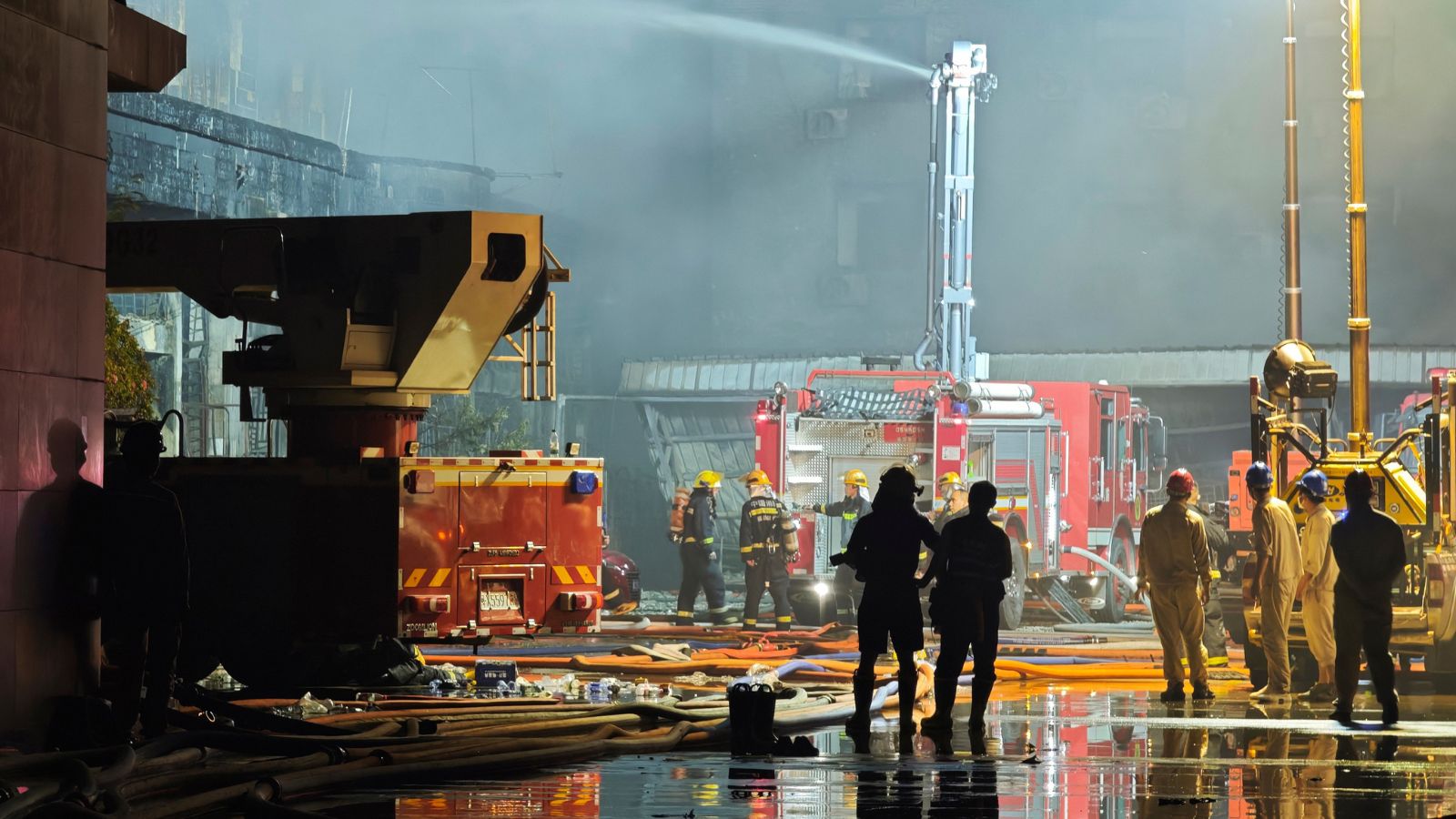
A horrific fire tore through a shoe factory in southeastern China on July 9, 2026, leaving 28 people dead and reminding us that manufacturing safety remains dangerously flawed. The blaze broke out around noon at the Huiteng shoe company in Jinjiang, a city known globally for mass-producing athletic footwear. Within hours, a five-story concrete building became a death trap for workers trapped by toxic smoke and blocked exits.
There were 237 workers and two visitors inside when the disaster started. While rescuers managed to pull 213 people out alive, the speed at which the fire spread made a full evacuation impossible. This tragedy isn't an isolated incident. It highlights a recurring pattern of compromised safety protocols, flammable raw materials, and poor oversight that continues to plague major industrial zones.
What Went Wrong at the Jinjiang Shoe Factory
Initial reports from the local fire department show the fire started on the first floor, which housed both a workshop and a storage warehouse. This location proved catastrophic. The ground floor was packed with highly flammable shoe components, including chemical adhesives, rubber, and synthetic sole materials. Once ignited, these materials fueled a rapid, intense blaze that sent thick black smoke surging through the upper floors.
Jinjiang Fire Chief Du Zhenzhou told state broadcasters that emergency personnel faced massive hurdles trying to reach those trapped inside. The biggest obstacle? Stairwells and emergency exits were completely blocked by piles of raw shoe materials. Instead of clear escape routes, workers found walls of inventory cutting off their survival paths. Some were forced onto the rooftop, waiting for rescue while smoke enveloped the building.
It took 183 firefighters, 35 emergency vehicles, and eventually more than 500 rescue personnel roughly four hours to control the open flames. By then, 28 people had lost their lives.
The Reality Behind China Industrial Safety Record
This incident follows a series of recent workplace disasters that show systemic gaps in safety enforcement.
- In May 2026, an explosion at a fireworks plant in Changsha, Hunan province, killed at least 37 people.
- In late 2024, a fire at a refrigeration facility under construction in Xinyu, Jiangxi province, claimed 39 lives.
- In November 2025, a massive residential fire in Hong Kong killed 168 people, sparking a brief nationwide campaign to eliminate high-rise fire hazards.
Official data shows that 18,261 people died across China in nearly 20,000 workplace accidents in 2025 alone. While officials point out that this number is lower than previous years, the sheer volume of preventable deaths shows that rules on paper don't always translate to safety on the factory floor. Local enforcement often takes a backseat to production quotas and profit margins until a high-profile disaster forces a sudden crackdown.
Real Accountability vs Sudden Crackdowns
Following the Jinjiang blaze, Chinese President Xi Jinping demanded a swift investigation, stating that those responsible must be strictly held accountable. Local authorities quickly took the factory owner and managers into custody, while also freezing the company's financial accounts.
Detaining executives after a tragedy is standard practice, but it rarely fixes the underlying issue. Factory owners frequently cut corners by using stairwells as overflow storage. In high-volume industries like footwear manufacturing, space is money. When regulatory inspections are predictable or superficial, safety hazards go unnoticed until it's too late. True workplace safety requires continuous, unannounced audits by independent bodies rather than reactive crackdowns after bodies are pulled from the rubble.
How Supply Chains Must React to Factory Risks
If you manage a business that sources goods from overseas manufacturing hubs, you can't rely solely on local government compliance certificates. A factory that looks safe during a scheduled annual review might look completely different during peak production season when inventory overflows into hallways.
First, require your sourcing agents to conduct unannounced safety walkthroughs. Pay close attention to structural realities like exit clarity, the storage of hazardous chemicals, and the functionality of fire suppression systems.
Second, demand proof of regular fire drills for all shifts. Workers need to know exactly how to exit a smoke-filled building when primary paths are compromised. If a supplier refuses to grant unannounced access or fails to keep escape routes clear, shift your production elsewhere. True supply chain resilience isn't just about managing shipping costs; it's about ensuring your products aren't stained by preventable human tragedies.