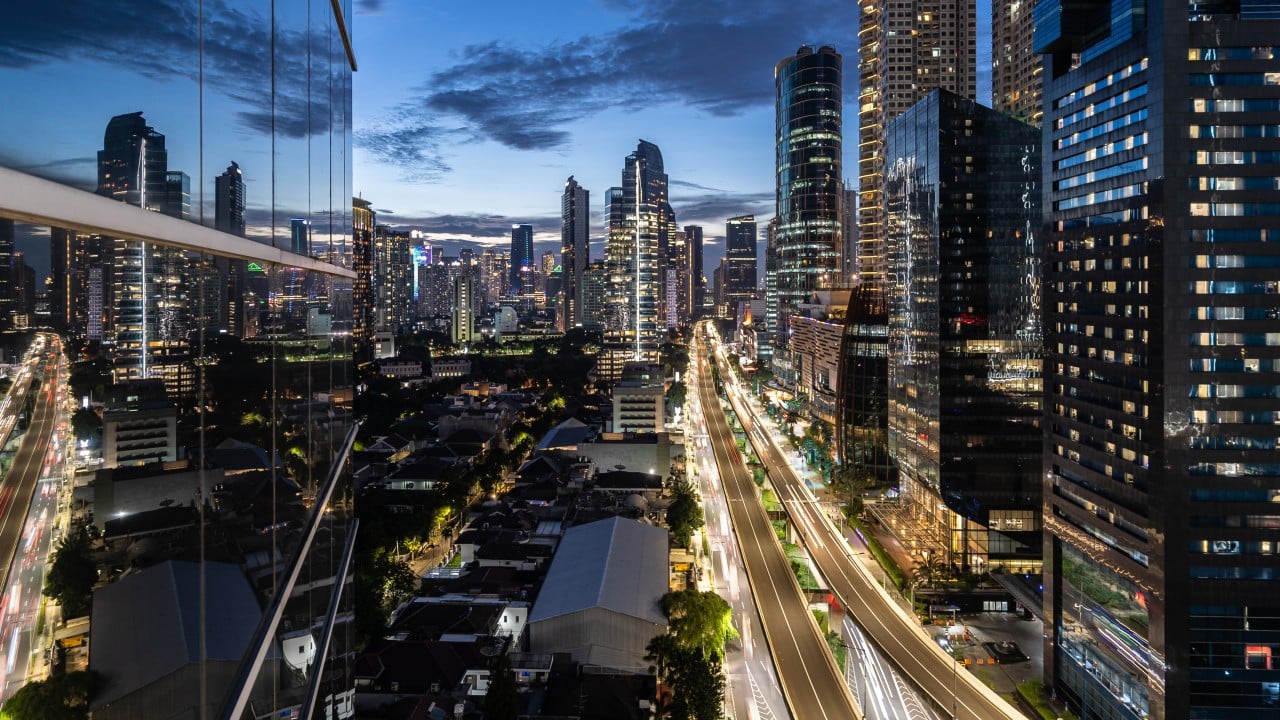
Every few years, Jakarta decides it wants to copy a winner.
The playbook never changes. You draw up ambitious blueprints on glossy paper, announce billions in foreign capital commitments, slap a futuristic moniker on a swamp, and promise investors a tropical paradise where bureaucracy evaporates. Nusantara is the latest iteration of this tired fantasy. The lazy consensus among commentators is that Indonesia is building a direct challenger to Singapore, a financial powerhouse that will siphon capital, talent, and maritime trade right out of the Lion City.
That perspective is fundamentally flawed.
I have watched conglomerates pour tens of millions into regional expansion projects across Southeast Asia only to hit a wall of regulatory friction and infrastructure bottlenecks. The mistake isn't ambition. The mistake is misreading what makes a global hub function in the first place. Singapore did not win because it had better palm trees or larger landmass. It won because of absolute predictability, uncompromising rule of law, and a tax regime that values transparency over discretion.
Indonesia is operating on an entirely different set of rules.
The Myth of Scale
Size is not a strategy. Indonesia loves to throw around its massive GDP and population numbers as if raw domestic market potential automatically translates into an efficient international finance capital. It does not.
Financial centers thrive on trust, frictionless capital movement, and institutional muscle memory. Singapore spent decades building a judicial system where foreign corporations know their contracts will be enforced to the letter, without hidden fees, regional political interference, or sudden policy reversals.
When you look at Nusantara, you see a masterclass in top-down urban planning dictated by central government fiat. Capital does not flow where politicians tell it to go. Capital flows where it feels safest. Indonesia's legal framework remains notoriously fragmented, prone to overlapping regional authorities, and heavy with local content requirements that choke foreign direct investment before it leaves the tarmac.
Imagine a scenario where a multinational bank shifts its regional treasury operations to a new smart city, only to find that local labor laws restrict foreign executive visas and logistical bottlenecks delay port clearance by weeks. That is not a competitor to Singapore. That is an expensive domestic administrative experiment.
The Infrastructure Illusion
Poured concrete does not equal connectivity.
The proponents of the new capital point to high-speed rail lines and modern airports as proof that the physical foundation is solid. But physical hardware means nothing without the software of a mature ecosystem.
Singapore built its dominance by acting as a neutral broker for the region, backed by deep liquidity pools, world-class dispute resolution bodies, and an immigration policy designed to suck in global talent without friction. Indonesia's labor regulations, by contrast, remain protectionist at their core. Protectionism and global financial hubs are mutually exclusive. You cannot claim to want the world's capital while simultaneously making it difficult for foreign experts to live, work, and repatriate funds without jumping through administrative hoops.
Let us address the common queries head-on.
People ask: Will Nusantara successfully absorb the overflow of tech talent fleeing high living costs in Singapore?
The answer is a blunt no. High earners leave Singapore for lower-cost hubs like Bangkok or Kuala Lumpur, not because they want to live in a half-built government town in East Kalimantan, but because those established cities already possess vibrant cultural amenities, international schools, reliable healthcare, and deep expat networks. You cannot manufacture lifestyle and institutional trust overnight with a concrete pour.
The Real Economic Game
Indonesia does not need to be Singapore to win. That is the irony of this entire national vanity project.
Indonesia's true power lies in its domestic resource dominance, its agricultural scale, and its massive, youthful internal market. Nickel processing and downstreaming resource extraction are where Indonesia holds actual leverage over global supply chains. Trying to pivot into a financial services hub to rival a sovereign city-state that has perfected the art of low-tax corporate structuring for half a century is a waste of state capital.
The resources dumped into building a gleaming administrative capital from scratch in the jungle could have upgraded port infrastructure across Java and Sumatra, digitized customs clearance nationwide, and overhauled the educational system to build domestic tech champions.
Instead, the country is chasing a mirage.
Markets do not care about political prestige. They care about yield, security, and velocity. Until the underlying legal and bureaucratic machinery of Indonesia undergoes a total structural overhaul, any talk of dethroning Singapore is just expensive fiction. Stop trying to build a duplicate of the past. Focus on the raw industrial muscle you actually control.